


Region
Alexandra Palace Antiques & Collectors Fair is permanently closed. The event is retained as an editorial archive of the venue and its distinctive character.
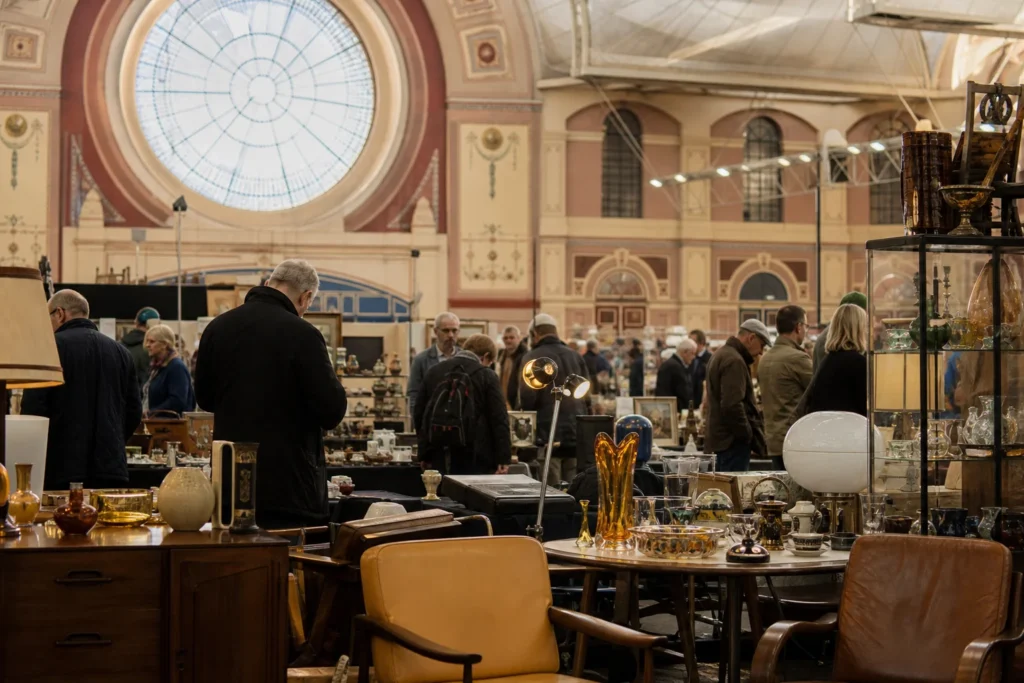
Alexandra Palace stands on a ridge in north London, its Victorian outline visible for miles across the city. Built in 1873 as a public pleasure ground, the building's Great Hall was one of the few spaces in London large enough to host a serious antiques fair at scale. Light fell through the hall's tall windows, and the sheer volume of the room gave the event a particular atmosphere — unhurried, generous, easy to navigate without feeling cramped even when up to 300 vendors were set up across the floor.
The fair drew collectors with a clear focus on 20th-century material rather than the deep antique end of the market. British ceramics formed the spine of the event. Dealers handling Clarice Cliff and Susie Cooper sat alongside those specialising in Carlton Ware, Midwinter and Ridgway. SylvaC, Poole and Hornsea rounded out a ceramics section that was, by any measure, unusually strong for a general antiques fair. Serious collectors of British studio and industrial pottery found the concentration of specialist knowledge genuinely useful.
Art Deco design ran through the fair as a recurring visual thread. Chrome ware, mantel clocks and figural lamps appeared across multiple stands, alongside tea services, prints and decorative posters. Glassware sat near displays of early plastics and advertising pieces, and the whole decorative section had a consistency that made it feel curated rather than accumulated. The period from roughly 1920 to 1960 was clearly where much of the fair's editorial weight fell.
Toys and collectibles for a slightly different kind of buyer occupied other parts of the floor. Advertising items, packaging and ephemera attracted visitors who came as much for cultural nostalgia as for antique value. Jewellery and accessories — compacts, handbags, vintage fur coats — appeared through the fair and signalled a secondary audience: buyers interested in wearable and personal vintage rather than display objects.
That secondary audience was reinforced by the presence of dealers in 1960s and 1970s kitchenware, whose colourful, affordable stock drew younger visitors alongside the established collector crowd. The fair was one of the earlier London markets to reflect this widening of collector interest, and the Alexandra Palace Great Hall gave the mix a setting that felt appropriately serious without being intimidating.
Within London's antiques calendar, the fair occupied a recognisable position. The combination of the palace's elevated setting, the hall's physical scale, the named ceramics specialists and the breadth of 20th-century material gave it a character distinct from the smaller specialist fairs or the open-air street markets elsewhere in the city. For collectors of British decorative arts from the first half of the last century, it remained one of the more dependable fixed points on the circuit during the years it ran.
Frequently Asked Questions
Q: What kind of antiques and collectibles was the Alexandra Palace fair best known for?
A: British ceramics were the fair's strongest suit. Specialist dealers in Clarice Cliff, Susie Cooper, Carlton Ware, Midwinter and Ridgway appeared alongside those handling SylvaC, Poole and Hornsea, making the ceramics section unusually concentrated for a general antiques fair. Art Deco decorative objects — chrome ware, mantel clocks, figural lamps, tea services and decorative prints — ran through the event as a consistent secondary strand.
Q: Was the fair only for traditional antiques collectors, or did it attract younger buyers too?
A: The fair drew a noticeably mixed audience. Alongside established collectors, dealers in 1960s and 1970s kitchenware and vintage clothing — compacts, handbags, fur coats — brought in buyers interested in wearable and affordable vintage rather than display-cabinet antiques. The Alexandra Palace fair was among the earlier London markets to reflect this widening of collector taste.
Q: How large was the fair, and what was the Great Hall like as a venue?
A: At its scale, the fair gathered up to around 300 vendors across the Great Hall of Alexandra Palace, a Victorian space with tall windows and enough volume that the floor never felt cramped. The hall's light and generous proportions gave the event an unhurried atmosphere that distinguished it from smaller London market venues.
Q: Is the Alexandra Palace Antiques & Collectors Fair still running?
A: The fair is permanently closed. The event is maintained as an editorial archive of the event and its character within London's antiques calendar. Check Alexandra Palace's official website for any current events at the venue.







Add a review