


Antibes Antiquités & Brocante is permanently closed. The market is retained as an editorial archive of the venue and its distinctive character.
Antibes is a town that announces itself through stone ramparts, a yacht-filled harbour and the particular blue of the Mediterranean beyond the old walls. It was not, at first glance, the kind of place you expected a proper brocante to take root. Yet Antibes Antiquités & Brocante did exactly that, gathering around fifty vendors into a weekend market with a character distinctly its own — one that felt less like a regional fair and more like a well-kept local secret.
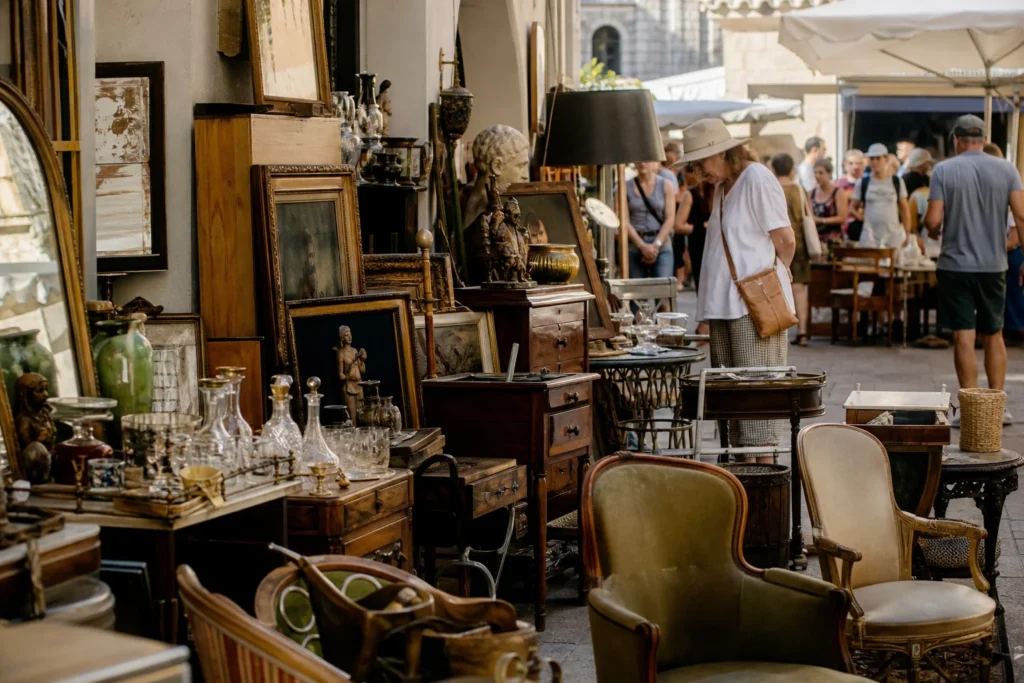
One of the market's structural advantages was its mixed indoor and outdoor layout. Outdoor stalls caught the full warmth of Provençal light on clear days. A covered section kept trade moving when the mistral pushed in from the west. That combination rewarded a complete circuit rather than a targeted sweep, since the mood and stock shifted between the open pitches and the sheltered interior.
The merchandise ranged widely without feeling unfocused. Antique furniture arrived in both statement proportions and more portable sizes — the kind of pieces a collector could plan a return trip around, or fit into the back of a car on impulse. Jewellery cases held mourning brooches alongside mid-century costume pieces. Elsewhere, browsers turned up vintage clothing, stacks of books and comics, domestic tools, old kitchenware, gardening finds and the occasional bicycle. The spread suited dedicated collectors chasing something specific and open-minded wanderers in equal measure.
What lifted the atmosphere beyond a simple transaction circuit was the vendor community itself. Many traders had worked the market for years and knew their stock well enough to offer a brief history with each piece. Newer sellers joined the regular crowd, keeping the selection from feeling stale. The overall pace was unhurried — very much in the spirit of a Sunday morning on the Côte d'Azur, where there was rarely a reason to hurry.
Prices tended toward the reasonable, and genuine finds surfaced for anyone willing to look carefully. Arriving early gave the most options, before the afternoon crowds reached the stronger pieces. The scale — approximately fifty vendors — kept browsing human without feeling thin, a significant contrast to the larger regional fairs that could overwhelm as much as they rewarded.
Within Antibes itself, the market sat naturally alongside the old town and its covered food market, sharing the same unhurried rhythm and the same compressed, centuries-layered geography. That combination gave the brocante a context few outdoor markets could match — sun-warmed stone, sea light and the particular pleasure of finding something old and unexpected in a place already full of history.
Frequently Asked Questions
Q: What kind of stock did Antibes Antiquités & Brocante typically carry?
A: The market covered a genuinely broad range. Antique furniture appeared in both large statement pieces and car-boot-friendly sizes. Jewellery cases held mourning brooches alongside mid-century costume pieces. Beyond that, vendors regularly brought vintage clothing, books, comics, old kitchenware, domestic tools, gardening finds and the occasional bicycle — enough variety to suit dedicated collectors and open-minded browsers in equal measure.
Q: Did the indoor-outdoor layout affect the browsing experience?
A: It made a meaningful difference. Outdoor stalls caught the full Provençal light on clear days, while a covered section kept trading going when the mistral pushed in. The two areas also carried a different mood and different stock, which made a full circuit more rewarding than a quick pass through one section.
Q: What was the vendor atmosphere like?
A: Many traders had worked the market for years and knew their pieces well enough to offer a brief history with each one. Newer sellers joined the regulars, keeping the selection from feeling static. The overall pace was unhurried — very much in step with a Sunday morning on the Côte d'Azur.
Q: Was early arrival worth the effort?
A: Yes. Arriving early gave the best choice of the stronger pieces before afternoon crowds worked through the stalls. Prices tended toward the reasonable throughout the day, but the most interesting finds went first.
Marketplace Highlights









Add a review