


Region
Drive Highway 4 on the third weekend of April or September and the road itself becomes the market. For roughly 30 miles, the two-lane stretch through central Texas transforms into one long open-air browsing trail. Storefronts spill onto sidewalks. Pastures fill with folding tables. Small-town crossroads that are quiet most of the year suddenly hum with generators, coffee thermoses, and the slow crawl of cars hunting for a parking spot.
Antique Alley Texas traces its roots to a 53-vendor sidewalk sale in Grandview in 1999. From that modest start, it has grown into a multi-day trail event threading through seven communities across two counties. The scale separates it from any conventional fairground market. There is no single gate to walk through, no perimeter fence — just the highway, the towns, and whatever vendors have set up along the route that particular weekend.
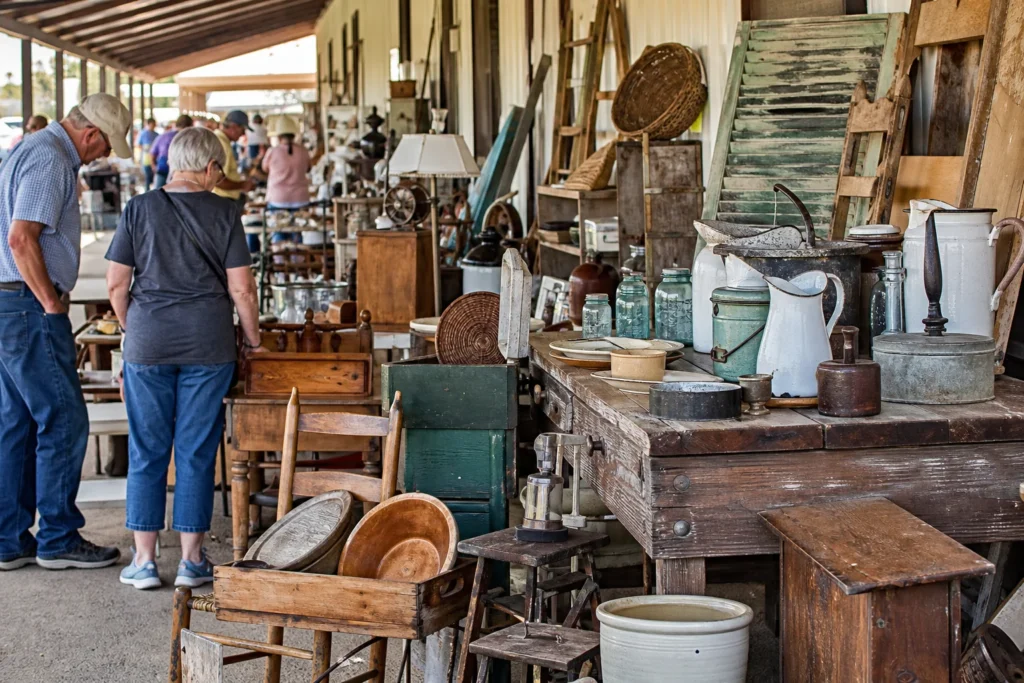
The merchandise covers the full range of rural Texas life, past and present. Horse tack and farming equipment sit alongside wrought iron garden statuary and wicker patio sets. Vintage housewares, western apparel, books, and collectibles fill the gaps between. One past visitor reportedly came across a stuffed skunk for sale somewhere along the route — which tells you something useful about the inventory's outer limits. The browsing is genuinely unpredictable, and that unpredictability is much of the appeal.
Shoppers who want something more focused can seek out Whipp Farm, which offers a juried selection of antiques, art, and quality collectibles within the wider event. It provides a clear counterpoint to the roadside yard-sale energy found elsewhere on the trail. Serious collectors often use it as an anchor point and work outward from there.
Local Mennonite families bring a different kind of character to the market. They sell homemade jams, baked goods, and handmade furniture — items that tend to move quickly and carry the kind of quality that mass-produced goods rarely match. Food along the wider trail leans toward fair classics: funnel cakes, corn dogs, down-home cooking, and freshly baked pies from local vendors. It is a full day out, not just a shopping trip.
The event runs rain or shine on the third Friday, Saturday, and Sunday of April and September, with hours from 09:00 to 18:00. Organisers make exceptions only for severe weather such as tornadoes or lightning. Sunday tends to run quieter, with some vendors closing for religious observance — a slower pace that suits browsers who find weekend crowds exhausting rather than energising.
Parking takes planning. The small communities along the route absorb a significant surge in visitors during the event, and street spaces fill fast. Church lots and open pastures advertised as festival parking are the better bet and are typically signed on event days. Roadside shoulder parking carries risks worth avoiding.
Antique Alley Texas suits collectors willing to put in the legwork for genuinely unexpected finds, road-trippers who enjoy a market with real rural character, and anyone who appreciates the contrast between a juried antique show and a neighbour's front-yard sale — often within the same mile. The nearest Amtrak connection is Cleburne Station, served by the Texas Eagle train, approximately 21 kilometres away by straight-line distance. The trail is most practically reached by car, which also gives you the flexibility to stop, double back, and cover the full 30-mile stretch at your own pace.
Frequently Asked Questions
Q: When does Antique Alley Texas take place, and how long does it run each day?
A: The event runs twice a year — on the third Friday, Saturday, and Sunday of April and September — with hours from 09:00 to 18:00 each day. It continues rain or shine, with exceptions only for severe weather such as tornadoes or lightning.
Q: What kinds of things can I expect to find along the trail?
A: The mix ranges widely: horse tack, farming equipment, wrought iron and garden statuary, vintage housewares, wicker and patio furniture, western apparel, books, and collectibles. Past shoppers have turned up everything from quality antiques to a stuffed skunk, so the browsing is genuinely unpredictable. For a more curated experience, Whipp Farm offers a juried selection of antiques, art, and quality collectibles within the wider event.
Q: Is it worth arriving early, and does the pace change across the weekend?
A: Early arrival is rewarded, particularly at Mennonite stalls selling handmade jams, baked goods, and furniture — these items tend to move quickly. Sunday runs noticeably quieter, as some vendors close for religious observance, which suits shoppers who prefer a more relaxed browse.
Q: How does parking work along the trail?
A: Street spaces in the small communities along Highway 4 fill fast on event days. Church lots and open pastures signed as festival parking are the better option and are typically clearly marked during the event.
Q: Do I need a car to visit Antique Alley Texas?
A: Yes — the trail stretches more than 30 miles along Highway 4 through rural central Texas, and a car is the practical requirement for getting around it. Visitors arriving by rail at Cleburne Amtrak Station (served by the Texas Eagle, roughly 21 kilometres from Grandview) would still need to arrange onward ground transport before reaching the trail.











Add a review