

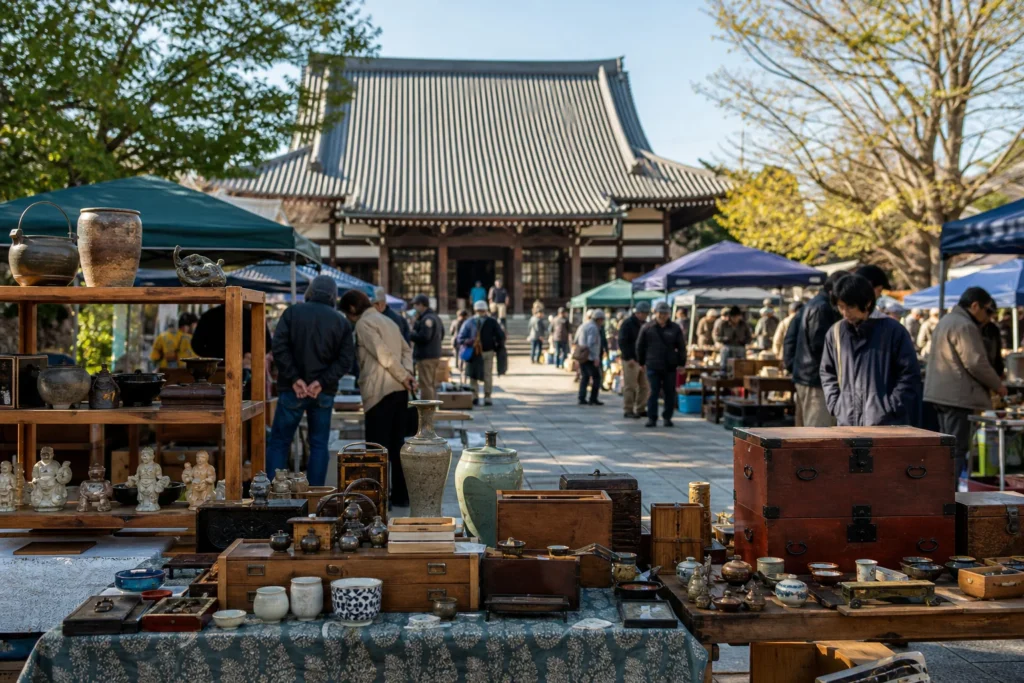

Arai Yakushi Temple – 新井薬師アンティーク・フェア is permanently closed. The market is retained as an editorial archive of the venue and its distinctive character.
Arai Yakushi Temple — formally called Baishoin — once drew antique lovers into one of Nakano-ku's most quietly atmospheric corners. The temple belongs to the Shingon sect of Japanese Buddhism and carries a long devotion to Yakushi Nyorai, the Healing Buddha. Locals have venerated it for centuries, and the grounds hold a particular warmth that few urban markets could replicate.
The temple earned a special reputation as an eye-healing site after legend held that a prayer here cured a severe eye ailment suffered by the daughter of the fifth Tokugawa shogun, Ietada. That story wove itself into the temple's identity, drawing pilgrims and later curious visitors from across the city. The sense of accumulated faith and quiet history made the grounds feel unlike an ordinary market venue.
Once a month, between 50 and 80 stalls spread across the temple precincts, each one offering a window into Japan's material past. Dealers brought out intricately painted porcelain, folded vintage kimonos, lacquerware, old woodblock prints, and smaller everyday objects from the Meiji and Taisho eras. The range suited both serious collectors hunting specific pieces and first-time visitors simply drawn to the texture and colour of old things.
The contrast at the heart of the fair was part of its appeal. Chatter and the shuffle of browsers mingled with incense smoke and the occasional bell from the main hall. Stall holders arranged their wares on low tables and cloth-covered boxes, and the temple's stone lanterns and wooden eaves formed a backdrop that felt genuinely earned rather than staged.
Nakano-ku sits northwest of Shinjuku, and the fair's location gave it an unhurried neighbourhood feel. Araiyakushi-mae Station on the Seibu-Shinjuku Line placed the temple within very easy reach, while Nakano Station on the JR Chuo Line offered a slightly longer approach that passed through lively local streets. Both routes made the fair accessible to visitors coming from central Tokyo.
The stalls attracted seasoned antique hunters alongside people with no particular plan, which gave the event a social ease rarely found at more curated fairs. A grandmother negotiating over a set of lacquer bowls might stand beside a foreign visitor holding up a ceramic figure to the light. That mix of purpose and curiosity was characteristic of the market at its best.
The Antique Fair at Arai Yakushi Temple combined the particular pleasures of outdoor antique browsing with the rarer pleasure of a temple that had its own living history. Visitors left carrying objects, but also a sharper impression of the neighbourhood around Nakano-ku and the quiet rhythms that still define much of this part of the city.
Frequently Asked Questions
Q: What kind of antiques were sold at the Arai Yakushi Temple fair?
A: Stalls typically offered Japanese ceramics and porcelain, vintage kimonos and textiles, lacquerware, woodblock prints, and smaller everyday objects from the Meiji and Taisho eras. The range suited both focused collectors and curious first-timers browsing without a specific piece in mind.
Q: How large was the market, and how often did it run?
A: The fair was a monthly event with between 50 and 80 stalls spread across the temple precincts — mid-sized by Tokyo standards, which gave it a more specialist, unhurried character than the city's larger weekend flea markets.
Q: What is the significance of Arai Yakushi Temple itself?
A: The temple, formally known as Baishoin, belongs to the Shingon sect of Japanese Buddhism and is dedicated to Yakushi Nyorai, the Healing Buddha. It developed a particular reputation as an eye-healing site, rooted in an Edo-period legend connecting a reported miraculous cure to the shogunate family.
Q: Is the antique fair still running?
A: The market is permanently closed. Arai Yakushi Temple itself remains a functioning religious site in Nakano-ku, but the antique fair no longer takes place on its grounds.
Marketplace Highlights







Add a review