

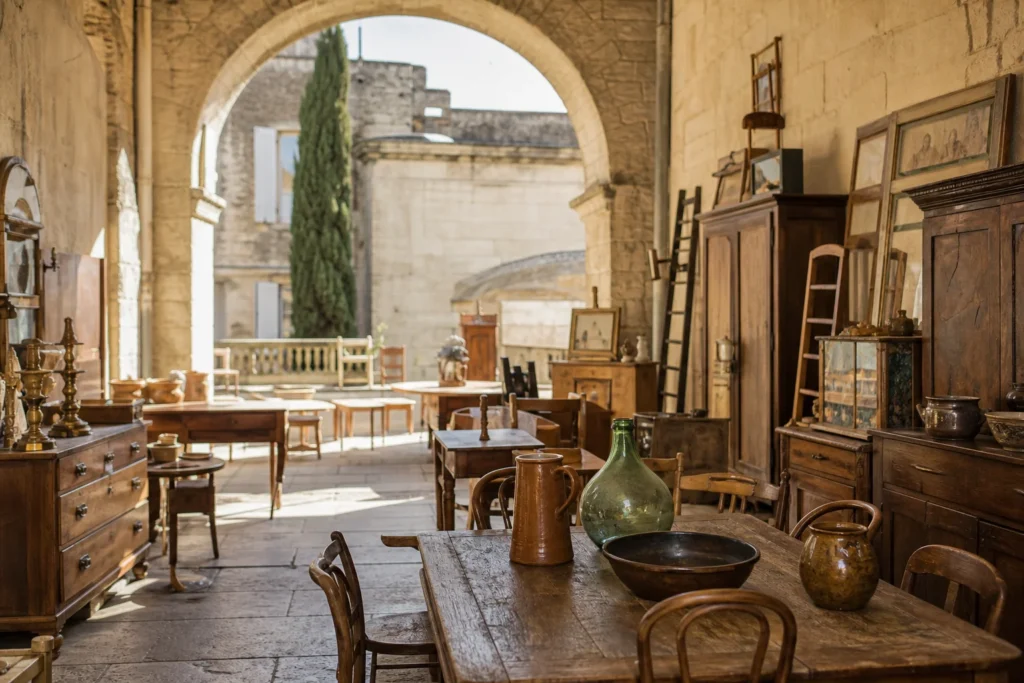

Finding independent vintage dealers online often feels like chasing fragments. One shop has a website. Another posts sporadically on social media. A third exists only as a name on a local directory with no inventory in sight. ATTIC.city exists to close that gap. It works as a search and discovery engine that pulls product listings from participating independent retailers — vintage dealers, antique furniture shops, artisan makers, clothing boutiques, home decor specialists — and makes them searchable in one place by location.
The model is worth understanding clearly, because ATTIC.city is not a marketplace. You browse by geographic area, scroll through stock across multiple independent shops, and then click through directly to the retailer carrying the piece you want. The transaction stays between you and the seller. Think of the platform as a curated local inventory map rather than a shopping cart — one that stays open whenever you want to search, not just on market day.
For vintage and antique hunters, the stock-freshness angle matters more than almost anything else. Small dealers turn over inventory quickly, and their online presence often lags behind what they actually have in the shop. ATTIC.city draws product data from participating stores and refreshes listings on an ongoing basis, so the results reflect current stock rather than a catalogue frozen in time. An availability predictor also gives you a rough read on whether a piece is likely still around before you pick up the phone. Together, these features support the way experienced secondhand shoppers already work: scout online, verify with the seller, then go.
The category range covers a broad collector spread. Mid-century furniture, vintage clothing, artisan ceramics, decorative objects and contemporary independent design all appear depending on which stores are active in your area. Shoppers with a specific era or style in mind can filter rather than clicking through a dozen individual shop websites in sequence.
ATTIC.city applies some quality criteria before accepting businesses into its index. That curatorial layer keeps results leaning toward genuine independents rather than reseller noise. For shoppers, it means the stores you find are more likely to carry the kind of considered, specific stock worth visiting in person.
The platform suits collectors who take local shopping seriously but find the independent retail landscape genuinely hard to navigate in one pass. It narrows a scattered search, surfaces dealers you might not have known were nearby, and hands the transaction back to the seller where it belongs. For anyone who has spent an afternoon clicking between patchy shop websites looking for one good piece, that is a meaningful shortcut.
Frequently Asked Questions
Q: Is ATTIC.city a marketplace where I can buy directly, or does it work differently?
A: ATTIC.city is a search and discovery engine, not a marketplace. You browse stock from independent shops by location, then click through directly to the retailer carrying the piece you want. The transaction happens between you and the seller — ATTIC.city connects you rather than processing the purchase itself.
Q: How current is the stock shown on ATTIC.city?
A: The platform draws product data from participating shops on an ongoing basis rather than publishing a static catalogue, so results are intended to reflect what stores actually have available. An availability predictor also gives you a rough read on whether a specific piece is likely still in stock before you contact the seller to confirm.
Q: What kinds of dealers and categories can I search?
A: The index covers independent vintage dealers, antique furniture shops, artisan makers, clothing boutiques and home decor specialists. Category depth across mid-century furniture, vintage clothing, artisan ceramics, decorative objects and contemporary independent design depends on which stores are active in the area you're searching.
Q: Which cities or countries does ATTIC.city cover?
A: Geographic coverage isn't detailed here — check the ATTIC.city site directly to confirm whether your area is currently served before planning a search around it.
Q: Are all independent shops eligible to appear, or is there some selection process?
A: ATTIC.city applies quality criteria before accepting businesses into its index, which keeps results oriented toward established independents rather than casual resellers. For shoppers, that curatorial layer means the dealers you find are more likely to carry considered, specific stock worth investigating in person.
Marketplace Highlights









Add a review