


Buying antiques online carries a familiar risk: you rarely know whether the dealer behind a listing is a genuine specialist or simply someone with a storage unit and a camera. The British Antique Dealers' Association, known as BADA, exists to remove exactly that uncertainty. Founded in 1918, the association has spent more than a century building a vetting process that puts peer accountability at the centre of the trade. Its online marketplace is the public face of that rigour — a searchable platform where every item traces back to a dealer who has already been assessed by specialists in their own field.
Membership standards are unusually strict by any marketplace measure. Applicants must demonstrate at least three years of active trading history and secure backing from existing BADA members before a formal vote decides their admission. That process filters out generalist or unproven sellers before a single item reaches the platform. Many members hold narrow specialisms — Georgian silver, early cartography, scientific instruments — and carry reputations that extend well beyond the UK. For a collector, that depth of expertise sitting behind each listing is the platform's core value.
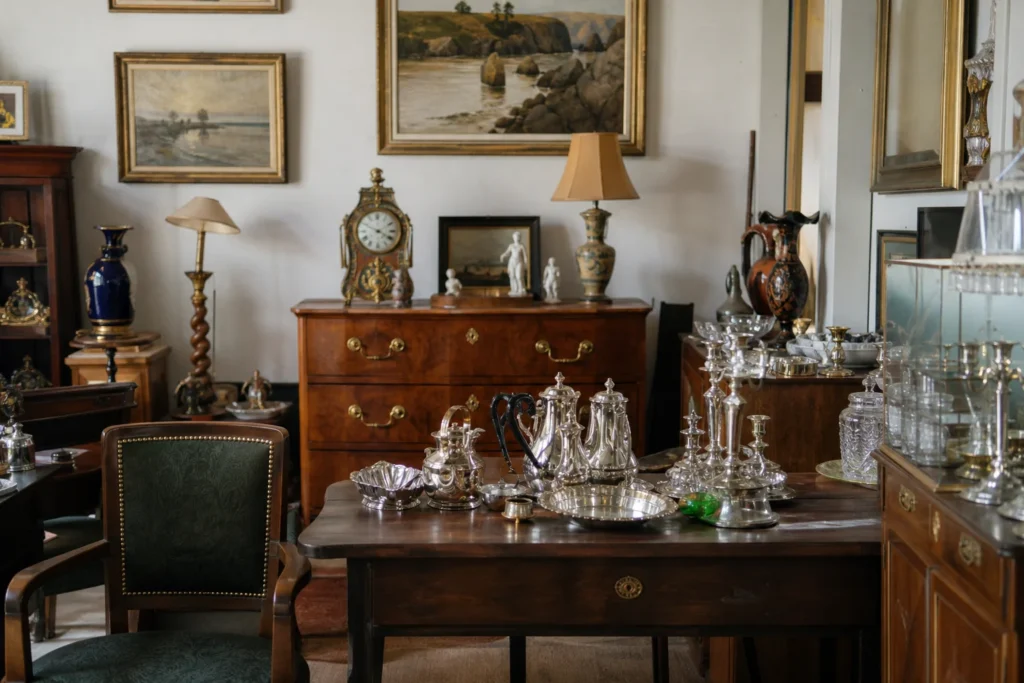
The inventory is broad enough to suit almost any serious collecting interest. At any given moment the platform carries more than 50,000 individual items, with dealers adding new stock regularly. Works on paper — antique maps, prints and posters — sit alongside decorative objects such as silver, clocks and scientific instruments. Furniture, sculpture, carpets and textiles, arms and armour, books and ceramics all appear in meaningful depth. Buyers can search by category or filter by price, which makes the platform practical for collectors working within a defined budget as well as those with open-ended briefs.
Individual item pages carry substantial detail rather than a brief description and a photograph. That level of information supports proper research before any conversation begins. Purchasing works through direct contact with the dealer via the platform — there are no additional fees layered on top of the asking price, and negotiation is entirely possible once a dialogue opens. Experienced antique buyers will recognise that as standard trade practice. Each member also maintains a dedicated profile page where collectors can review their specialism and current stock before making an approach.
BADA functions as an information resource well beyond its commercial role. An events calendar tracks antique fairs and trade events worth noting throughout the year. A stream of editorial features covers specific rare objects, particular periods of design history and introductions to newly admitted members. That content gives the platform a texture that straightforward marketplaces rarely match and gives collectors a genuine reason to return between purchases.
The platform suits buyers who place provenance and authentication above convenience or low price. It is a deliberate alternative to auction aggregators and open online markets, where a lot's authenticity and the seller's knowledge can both remain opaque. For collectors who want to know exactly who they are buying from — and why that dealer's judgement can be trusted — BADA offers something that a broader marketplace simply cannot replicate.
Frequently Asked Questions
Q: What makes BADA different from a general antiques marketplace?
A: Every dealer on the BADA platform has passed a formal vetting process before their first item appears. Applicants need at least three years of active trading history and the backing of existing BADA members before a vote decides their admission. That peer-assessed standard means buyers are dealing with verified specialists, not anonymous sellers, which matters most when authenticity and provenance are at stake.
Q: What kinds of antiques can I find on the platform?
A: The range is genuinely broad. Works on paper — antique maps, prints and posters — sit alongside decorative objects such as silver, clocks and scientific instruments. Furniture, sculpture, ceramics, books, arms and armour, carpets and textiles all appear in meaningful depth. Many BADA members hold narrow specialisms, so the stock tends to reflect real expertise in each category rather than general dealer accumulation.
Q: How does buying through BADA actually work?
A: Purchases are arranged by making direct contact with the individual dealer through the platform. There are no additional platform fees layered on top of the asking price, and negotiation is entirely possible once a conversation opens — a standard practice in the professional trade that experienced collectors will recognise. Each member maintains a dedicated profile page showing their specialism and current stock, which is worth reviewing before making an approach.
Q: Does BADA offer anything useful beyond shopping for antiques?
A: Yes. The platform carries an events calendar covering antique fairs and trade events throughout the year, alongside a running stream of editorial features on specific rare objects, periods of design history and newly admitted members. For collectors who want to build knowledge as well as a collection, that content gives BADA a depth that straightforward marketplaces rarely match.
Marketplace Highlights







Add a review