


Region
Once a year, usually on the first weekend of March or April, the Bath Decorative Antiques Fair opens its doors for three days. Friday and Saturday run from 11:00 to 17:00, and Sunday wraps up at 16:00. That narrow window is the point. This is the kind of event serious collectors mark in the diary months in advance, because missing it means waiting another full year.
The fair has been running since 1989, and that long history shows in the way dealers carry themselves. Many have returned annually across multiple decades. They know the fair's rhythm, they know their regular buyers, and they arrive with stock chosen accordingly. The atmosphere feels professionally settled rather than market-day unpredictable — a quality that comes only from years of accumulated trust between exhibitors and their clientele.
Bath itself earns its place as a setting. The city carries centuries of layered architectural and cultural history, and that backdrop suits a fair that spans an extraordinarily broad period range. Antiques here feel like part of a living collecting culture rather than objects under glass.
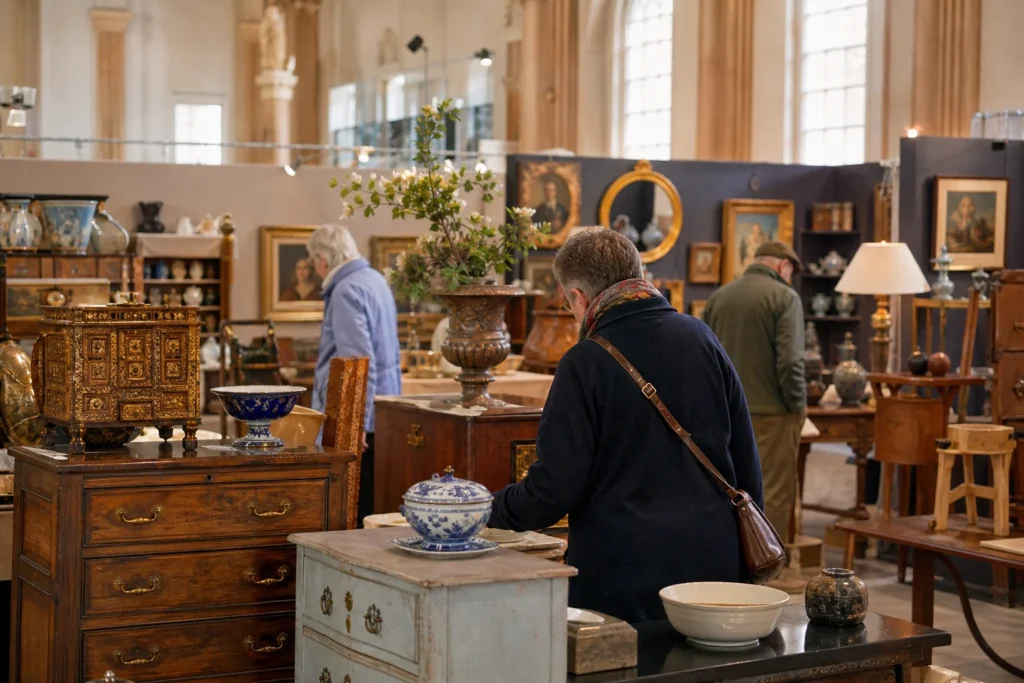
The stock runs from the sixteenth century through to finds from the 1990s, and dealers track current collecting trends closely enough that the mix shifts in emphasis from year to year. Period furniture anchors the fair: expect English Country House pieces, Swedish painted furniture from earlier centuries, and a strong showing of Mid Century and industrial-design objects. Decorative works sit alongside — period portraits, glassware, chinaware, ornamental items and old movie posters. Then there is the vernacular end of the market: crusty iron garden furniture, pub signs, advertising memorabilia, quilts, cushions, tools and everyday household objects. The breadth is real. This is not a fair stretched thin by ambition; it is one with enough exhibitors to fill every category convincingly.
Three days gives visitors genuine breathing room. A first pass through the stands reveals the landscape; a second pass, often on a different day, tends to yield different results. Pieces that felt overpriced on Friday can look more interesting after a full circuit. Patience is an asset here, and the format rewards it.
Professional buyers and collectors with a specific brief should note that a trade preview typically takes place on the Thursday before the fair opens to the public. This gives advance access to the full selection before general admission begins — a meaningful advantage for anyone buying for resale or hunting a particular piece.
The Bath Decorative Antiques Fair suits experienced collectors, trade buyers, and decorative-arts enthusiasts who value concentrated access to specialist dealer knowledge. The five-century period range and the once-a-year format make it especially valuable for anyone with defined collecting interests. If you come with broad curiosity and a willingness to look carefully, this fair tends to deliver.
Frequently Asked Questions
Q: When does the Bath Decorative Antiques Fair take place each year?
A: The fair runs for three days, typically on the first weekend of March or April. Friday and Saturday are open 11:00 to 17:00, and Sunday closes at 16:00. Because it happens just once a year, it is worth confirming exact dates on the organizer's official page well in advance.
Q: Is there early access for trade buyers?
A: Yes. A trade preview typically takes place on the Thursday before the fair opens to the general public, giving dealers and professional buyers first access to the full selection — a practical advantage if you are buying for resale or hunting a specific piece.
Q: What kind of antiques and decorative objects can I expect to find?
A: The range spans roughly the sixteenth century to the 1990s. Period furniture is a strong anchor — English Country House pieces, Swedish painted furniture, and Mid Century and industrial-design objects all feature regularly. Alongside those sit period portraits, glassware, chinaware, old movie posters, and ornamental items, as well as vernacular finds: crusty iron garden furniture, pub signs, advertising memorabilia, quilts, tools, and household objects. Dealers track current collecting trends, so the precise mix shifts from year to year.
Q: Is this fair worth attending if I have a specific piece in mind rather than browsing broadly?
A: The three-day format rewards focused buyers as much as browsers. A first pass maps the landscape; returning on a second day often yields different results, and pieces that felt overpriced early in the fair can look more compelling after a full circuit. For very specific briefs, the Thursday trade preview gives the best window before general admission begins.
Q: How long has the fair been running, and does that affect the quality of exhibitors?
A: The fair traces its roots to 1989, and that long run has shaped its character noticeably. Many dealers have returned year after year across multiple decades — they know the fair's clientele and arrive with stock chosen accordingly, which gives the event a professionally settled atmosphere rather than the unpredictability of a newer market.
Marketplace Highlights









Add a review