


Bazár na hrade Devín is permanently closed. The market is retained as an editorial archive of the venue and its distinctive character.
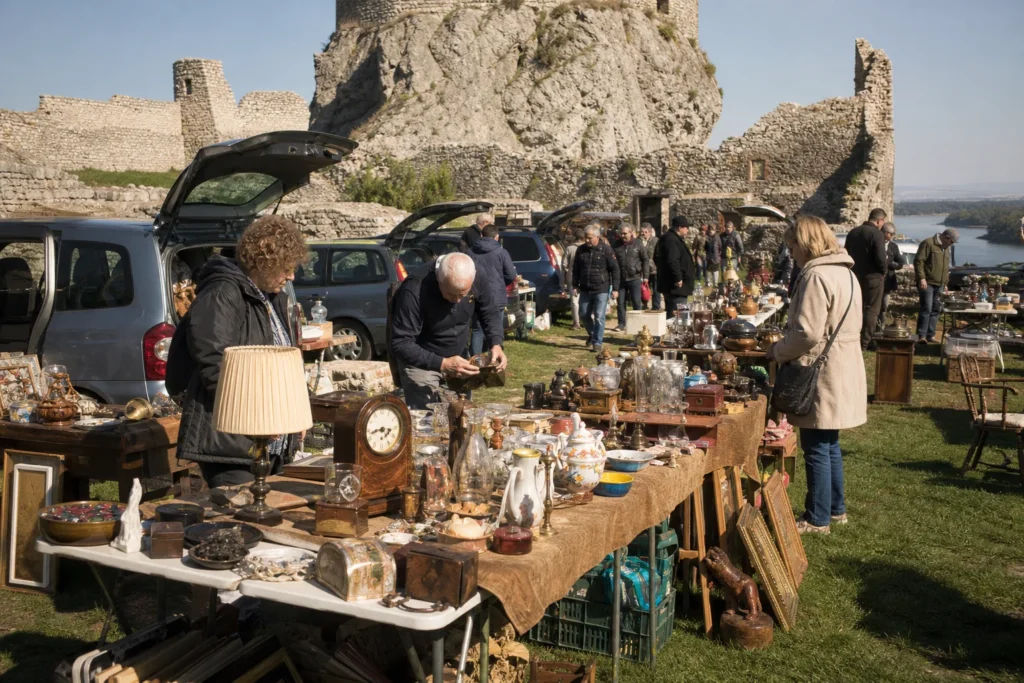
Few flea markets anywhere in Central Europe could claim a setting like this one. Bazár na hrade Devín took place among the stone remnants of a medieval fortress perched on a cliff above the confluence of the Danube and Morava rivers. Folding tables and ground blankets appeared between excavated foundations and crumbling towers, giving the event a quality that no purpose-built market hall could manufacture. The juxtaposition was the point: archaeological debris underfoot, centuries of layered history overhead, and somewhere between the two, a seller unpacking a box of old clocks.
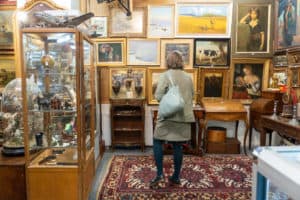
The stall format was refreshingly informal, closer in spirit to a village swap meet than a curated antique fair. Sellers arrived with car boots, folding tables, and blankets spread directly on the ground. Smaller objects — vintage jewellery, ceramic ornaments, and old household curiosities — tended to surface at ground level, while tables carried crockery, books, clocks, and occasional pieces of framed artwork. The informal layout rewarded patient browsers. Negotiation felt natural in that context, and the unpredictable mix of private sellers meant genuine finds surfaced regularly rather than by arrangement.
Admission ran at roughly €4 for adults and €2 for children, and the ticket covered considerably more than the market stalls alone. The same entry gave access to the full castle grounds and the on-site museum, which made the fee genuinely reasonable even on days when the merchandise held little appeal. In practice, this structure shaped the audience. Families could spend hours exploring the ruins independent of the market entirely, and casual visitors absorbed the cultural context alongside any shopping. Dedicated collectors, meanwhile, worked the stalls with the quiet focus the format encouraged.
The programme extended well beyond buying and selling. Medieval re-enactments, historical workshops, and occasional lectures ran alongside the vendor stalls, and children's theatrical performances appeared in the schedule too. The result was a public cultural occasion as much as a commercial one. It drew a broader audience than a conventional collector's market might, and that breadth contributed to the variety of stock on offer. The market ran outdoors, so bad weather could cancel an event entirely, which added a seasonal unpredictability to its character.
What distinguished the venue most was its geopolitical situation. The Morava river marks the boundary between Slovakia and Austria just beyond the castle walls, and the view across the floodplain toward the Austrian side carries the weight of a border that was, for decades, one of the most heavily guarded in Europe. Devín Castle itself accumulated centuries of contested significance long before any flea market arrived. Holding a monthly exchange of household objects in that particular landscape gave the bazár a resonance that was specific to this place and impossible to replicate elsewhere. The setting was the market's most distinctive offer, and it remained so throughout.
Frequently Asked Questions
Q: What kind of market was Bazár na hrade Devín, and what could shoppers expect to find?
A: It was an informal flea market held among the medieval ruins of Devín Castle, with a swap-meet atmosphere rather than the curated feel of an antique fair. Sellers used ground blankets, car boots, and folding tables. Smaller pieces — vintage jewellery, ceramic ornaments, and household curiosities — tended to appear at ground level, while tables carried clocks, crockery, old books, and occasional framed artwork. The unpredictable mix of private sellers meant genuine finds surfaced regularly, and negotiation felt entirely natural in the setting.
Q: Did the market fee cover only the market, or was there more to see?
A: The admission ticket covered the full castle grounds and the on-site museum as well as the market stalls. Historically the fee ran at around €4 for adults and €2 for children, which made it reasonable value even on days when the merchandise held little appeal. In practice this meant families and casual visitors could spend hours exploring the ruins entirely independent of the buying and selling.
Q: Was the market purely a shopping event, or was there a broader programme?
A: The programme extended well beyond commerce. Medieval re-enactments, historical workshops, lectures, and children's theatrical performances ran alongside the vendor stalls, making the day a public cultural occasion as much as a market. That broader appeal contributed to the wide variety of stock, since it drew a more diverse mix of sellers than a specialist collector's fair typically would.
Q: What made the setting at Devín Castle historically significant beyond the market itself?
A: Devín Castle sits on a cliff at the confluence of the Danube and Morava rivers, at the point where Slovakia meets Austria. For decades that border was one of the most tightly controlled in Europe. The view across the floodplain toward the Austrian side gave the site a weight that most flea market venues simply cannot carry, and it added a layer of context to the experience that was impossible to separate from the browsing.
Marketplace Highlights






Add a review