


Brocante de la Roche is permanently closed. The market is retained as an editorial archive of the venue and its distinctive character.
For decades, the defining practice behind Brocante de la Roche was the emptying of French homes. A specialist team would travel to properties across the country, clear the contents, and bring everything back to a single address on the rural outskirts of Augan, a small town in the Morbihan département of central Brittany. Staff cleaned and restored pieces where the work was warranted. What reached the shelves and floor space was generally in better condition than the typical vide-maison haul — and vastly more varied.
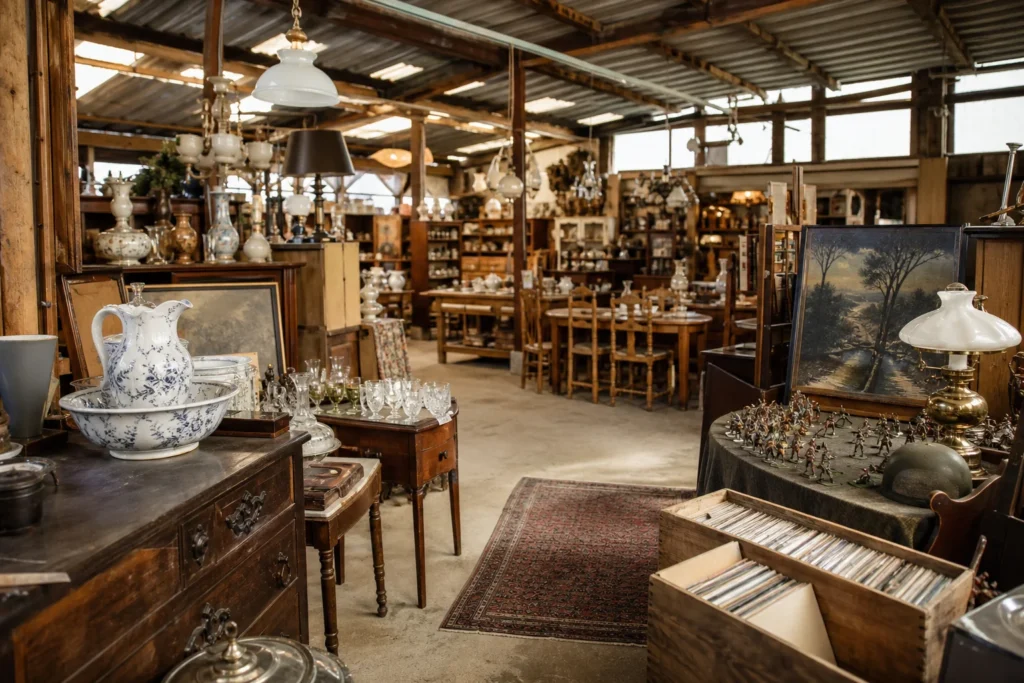
That sourcing model shaped everything about the shop. Because house clearances produce whole households rather than curated selections, the stock resisted easy categorisation. Solid farmhouse furniture dominated the floor — tables, armoires, dressers and chairs with the weight and patina of genuine use. Around and between the larger pieces, decorative objects accumulated: artwork, ornamental ceramics, vintage lighting fixtures and the kind of small finds that collectors describe as serendipitous. The approximately 3,700-square-foot interior held a great deal, and the variety reflected directly the breadth of the homes the team had worked through.
The specialist corners gave the shop its particular depth. Vinyl record collections arrived intact from cleared properties and filled dedicated sections. Vintage books, war memorabilia and collectible toy soldiers appeared regularly enough to draw dedicated collectors rather than casual browsers. These were not incidental curiosities. They reflected the accumulated interests of the households the team had been commissioned to clear, carried into Augan and offered out again.
The interior could seem dense and slightly chaotic at first. That impression usually gave way to something more rewarding once a visitor settled into it. Groupings became apparent. The owner's underlying logic made itself felt. People who arrived for a quick look regularly stayed far longer than they had intended — a reliable sign that the stock rewarded attention rather than demanding it.
The shop suited a particular kind of visitor well: collectors working without a fixed list, dealers sourcing French country furniture, and browsers drawn to the particular pleasure of not knowing what the next corner would produce. The rural Breton setting reinforced that mood. Country lanes, quiet farmhouse architecture and an unmarked building that gave little away from the road — these details added to rather than detracted from the experience. A drive through the Morbihan countryside to reach an address few people mentioned publicly was itself part of the appeal.
What the Friday afternoon window of 15:00 to 18:00 says about the shop's later years remains a matter of record rather than explanation. That narrow schedule, combined with a location well outside any town centre, meant the shop functioned largely on reputation — passed along among serious collectors and regional dealers rather than advertised to passing trade. Brocante de la Roche built its standing not on presentation or visibility but on the depth and unpredictability of what a house-clearance operation, run with care over many years, could quietly accumulate.
Frequently Asked Questions
Q: What made Brocante de la Roche different from a typical French brocante?
A: The shop was built around house clearances rather than dealer sourcing. A specialist team travelled across France emptying private homes and brought the contents back to a single rural address outside Augan, in the Morbihan. Staff cleaned and restored pieces where the work was warranted, which meant stock generally arrived in better condition than a standard vide-maison haul — and reflected the full breadth of the households cleared, not a curated selection.
Q: What kinds of things could you find there?
A: The approximately 3,700-square-foot interior held an unusually wide range. Solid farmhouse furniture — tables, armoires, dressers, chairs — dominated the floor space. Around and between the larger pieces were decorative objects, artwork, vintage lighting fixtures and ornamental ceramics. Specialist sections filled regularly with intact vinyl record collections, vintage books, war memorabilia and collectible toy soldiers, often drawn from the same cleared households that produced the furniture.
Q: What kind of shopper did the shop suit best?
A: Collectors working without a fixed list, dealers sourcing French country pieces and browsers who enjoy not knowing what the next corner will produce. Visitors who arrived for a quick look regularly stayed far longer than planned — a reliable sign that the stock rewarded attention rather than demanding it.
Q: How did the rural Breton setting shape the experience?
A: Augan is a small, quiet town in central Brittany, and the shop sat on the rural outskirts among farmhouse lanes. The building gave little away from the road. The understated setting reinforced the character of the stock: depth and genuine provenance rather than showroom presentation. The drive through the Morbihan countryside was itself considered part of the appeal by the collectors who knew the place.
Marketplace Highlights








Add a review