

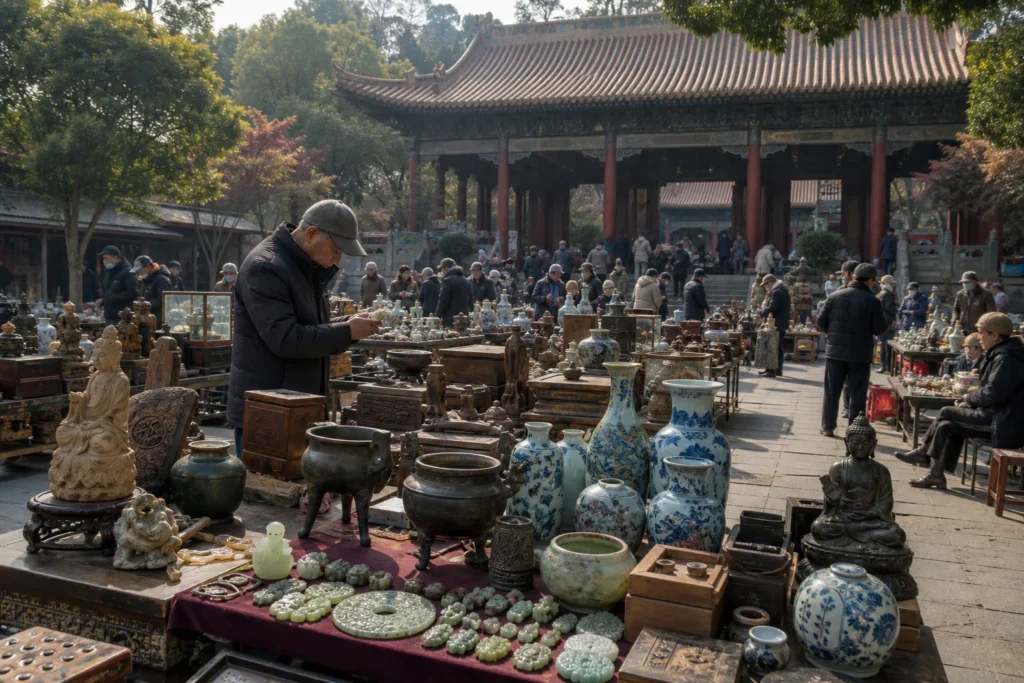

Few antique markets anywhere place you quite like this one. Chao Tian Gong Antique Market unfolds across the forecourt of a Ming-Dynasty Confucius temple in central Nanjing, and from the moment you pass beneath the carved eaves the setting announces itself. Ancient stonework rises above the vendor stalls. The weight of the architecture is not decoration — it is context, and it changes how you look at everything laid out beneath it.
What surfaces here reflects Nanjing's particular depth of history. Ceramic and porcelain pieces appear in quantity and variety, from blue-and-white fragments to more substantial decorative wares. Carved jades and small decorative objects reward close attention and a degree of knowledge — rushing past them means missing the point. Bronze incense burners show up regularly and draw serious interest. Vintage woodcarvings and old military medals round out the picture: objects that carry stories no printed label fully conveys. Individual stalls tend to reward slow, careful looking rather than a quick pass.
The market runs daily, typically from around 08:00 to 17:00, but Saturday and Sunday mornings shift the register noticeably. More vendors arrive on weekends, stock runs deeper, and the lanes fill with buyers who mean business. If you have a specific collecting focus — a dynasty's bronzework, a particular style of porcelain — a weekend morning gives you the widest field to work through. Arrive early for the best choice before the day heats up.
Bargaining is structural here, not incidental. Asking prices open high and sellers expect a counter. Visitors who treat the first figure as negotiable will find the market far more rewarding than those who pay without question. A few phrases of conversational Mandarin accelerate a deal faster than gesturing alone. Dealers notice when a buyer understands what they are looking at, and that recognition moves things forward.
The fakes question deserves straight treatment. Reproductions and outright imitations circulate here alongside genuine period pieces — a reality common to large antique markets across China, not a reason to avoid the place. A price that seems dramatically low for the category on offer is a signal worth heeding. Jade in particular demands healthy scepticism. Buy from knowledge and instinct, not from excitement alone.
Getting here is straightforward by public transport. Daxinggong station on Metro line 3 sits approximately 600 metres away in straight-line distance, and Xinjiekou station on Metro line 2 is roughly the same distance in the other direction. For those already close, bus lines 26, 30 and 46 all stop at Xiangfuying, about 86 metres from the site — a short walk to the temple gate.
Chao Tian Gong suits collectors who arrive with a clear purpose and know enough to navigate the mix of genuine and reproduction stock. It also works well for first-time visitors to Nanjing who want antique shopping that feels genuinely embedded in the city rather than assembled for visitors. The temple forecourt is the distinction no other market in Nanjing can replicate — and it makes even an empty-handed visit feel worth the trip.
Frequently Asked Questions
Q: When is the best time to visit Chao Tian Gong Antique Market?
A: Saturday and Sunday mornings bring the widest range of vendors and the deepest stock. Arriving early gives you the best selection before the lanes fill with serious buyers. The market runs daily, typically from around 08:00 to 17:00, but weekends shift the atmosphere noticeably toward active, competitive trading.
Q: Is bargaining expected, or are prices fixed?
A: Bargaining is structural here — asking prices open high and sellers expect a counter. Accepting the first figure will cost you significantly more than negotiating. A few phrases of conversational Mandarin help considerably; dealers respond well to buyers who signal genuine knowledge of what they are looking at.
Q: How do I get to the market by public transport?
A: Daxinggong station on Metro Line 3 and Xinjiekou station on Metro Line 2 are each roughly 600 metres away. If you are already nearby, bus lines 26, 30 and 46 stop at Xiangfuying, about 86 metres from the temple gate.
Q: Are reproductions a concern, and which categories need the most care?
A: Reproductions and outright fakes circulate alongside genuine period pieces — a reality common to large antique markets across China. Jade pieces deserve particular scepticism. A price that seems dramatically low for the category on offer is usually a signal rather than a bargain. Buying from knowledge and instinct, rather than excitement, serves collectors far better here.
Q: What types of antiques and collectibles typically appear at this market?
A: Ceramic and porcelain pieces appear in quantity and variety, including blue-and-white wares. Carved jades, bronze incense burners, vintage woodcarvings, and old military medals surface regularly. The range rewards slow, careful looking — individual stalls tend to open up considerably more once you slow down and engage rather than scan quickly.
Marketplace Highlights







Add a review