


Region
Few collecting destinations in the American South carry the historical weight of King Street in Charleston. Founded in 1670, Charleston predates the republic by more than a century, and that depth shows up in the merchandise along this stretch in ways that reward careful attention. Serious antique hunters arrive knowing this. Casual visitors leave surprised by how much they want to carry home.
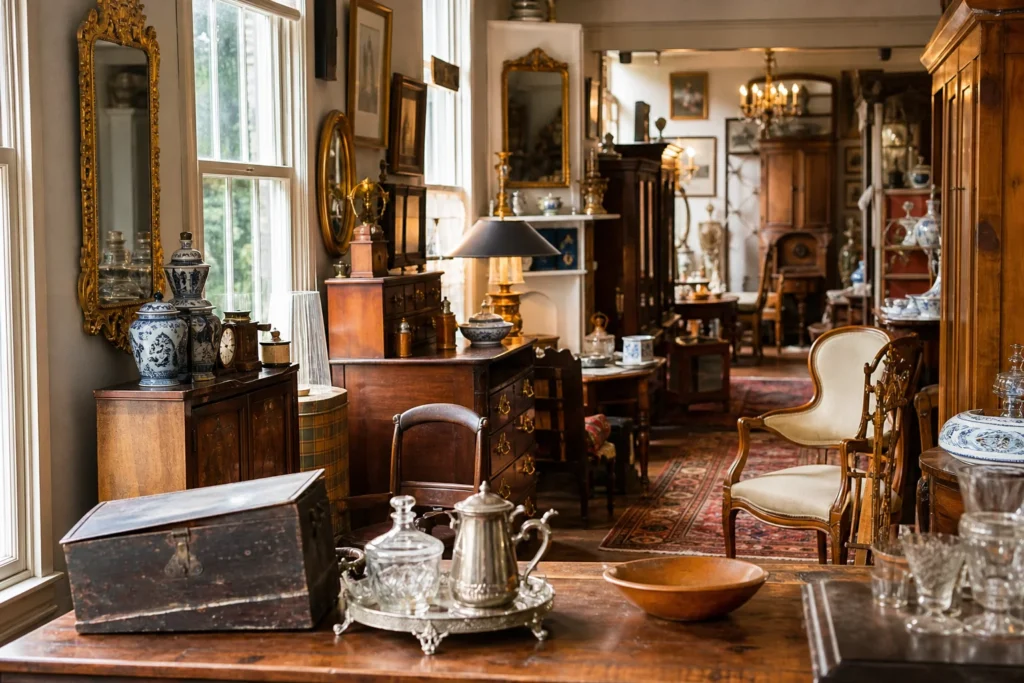
The stock here spans a sweep few single streets can match. Dealers concentrate on 18th and 19th century American furniture, silverware, decorative objects and Civil War memorabilia. Pre-colonial European artifacts surface regularly too, a reflection of Charleston's long history of shifting cultural ownership before independence. That layered provenance gives pieces here a context that generic antique markets rarely offer.
Golden and Associates Antiques tends to stop shoppers early and firmly. The shop trades in statement-scale pieces: ornate chandeliers, grand bed frames and architectural fireplaces that belong in a historic townhouse rather than a storage unit. Buyers with a serious room to furnish and the patience to arrange shipping should start here. The scale of the pieces alone makes the stop worthwhile.
Jacques' Antiques draws a different kind of attention. The shop carries a particularly strong collection of ornate mirrors, and the selection makes choosing genuinely difficult. A well-chosen antique mirror transforms a room faster than almost any other single piece, and the options here reflect real curation rather than accumulated stock. Furniture buyers will find material to consider too, but the mirrors are the reason to linger.
Wynsum Antiques at 648 King Street and John Pope Antiques at 180 King Street both operate as edited showrooms rather than overstuffed warehouses. Each carries a focused range, and the vendors tend to know their stock in depth. Conversation usually reveals pieces not immediately visible on the floor — silverware, Civil War ephemera, textiles, paintings and glassware often emerge once a dealer understands what a visitor is actually after. That kind of shop-owner knowledge turns a purchase into something worth explaining later.
Most dealers along the district open Monday through Saturday, from 11 in the morning until 5 in the afternoon. Sunday visits are generally by appointment, so it is worth contacting individual shops before planning a Sunday trip. Allow more time than seems necessary. The curated character of the showrooms and the scale of some pieces at Golden and Associates mean browsing rarely moves at pace.
Bus route 20 serves King Street directly, with a stop at King Street and Carolina Street approximately 90 metres from the district. A second stop at King Street and Congress Street sits roughly 200 metres further along the same corridor. Charleston's historic core is compact, and many visitors staying nearby reach King Street easily on foot from central accommodation.
Frequently Asked Questions
Q: What kinds of antiques are dealers along King Street most known for?
A: The district concentrates on 18th and 19th century American furniture, silverware, decorative objects and Civil War memorabilia. Pre-colonial European artifacts surface regularly too. Golden and Associates is the place for large statement pieces — chandeliers, grand bed frames and architectural fireplaces — while Jacques' Antiques carries a particularly strong selection of ornate mirrors. Wynsum Antiques and John Pope Antiques run more tightly edited showrooms suited to buyers with a specific period or style in mind.
Q: When are the shops open, and do I need to plan differently for a Sunday visit?
A: Most dealers open Monday through Saturday, 11 in the morning until 5 in the afternoon. Sunday visits are generally by appointment, so contact individual shops before making a Sunday trip part of your plans.
Q: Can I reach the antique district by public transport?
A: Bus route 20 serves King Street directly. The closest stop is at King Street and Carolina Street, roughly 90 metres from the district, with a second stop at King Street and Congress Street about 200 metres further along.
Q: Is this district worth visiting if I'm a serious collector rather than a casual browser?
A: The district is built for both, but serious collectors tend to get the most out of it. Vendors at the curated showrooms know their stock in depth, and conversation often surfaces pieces — silverware, Civil War ephemera, textiles, paintings — not immediately visible on the floor. Charleston's history stretching back to 1670 gives the merchandise a layered provenance that generic antique markets rarely match.
Marketplace Highlights










Add a review