

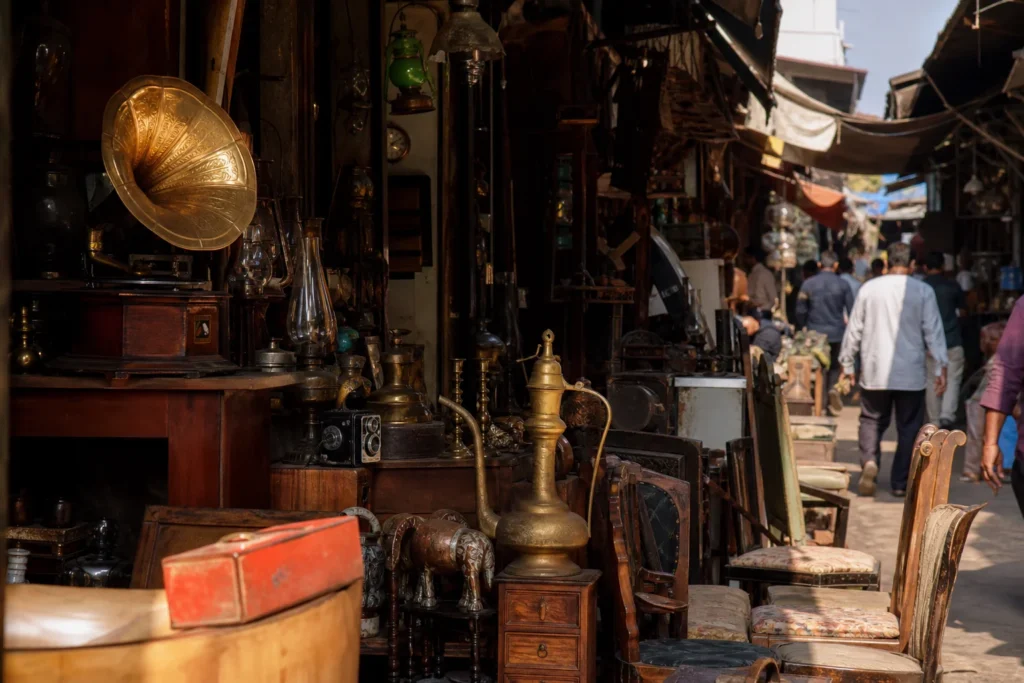

Step onto Mutton Street on any morning between Saturday and Thursday and the sensory overload arrives fast. Brass fittings catch the light in doorways. Stacked gramophones crowd narrow shelves. Old film reels and vintage camera bodies share display cases with model vehicles and miniature instruments. This is Chor Bazaar at its most characteristic — dense, layered and entirely absorbed in the business of objects with a past.
The name itself carries two competing origin stories. One traces it to Shor Bazaar, meaning noisy market, a label that British colonists reportedly mangled until "Shor" became "Chor." The other, more romantic version claims that personal belongings lost during Queen Victoria's visit to Mumbai later surfaced for sale in these very lanes, earning the market its enduring nickname: Chor Bazaar, the thieves' market. Neither story is documented history, but both say something true about the place — that its reputation for goods of uncertain provenance is half the appeal.
Mutton Street forms the commercial backbone of the bazaar. Collectors hunting antique lighting tend to find Al Anwar Lamp Shop at 121 Mutton Street early in their visit. Its selection of vintage lamps is among the broadest in the market. R World, also on Mutton Street, fills a different niche: brass objects, old gramophones and curios that reward slow browsing rather than targeted searching.
Cinema enthusiasts have their own cluster of destinations. Bollywood Bazaar, Mini Market and Poster Stuff all specialise in film memorabilia — original Bollywood posters, lobby cards and promotional material spanning decades of Indian cinema. The Camera House on Mutton Street takes a more eclectic approach, combining vintage cameras with miniature vehicles and musical equipment in a way that suits collectors who resist easy categories.
Shops open Saturday through Thursday, from 11:00 to 19:30. Friday is a full rest day, observed in keeping with the neighbourhood's conservative Muslim character — Chor Bazaar sits close to Bhendi Bazaar, and Friday prayers shape the rhythm of the week here. Individual shops sometimes keep their own hours within this general framework, so flexibility helps.
Practical matters are worth knowing before arrival. The neighbourhood calls for modest dress — loose clothing that covers shoulders and legs is comfortable and respectful. Haggling is not optional; it is the grammar of every transaction. Sellers open high, and confident, patient negotiation almost always brings the price to a more reasonable level. First-time visitors sometimes arrange a guided walk through their hotel, which can make the lanes feel less chaotic and the stalls easier to read.
Chor Bazaar rewards visitors who arrive with curiosity rather than a shopping list. Vintage lighting collectors, Bollywood memorabilia hunters and dedicated browsers of secondhand oddities all find something here that they could not have predicted. What distinguishes it from other Indian antique markets is not scale alone but atmosphere — a genuine, working trading district where the lanes themselves are as interesting as anything on the shelves.
Frequently Asked Questions
Q: When is Chor Bazaar open, and which day should I avoid?
A: Most shops open Saturday through Thursday, roughly 11:00 to 19:30. Friday is a rest day observed across the market in keeping with the neighbourhood's Muslim character — plan your visit on any other day of the week. Individual shops can keep their own hours within this general framework, so some flexibility in your schedule helps.
Q: What kinds of things can I actually find here?
A: Chor Bazaar concentrates a striking range of vintage and antique goods. Antique lighting and brass objects are a strength — Al Anwar Lamp Shop at 121 Mutton Street and R World both specialise here. Bollywood film posters, lobby cards and cinema memorabilia draw a separate crowd, with Bollywood Bazaar, Mini Market and Poster Stuff all focused on that area. The Camera House on Mutton Street takes a more eclectic approach, mixing vintage cameras, miniature vehicles and musical equipment.
Q: Is haggling expected, or are prices fixed?
A: Haggling is standard practice throughout Chor Bazaar — sellers routinely open well above what they expect to accept. Patient, confident negotiation almost always brings the price down. Tourist footfall is significant, so persistence matters more than speed.
Q: Is there anything practical I should know before visiting?
A: Modest dress is both respectful and practical here — loose clothing covering shoulders and legs suits the conservative neighbourhood surrounding the market. Mutton Street is the main commercial spine and a reliable place to start. First-time visitors sometimes arrange a guided walk through their hotel concierge, which can help make the dense network of lanes easier to navigate.
Marketplace Highlights







Add a review