


Region
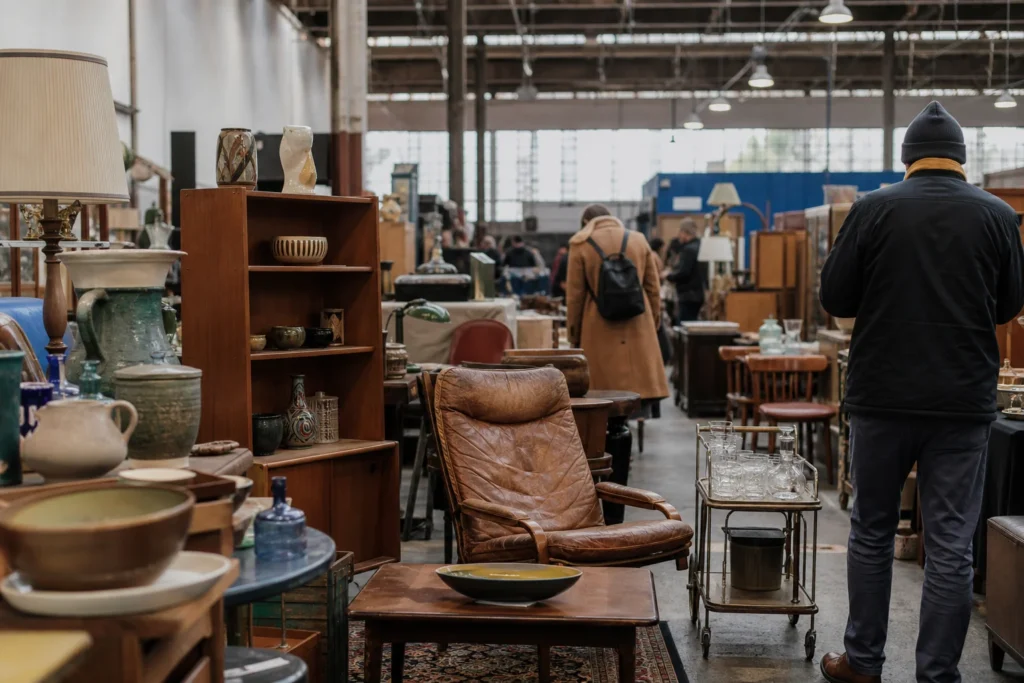
Walk into Den Blå Hal on a Saturday morning and the first thing you notice is scale. The warehouse in Kastrup, on the southern edge of Amager island, spreads across roughly 2,000 square metres of stacked, crowded, wonderfully dense market space. Ceiling-high shelves carry glassware. Aisles narrow between furniture and folded textiles. The building feels like it has been accumulating things for decades, because in many ways it has.
The named objects are what give Den Blå Hal its specific identity. One room holds a concentrated display of antique Royal Copenhagen porcelain — the kind of dedicated section that most Copenhagen flea markets cannot pull together. Elsewhere, Raadvad Danish bread slicers from as far back as the 1880s sit alongside Bauhaus wall clocks and vintage Danish design furniture. Letterpress drawers, weathered and satisfyingly heavy, stack against walls near aisles of ceramics. The market's depth in Scandinavian domestic objects sets it apart from a general secondhand hall.
Record hunters tend to find their way to the vinyl section, which draws a steady crowd on weekend mornings. Old hat boxes, cast iron bottle openers, oriental rugs and vintage clothing fill in the gaps between the bigger-ticket furniture pieces. Around a hundred traders operate here in total, each with a distinct area of stock. The range rewards both focused collectors and visitors who arrive without a shopping list.
Pricing sits at the fair end of the market spectrum, and most traders are genuinely open to negotiation. What makes Den Blå Hal feel different from a more transactional antique centre is what happens after you make an offer. Vendors know their stock well. A reasonable counter-offer can turn into a real conversation about the history of a piece. That exchange is part of the experience, not a sidebar to it.
Den Blå Hal opens every Saturday and Sunday from 10:00 to 16:00. The year-round schedule is one of its most practical advantages. Copenhagen's outdoor flea markets close for the colder months, making indoor alternatives rare and valuable from autumn through winter. Den Blå Hal stays open whatever the season. A small café operates inside the market and gives visitors a natural pause point between stalls. Entry carries a modest fee in Danish kroner.
The nearest bus stop, Tømmerup, sits less than 50 metres from the market and serves bus lines 35 and 250S. Two further stops — Hjallerup Allé (bus 34) and Høgsbrovej (bus lines 34 and 35) — are each approximately 300 metres away. Copenhagen's wider metro network connects to other parts of Amager, making the journey straightforward from the city centre.
Den Blå Hal occupies a specific position in Copenhagen's market landscape. The Royal Copenhagen room, the depth of Danish design objects across multiple eras, and the reliable weekend schedule throughout the year give it a collector-focused identity that is genuinely hard to find under one roof in this city.
Frequently Asked Questions
Q: When is Den Blå Hal open, and does it close for winter?
A: Den Blå Hal runs every Saturday and Sunday from 10:00 to 16:00, year-round. That consistent winter schedule is genuinely useful — most outdoor Copenhagen flea markets close from late autumn through early spring, making this warehouse market one of the few reliable options during the colder months.
Q: Is there a particular area of the market worth heading to first for serious collectors?
A: The Royal Copenhagen porcelain room is a strong early stop — it holds a concentration of antique pieces that most Copenhagen markets cannot match. From there, the Danish design furniture aisles and the dedicated vinyl section both draw focused collectors. The Raadvad bread slicer displays, with examples reportedly dating to the 1880s, are worth finding if Scandinavian domestic objects are your interest.
Q: Can you negotiate on prices, and how does that tend to work here?
A: Most traders are open to negotiation, and at Den Blå Hal a reasonable offer often opens into a proper conversation. Vendors tend to know the history of their stock well, so a counter-offer is as likely to prompt a story about a piece as a quick agreement. Patience and genuine curiosity tend to work better than hard bargaining.
Q: How do you get there by public transport?
A: The nearest bus stop, Tømmerup, is less than 50 metres from the market and is served by bus lines 35 and 250S. Two further stops — Hjallerup Allé (bus 34) and Høgsbrovej (bus lines 34 and 35) — are each around 300 metres away. Check current timetables before you travel, as schedules can change.
Q: Is there somewhere to take a break inside the market?
A: A small café operates inside Den Blå Hal, which makes it easy to pause between stalls without leaving the building. Given that the market covers around 2,000 square metres with roughly a hundred traders, most visitors find a mid-session stop useful.
Marketplace Highlights








Add a review