


Region
Every August, the small river town of Oronoco, Minnesota, earns a reputation far beyond its size. Gold Rush Days takes its name from a real event: in 1857, prospectors found gold along the Zumbro River here, sparking a brief Minnesota gold rush. When the community revived that story in 1972 — reportedly with Earl Berg among those who helped establish the gathering — they gave it a name that stuck. More than fifty years on, the event has grown into one of the Midwest's most anticipated annual antique fairs.
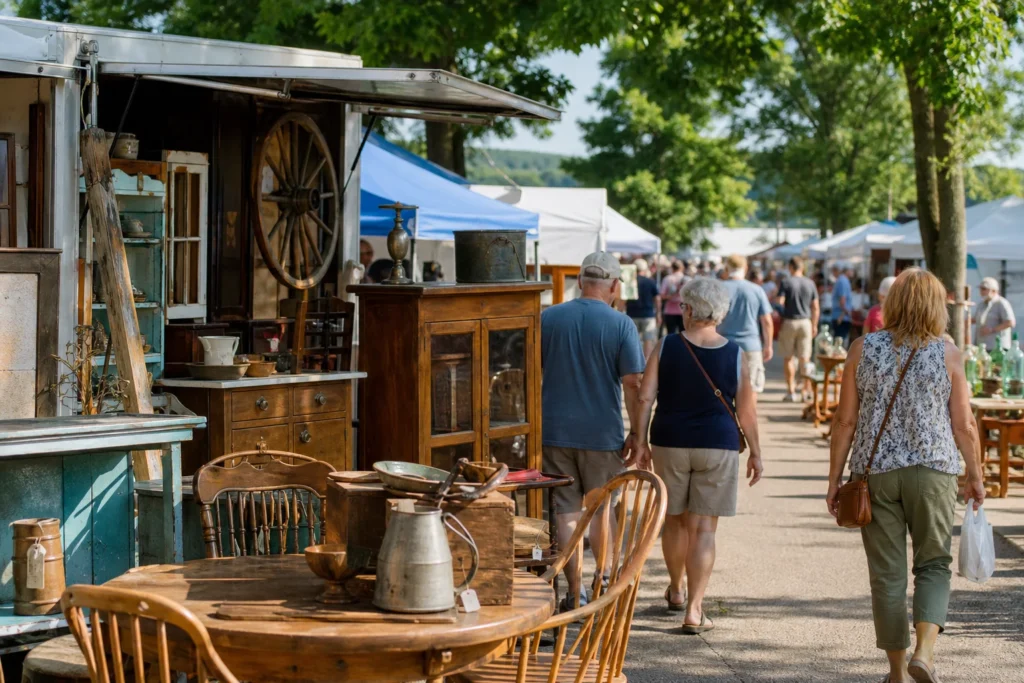
The market runs on the third weekend in August, opening Friday through Sunday from 07:00. Friday and Saturday run until 18:00; Sunday wraps earlier, at 14:00, so early risers get the best of the final morning. The scale is remarkable for a town this size. Reportedly around a thousand vendors fill the downtown streets, transforming Oronoco into a sprawling open-air market for the entire weekend.
What vendors bring is genuinely wide-ranging. Antique furniture anchors many stalls, from painted farmhouse pieces to heavier Victorian hardwood. Cast iron, bronze, silverware and decorative glassware draw the collectors who arrive with lists. Vintage clothing and linens attract a younger crowd hunting wearable finds. Decorative lighting, enamel signs, handcrafted goods, original artwork and toys fill the gaps between. The spread rewards both focused hunters and people who simply enjoy looking.
The atmosphere is closer to a town celebration than a trade fair. Food stalls run alongside the vendor rows, and live music carries across the streets through much of the day. Volunteers drive much of the organisation, and proceeds benefit local charities — which gives the whole thing a civic warmth that larger commercial shows rarely manage. It is common to spend a long stretch of time at a single stall, deep in conversation with a dealer, and leave carrying something you had no intention of buying.
Gold Rush Days suits a broad range of visitors. Serious collectors arrive at opening to work the rows methodically. Families come for the festival energy. Vintage textile and clothing enthusiasts find strong representation across multiple stalls. Anyone willing to dig and wander is likely to go home with something.
Oronoco sits just north of Rochester, making it a practical day trip from the Twin Cities or anywhere in the wider Upper Midwest. Most visitors reach the event by car, given the rural setting. The nearest recorded public transport option is the 75 St Park and Ride, served by bus line 550, roughly 7 km away as the crow flies — useful context, but the majority of attendees drive directly into town and park for the day.
Frequently Asked Questions
Q: When does Gold Rush Days take place, and what are the hours?
A: The event runs on the third weekend in August, Friday through Sunday, opening at 07:00 each day. Friday and Saturday close at 18:00. Sunday closes early at 14:00, so if you're planning to attend on the final day, arrive at opening to make the most of it.
Q: What kind of antiques and vintage goods can shoppers expect to find?
A: The range is genuinely broad. Heavy antique furniture, cast iron and vintage automobiles anchor the serious collector end. Glassware, silverware, decorative lighting and enamel signs draw interiors hunters. Vintage clothing, linens and textiles attract fashion browsers, while handcrafted goods, toys and original artwork fill in the gaps. The same stretch of downtown can yield a pressed-glass pitcher and a mid-century floor lamp within a few steps of each other.
Q: How large is the market, and how long should I plan to spend there?
A: Around a thousand vendors reportedly spread across Oronoco's downtown streets, effectively filling the entire town for the weekend. A full day is a reasonable minimum if you want to cover the ground properly; serious collectors often return on a second day.
Q: Is Gold Rush Days purely a buying event, or is there more going on?
A: There's a genuine festival atmosphere alongside the trading. Food stalls and live music run throughout the day, and volunteers power much of the organisation, with proceeds going to local charities. It draws both methodical collectors who work the rows early and visitors who come as much for the community energy as the finds.
Q: How do most visitors get to Oronoco?
A: Driving is the practical choice for most attendees. Oronoco is a small rural town just north of Rochester in Olmsted County, making it a straightforward day trip from Rochester or the Twin Cities. Street parking fills up, so arriving early is worthwhile on all three days.









Add a review