


Region
Edgewater Antique Mall is permanently closed. The venue is retained as an editorial archive of the venue and its distinctive character.
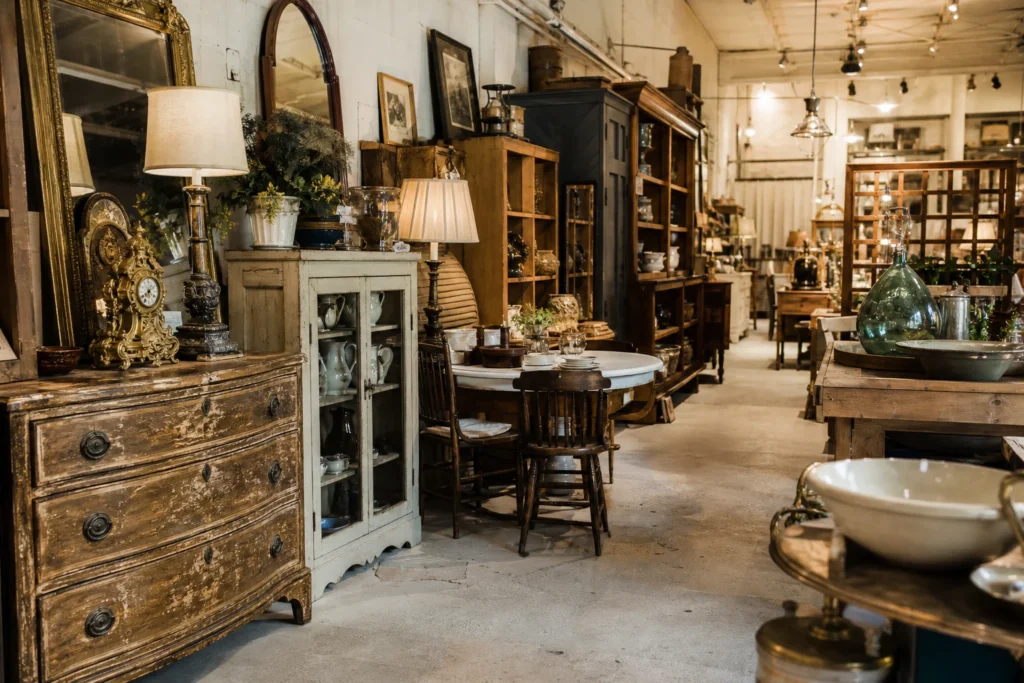
Stepping into Edgewater Antique Mall felt less like entering a shop and more like wandering into a well-stocked bazaar. Tables appeared around every corner, each one loaded with objects from a different decade, a different taste, a different life. The multi-dealer format gave the space a restless, exploratory energy that conventional antique stores rarely managed to produce.
The strongest editorial thread running through the mall was mid-century American domestic material. Furnishings, decorative objects, vintage curtains and homeware from the post-war decades filled booth after booth. These were the kinds of pieces that defined a particular era of confident, abundant American interior life — solid, purposeful and often beautifully made. Serious collectors came for the decorative arts and the 20th-century furniture. Casual browsers found plenty to linger over in the kitsch corners and industrial vintage sections, where the mood was lighter and the price points more accessible.
The range of dealers meant an unusually wide spread of expertise under one roof. Staff and traders knew their stock well, and that knowledge was genuine — questions about provenance, period or style tended to draw real answers rather than educated guesses. Pricing reflected the quality of the goods on offer. Most traders held their prices firm, which made the mall feel more like a curated retail destination than a negotiating arena. That was, in its way, a mark of confidence in what was being sold.
Browsing Edgewater Antique Mall rewarded patience and an open mind. Visitors who arrived looking for one specific object sometimes left empty-handed. Those who gave themselves over to the process — inspecting unfamiliar things, doubling back, spending time — tended to find something they had not expected to want. Half a day was a reasonable amount of time to give the place, and even then, corners remained unexplored.
Admission was free, which occasionally surprised first-time visitors. The atmosphere carried a flea-market energy, with its overlapping displays and the sense that fresh stock might appear around the next turn. In practice, this was a fixed-address indoor retail space with consistent, vetted merchandise. The market feel was a feature of the layout, not of the business model.
Clothing barely figured here. Edgewater Antique Mall was, at its core, a homeware and furniture destination — a place to find curtains with history, a lamp from a specific decade, a chair that looked as though it had been waiting for the right room. For anyone hunting Chicago's North Side for mid-century domestic character, it was one of the more rewarding addresses the city had to offer.
Frequently Asked Questions
Q: What type of antiques and vintage goods was Edgewater Antique Mall best known for?
A: The mall built its strongest reputation around mid-century American domestic material — post-war furnishings, decorative objects, vintage curtains and homeware from the 1950s through 1970s. Alongside that core, it carried kitsch collectibles, industrial vintage pieces and 20th-century furniture across a wide range of price points.
Q: Was Edgewater Antique Mall a flea market or a fixed retail space?
A: It was a fixed indoor retail address, not a flea market. Admission was free, and the merchandise was consistent and vetted. The market-like atmosphere came from the layout — tables appearing around every corner, dealers side by side, stock from different eras overlapping — rather than from any open-air or rotating-vendor format.
Q: How did pricing and negotiation typically work there?
A: Most dealers held their prices firm and were not generally open to negotiation. Pricing reflected the quality of the stock, and the mall operated more as a curated retail destination than a haggling environment.
Q: How much time did a visit typically require?
A: Half a day was the practical minimum to do the space justice. The multi-dealer layout meant corners remained unexplored even after extended browsing, and visitors who gave themselves time to wander rather than search for a single item tended to get the most from the experience.
Q: Did Edgewater Antique Mall carry vintage clothing?
A: Clothing was not a meaningful part of the offer. The mall was primarily a homeware and furniture destination — the place to look for period curtains, decorative objects, lamps and chairs rather than apparel.
Marketplace Highlights








Christina
7th October 2021 at 07:03Out of business!