


Region
Edinburgh Antiques, Vintage & Collectors Fair is permanently closed. The event is retained as an editorial archive of the venue and its distinctive character.
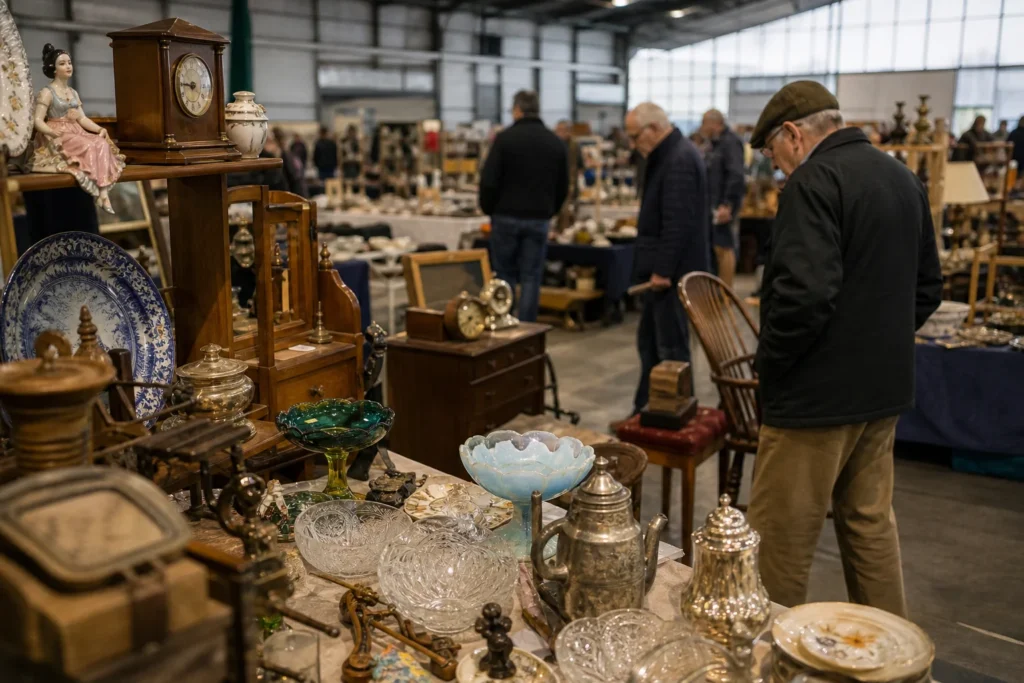
The Edinburgh Antiques, Vintage & Collectors Fair was one of Scotland's most substantial trading events of its kind. Held quarterly at the Royal Highland Centre, it drew dealers and collectors from across Scotland and well beyond. The sheer footprint of the venue gave the fair a scale that set it apart. This was not a casual car-boot affair. It operated as a serious marketplace where genuine stock changed hands between knowledgeable people, and where the rhythm of a quarterly calendar gave each edition a sense of occasion.
The merchandise that filled the stands was broad without feeling unfocused. Decorative antiques anchored much of the floor: glassware, china and vintage jewellery appeared in quantity, with quality varying usefully from affordable entry points to pieces that drew experienced eyes and careful examination. Fashion and accessories formed a strong parallel strand, with vintage clothing and handbags drawing a different but equally engaged crowd. Furniture, toys and a shifting roster of collectibles completed the picture. What made the mix genuinely interesting was the combination of specialist traders — those who dealt exclusively in a defined category — and generalist vendors whose tables held the kind of unpredictable accumulation that rewards patient browsing. That combination meant no two editions felt identical.
Perhaps the clearest signal of the fair's seriousness as a trading event was its early-access ticket structure. The fair offered a premium early-entry option that allowed buyers onto the floor before general admission opened. In competitive collector categories, this was not a minor convenience. It reflected the calibre of material the fair attracted and the appetite of the community that came for it. By the time standard opening began, some of the most sought-after pieces had already moved. Alongside this, the negotiating culture at the fair was well understood by regulars. Prices were not fixed, and a measured offer — particularly later in the day, when dealers weighed what they did not want to reload into their vans — could land well.
The Royal Highland Centre's position near Edinburgh Airport made the fair accessible to visitors arriving by air from elsewhere in the UK and beyond. A complimentary bus service ran from Edinburgh city centre on fair days, offering a practical route in for those without a car. Free on-site parking served drivers, and an ATM operated within the venue for anyone needing cash — useful given that card acceptance varied from stall to stall. The entirely indoor layout also insulated the event from Scotland's reliably uncertain weather.
As a quarterly fixture, the Edinburgh Antiques, Vintage & Collectors Fair built a community around it — dealers who returned each edition, collectors who planned their diaries around its rhythm, and browsers who came for the atmosphere as much as the finds. That consistent character, rather than any single spectacular lot, was what gave the fair its place on the Scottish antiques calendar.
Frequently Asked Questions
Q: What kind of fair was the Edinburgh Antiques, Vintage & Collectors Fair?
A: It was a serious trading event rather than a casual market — held quarterly at the Royal Highland Centre and drawing specialist dealers and collectors from across Scotland and further afield. The scale of the venue, the calibre of stock, and the early-access ticket structure all reflected its standing as one of the more substantial antiques fairs in Scotland.
Q: What kinds of items typically appeared at the fair?
A: The floor covered decorative antiques including glassware, china and vintage jewellery, alongside vintage clothing, handbags and fashion accessories. Furniture, toys and a rotating roster of collectibles filled out the mix. The combination of specialist traders focused on defined categories and generalist vendors with unpredictable accumulations meant no two editions were identical.
Q: What was the early-access ticket, and was it worth it for serious collectors?
A: The fair offered a premium early-entry option that allowed buyers onto the floor before general admission opened. In competitive collecting categories this mattered considerably — by the time standard opening began, some of the most sought-after pieces had already changed hands. For anyone with a specific quarry in mind, the early slot was widely regarded as worth the additional cost.
Q: Was negotiating on price normal at this fair?
A: Yes. Haggling was an understood part of the culture. Prices were not fixed, and a measured, polite offer was generally well received — particularly later in the day, when dealers were weighing what they preferred not to reload for the journey home.
Q: How did visitors without a car reach the Royal Highland Centre on fair days?
A: A complimentary bus service ran from Edinburgh city centre to the venue on fair days. The Royal Highland Centre also sat close to Edinburgh Airport, which made the fair accessible for visitors arriving from elsewhere in the UK. Free parking was available on site for those who drove, and an ATM operated within the venue — useful given that card acceptance varied between stalls.
Marketplace Highlights







Add a review