

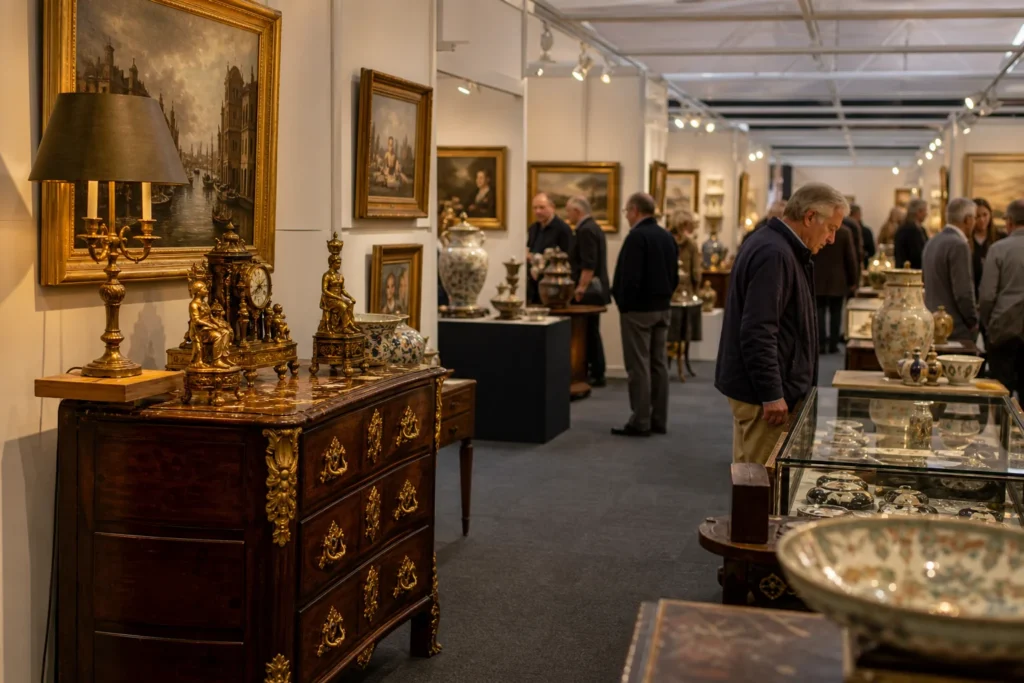

Eurantica is permanently closed. The market is retained as an editorial archive of the venue and its distinctive character.
At its best, Eurantica offered something that open markets and general antiques fairs rarely could: the assurance that every object on the floor had been examined before visitors arrived. A team of specialist experts reviewed each piece for provenance and authenticity during a pre-opening authentication process. Nothing reached the stands without passing that scrutiny. For collectors, that detail changed the character of the event entirely — buying here carried an institutional confidence that browsing a weekend brocante simply could not match.
The fair traced its origins to 1977, building steadily into one of Belgium's most serious annual showcases for fine art and antiques. Its scale was considerable, drawing more than a hundred dealers in a typical edition. What distinguished the exhibitor base was its reach: dealers arrived from across Europe and beyond, bringing individual works they had researched rather than catalogue stock pulled from a warehouse. Previously unseen pieces surfaced at Eurantica with genuine regularity, which gave returning collectors a strong incentive to come back each year.
The merchandise ranged widely but held together coherently. Classical European decorative arts formed the core — furniture, silverware, tapestries, bronzes, ceramics and porcelain from across the centuries. Fine and graphic arts ran alongside, with paintings, sculpture, icons and engravings all represented. The fair also reached into more specialist and cross-cultural territory: coins, clocks, ancient weapons, ethnographic objects and Oriental art each had their place. Twentieth-century design sat beside the classical programme, which made the fair useful for interior designers and serious collectors in equal measure.
The atmosphere inside matched the calibre of the exhibits. Stands were well lit and thoughtfully laid out. The mood was calm and focused rather than crowded or competitive — a place for looking carefully, asking considered questions and making unhurried decisions. That tone suited the audience Eurantica consistently attracted: buyers who arrived prepared and knew what they were looking for.
Brussels gave the fair a natural home. The city has long supported one of Europe's most active fine art and antiques calendars, and Eurantica occupied a settled position within that wider season. International collectors already in the city for other events could slot it into their circuit without difficulty. The fair's late-winter to early-spring window placed it logically within that broader schedule.
Eurantica earned its reputation through consistency: consistent authentication standards, consistent international calibre and a consistent commitment to genuine quality over volume. Its founding decade, its rigorous vetting process and its breadth of categories gave it a distinct identity within the Belgian fine art calendar — one that collectors and dealers working in this field are unlikely to have forgotten.
Frequently Asked Questions
Q: What made Eurantica different from a general antiques fair or open market?
A: Every object was reviewed by a team of specialist experts before the fair opened to the public. Dealers had to meet a rigorous authentication standard — covering provenance and authenticity — before anything reached the stands. For collectors, that pre-opening scrutiny gave purchases a level of institutional confidence that a weekend brocante or general antiques market simply could not offer.
Q: What kinds of objects and works did Eurantica typically show?
A: The range was broad but coherent. Classical European decorative arts formed the core — furniture, silverware, ceramics, tapestries and bronzes — alongside paintings, sculpture, engravings and icons. Specialist categories included coins, clocks, ancient weapons, ethnographic objects and Oriental art. Twentieth-century design also had a place, which made the fair useful for interior designers as well as dedicated collectors.
Q: How large was the fair, and where did the dealers come from?
A: A typical edition drew more than a hundred exhibitors. Dealers came from across Europe and beyond, arriving with individually researched works rather than catalogue stock. Previously unseen pieces surfaced at Eurantica with genuine regularity, which gave returning collectors a strong reason to come back each year.
Q: Is Eurantica still running?
A: Eurantica is permanently closed. The market is retained as an editorial archive of the fair and its character. Check the broader Brussels fine art and antiques calendar if you are looking for comparable events in the city.
Marketplace Highlights







Add a review