


Region
Exeter Matford Antique and Collectors Fair is permanently closed. The event is retained as an editorial archive of the venue and its distinctive character.
On a Saturday morning at the Matford Centre, the car park would fill early. Dealers from across Devon, Cornwall and the wider southwest arrived with loaded vans, and the indoor halls quickly took on that particular atmosphere — part warehouse, part drawing room — that only a well-stocked antiques fair can produce. The Exeter Matford Antique and Collectors Fair earned its place firmly on the regional collector's calendar by combining genuine variety with a format that rewarded those who tracked the dates and arrived before the serious browsing began.
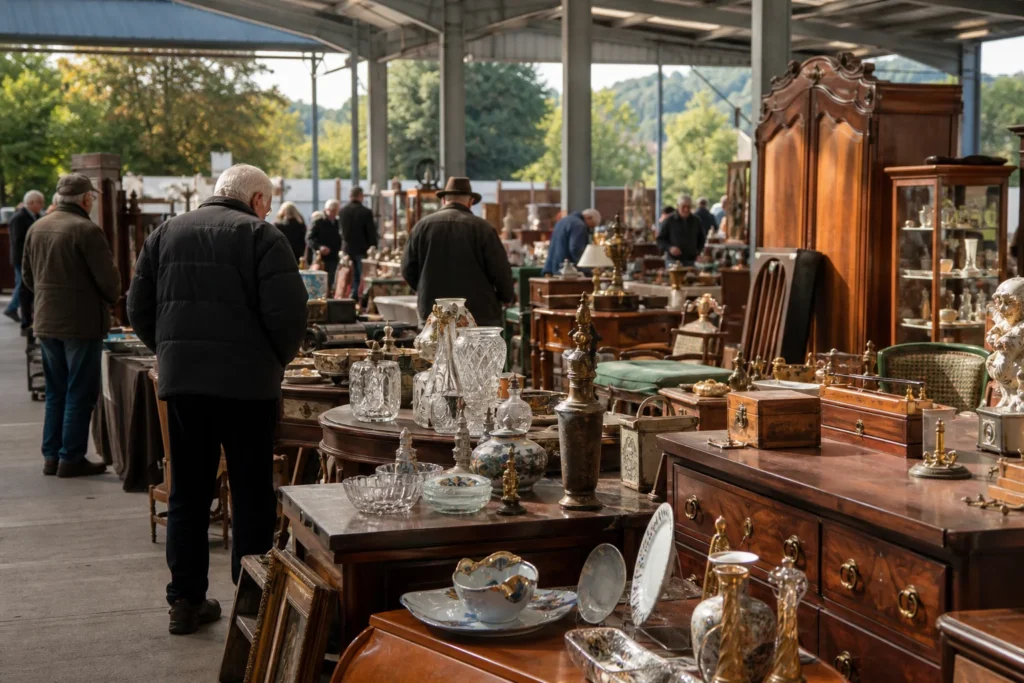
Furniture gave the fair much of its physical presence. Dining chairs, writing desks and decorative cabinets occupied the floor space in numbers that few comparable events in the southwest could match. Larger pieces — wardrobes, sideboards, occasional tables — often made their way out to the external stalls, where the open-air section gave the event a more relaxed, market-like feel. Moving between the two zones shifted the experience noticeably. Indoors, the atmosphere was denser and better suited to fragile or smaller pieces. Outside, the scale opened up, and the browsing had a different pace altogether.
Smaller treasures filled the indoor tables in considerable depth. Crystal glassware caught the light alongside rows of clocks, ornamental vases and china. Jewellery cases sat beside stacks of old artwork and framed signage. Textiles, collectibles and the occasional genuinely obscure object gave each stall its own character, and a full circuit of the entire fair could absorb most of a day without effort. The stock ranged widely enough to interest dedicated collectors hunting specific categories and casual browsers drawn in simply by curiosity.
The periodic Saturday schedule shaped the culture of the fair in a particular way. Because it did not run weekly, each event carried a slightly heightened energy. Regulars knew the dates. Early arrivals moved with purpose. The best pieces — the writing desk at a fair price, the overlooked set of glassware — rarely waited long. Dealers generally welcomed a conversation about price, and a confident, well-informed offer was part of how business got done. That negotiating culture gave the fair a human texture that static retail could never quite replicate.
Catering on site meant visitors rarely needed to leave mid-browse. Hot food, drinks and snacks kept the day self-contained. Exeter itself added a sense of occasion: the cathedral city gave the whole event a backdrop that felt appropriate for a fair of its range and character. The Matford Centre sat within easy reach of the wider region, drawing visitors from well beyond Devon and cementing the fair's reputation as a reliable fixture in the southwest antiques calendar.
For those who knew it, the fair represented a particular kind of collecting experience: periodic enough to feel like an event, varied enough to surprise on every visit.
Frequently Asked Questions
Q: Is the Exeter Matford Antique and Collectors Fair still running?
A: No. The Exeter Matford Antique and Collectors Fair at the Matford Centre in Exeter is permanently closed. The fair no longer holds events.
Q: What kinds of antiques and collectibles did the fair typically offer?
A: The fair covered a wide range. Furniture was a strong point — dining chairs, writing desks, decorative cabinets and larger pieces such as sideboards and wardrobes. Indoor stalls carried crystal glassware, clocks, china, ornamental vases, jewellery, framed artwork and textiles, alongside a good spread of collectibles ranging from the obscure to the immediately recognisable.
Q: How was the fair laid out, and how long did a visit usually take?
A: Trading ran across both indoor halls and an outdoor section. The indoor areas suited smaller and more fragile items, with a denser, more concentrated feel. The outdoor stalls carried larger furniture pieces and had a more relaxed, open-air atmosphere. A full circuit of both zones could comfortably absorb most of a day.
Q: Was haggling expected at the fair?
A: Yes — negotiating was part of the culture. Dealers generally welcomed a conversation about price, and a polite, well-informed offer often produced a better result than the sticker price suggested. Coming with a rough sense of a piece's value made that exchange considerably easier.
Marketplace Highlights







Alastair Parkinson
6th February 2024 at 08:48Complete waste of time !