

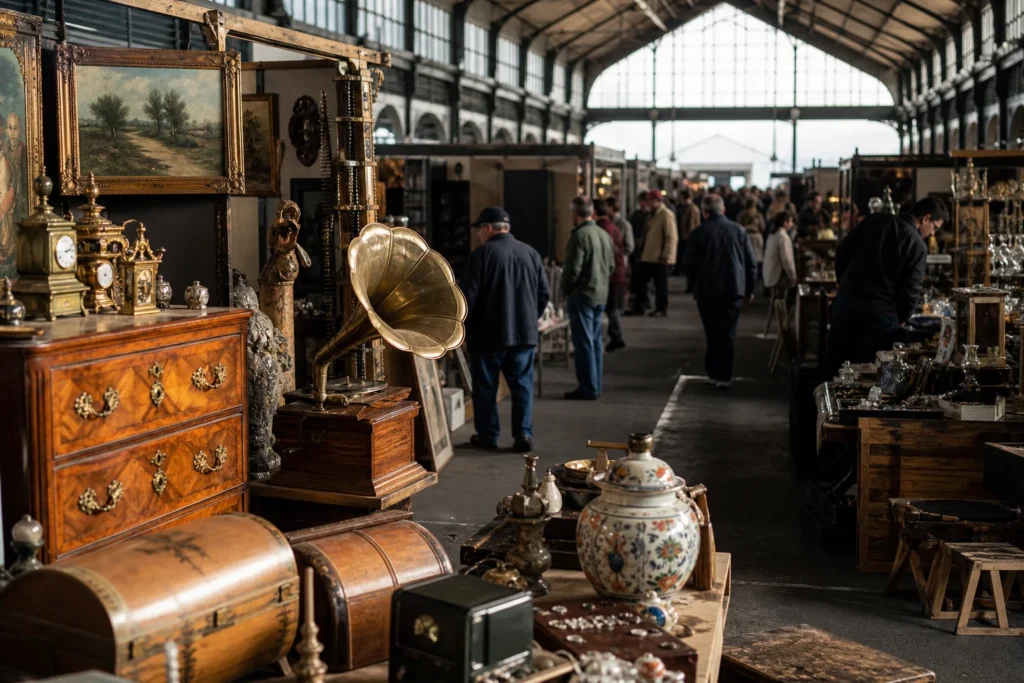

Every item at Feria Desembalaje must be at least 40 years old. That single rule shapes everything a visitor encounters — the quality of the stalls, the seriousness of the vendors, and the sense that this is a different proposition from the average weekend market. It filters out the noise and puts genuine antiques, vintage finds and retro objects at the centre of the experience.
The fair travels, which is part of its appeal. Feria Desembalaje visits several Spanish cities across the calendar year, with stops in Cantabria, Bilbao, Arriondas, Madrid, Murcia and the wider Asturias region. The touring format means the vendor mix and available stock shift meaningfully from city to city. Collectors who follow more than one stop are not simply repeating a visit — they are working a genuinely different selection each time.
The Cantabria edition is the circuit's flagship. It draws around 130,000 visitors, hosts approximately 1,400 exhibitors, and puts more than 800,000 individual items on the floor. The Association of Fairs of Spain has recognised it among the most visited events in the national antique sector, and its reported economic impact on the Cantabria region runs to an estimated 3.5 million euros per edition. Few antique fairs in Spain operate at this scale.
The depth of stock rewards different kinds of buyer. Mid-century technology hunters find Bakelite radios, vintage typewriters and old telephones. Domestic and decorative stalls carry sewing machines, garden tools, ceramics, lamps and ornaments. Vintage clothing draws fashion buyers, while jewellery displays range from costume pieces to more distinctive finds. Books, decorative furniture and household implements fill the gaps between. Experienced visitors arrive close to the 11:00 opening and allow the better part of a full day — the fair typically runs through to 21:00, giving serious browsers time to cover the ground properly.
Food vendors operate alongside the antique stalls, and that changes the atmosphere in a useful way. The fair takes on a market-day energy that makes it accessible to families and companions who are not necessarily collectors. It becomes a social occasion as much as a buying trip, without losing its character as a serious antique event.
Getting to the Cantabria edition at Torrelavega is straightforward by bus. The Avda. Cantábrico bus stop sits approximately 150 metres from the venue. Bus lines L2 and L4 serve the Avenida Fernando Arce - Nueva Ciudad stop, around 180 metres away. Bus line VAC 157 connects to Torrelavega, approximately 390 metres from the site. Note that transport access will differ at the fair's other city stops.
Feria Desembalaje suits dedicated collectors chasing specific objects, mid-century enthusiasts, vintage fashion buyers and anyone who finds genuine depth of stock useful. With over 800,000 items at the Cantabria stop alone, the odds of finding something worthwhile are real rather than optimistic. Dates change each year and the schedule typically covers a few events annually, each running across two or three days, so checking the current programme before making travel plans is essential.
Frequently Asked Questions
Q: Does Feria Desembalaje accept all secondhand goods, or is there a quality threshold?
A: Every item on sale must be at least 40 years old. Organisers enforce this across all vendors, which means the stalls carry genuine antiques, vintage pieces and retro objects rather than the mix of new and nearly-new goods you find at a general flea market. That rule is the fair's defining characteristic and the main reason serious collectors travel to follow it.
Q: The fair visits several cities — which stop is the largest?
A: The Cantabria edition, held in Torrelavega, is the flagship stop on the circuit. It draws around 130,000 visitors, hosts approximately 1,400 exhibitors, and puts more than 800,000 individual items on the floor. Other stops on the touring circuit — including Arriondas, Bilbao, Madrid, Murcia and wider Asturias — offer meaningfully different vendor mixes, so collectors who follow more than one stop are not simply repeating the same experience.
Q: What kinds of things can I expect to find at the fair?
A: Mid-century technology is well represented — Bakelite radios, vintage typewriters and old telephones are typical finds. Domestic and decorative stalls carry sewing machines, ceramics, lamps, ornaments and decorative furniture. Vintage clothing draws fashion buyers, and jewellery ranges from costume pieces to more distinctive finds. Books and household implements fill the gaps. With over 800,000 items at the Cantabria edition alone, depth of stock is a genuine strength.
Q: How long should I allow for a visit, and is there a best time to arrive?
A: Experienced visitors arrive close to the 11:00 opening and plan for the better part of a full day. The Cantabria edition runs through to 21:00, which gives serious browsers enough time to cover the ground properly. Food vendors operate alongside the antique stalls, so taking a break without leaving the site is straightforward.
Q: How do I get to the Cantabria edition by public transport?
A: The Torrelavega venue is well served by bus. The Avda. Cantábrico stop is around 150 metres from the site; bus lines L2 and L4 serve the Avenida Fernando Arce - Nueva Ciudad stop, approximately 180 metres away; and bus line VAC 157 connects to Torrelavega, roughly 390 metres from the venue. Transport access will differ at the fair's other city stops, so check local options before travelling to those editions.
Marketplace Highlights







Add a review