

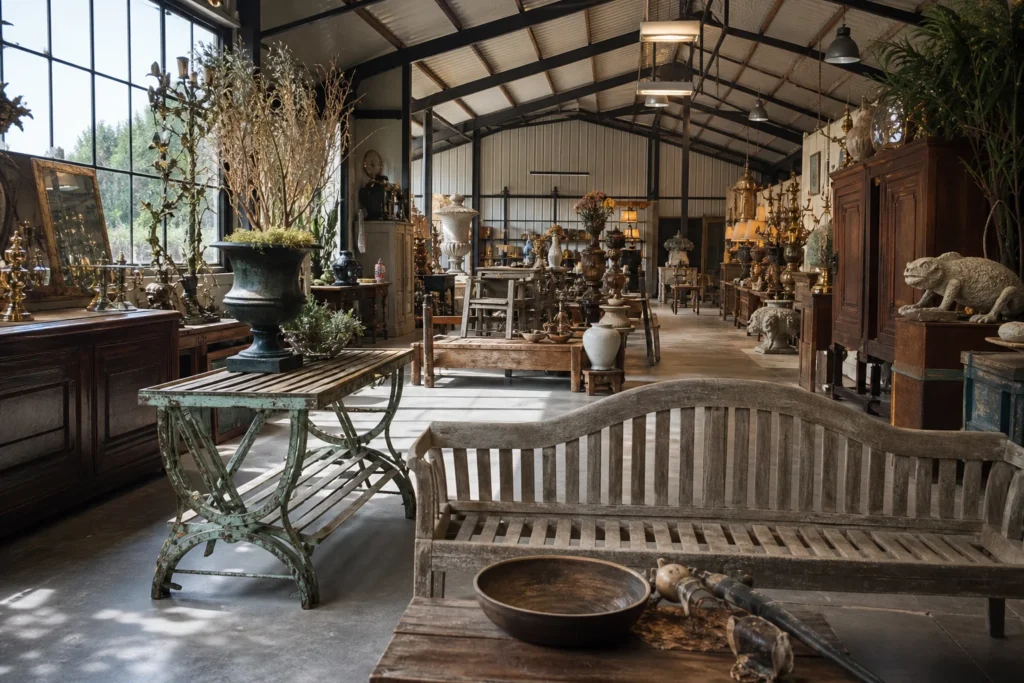
Guenatone is not the kind of place you stumble through in twenty minutes. It is a curated, gallery-like space where twelve professional antique dealers each maintain a distinct area within a shared 500 m² showroom. The atmosphere feels closer to a design atelier than a brocante hall — deliberate, unhurried, and quietly theatrical. The venue sits in Nogent-le-Rotrou, at the edge of the Perche region in northwestern France.
The layout rewards slow browsing. Each dealer brings a specific sensibility, and the overall effect is one of considered range rather than accumulated clutter. Rustic garden furniture occupies the same room as industrial metalwork and gilded bronzes. Oil paintings and hand-thrown ceramics share space with carved curiosities that are harder to categorise. Nothing here looks thrown together.
The variety of styles means the space suits more than one kind of visitor. Those renovating a period property will find antique French furniture, marble-topped consoles and statement pieces worth travelling for. Visitors with a single empty shelf and a modest budget can still leave with something genuinely interesting. The price spectrum stretches wide, and the mix of classic, industrial, country and decorative objects keeps the space from feeling targeted at any one buyer.
Among the pieces that have appeared here, an Indian wagon converted into a coffee table and a pair of chameleons carved from horn stand out as the kind of finds collectors remember for years. They reflect the shared sensibility of the dealers: a preference for objects with craft, provenance or an unexpected origin story. Staff tend to know what they sell in depth and are comfortable discussing individual pieces at length. For visitors new to the Perche antiques scene, that kind of unhurried guidance adds real value.
One corner of the showroom belongs to interior designer Laurence Fockedey. Her area functions somewhere between an atelier and a gallery. She repurposes found objects into bespoke lighting fixtures, paintings and sculptures — work that sits at the edge of brocante and contemporary art. Her installations give Guenatone a creative anchor that lifts the whole space above the level of a well-stocked but conventional antique shop.
The venue opens every day of the week from 10:00 to 19:00, making it practical for visitors passing through on a weekday as well as a weekend detour. It sits along the D923 corridor between Chartres and Le Mans, a route that passes several towns worth stopping in — this is one of the more compelling reasons to pull over. Visitors driving the corridor can plan it as a dedicated stop rather than an afterthought.
For those travelling by rail, Gare de Nogent-le-Rotrou is approximately 3.2 km away in straight-line distance. The station connects to Paris Montparnasse via Chartres on the Paris–Chartres–Nogent-le-Rotrou train service, and sits on the Chartres–Le Mans–Angers corridor as well. Guenatone is best reached by car from the station, so visitors arriving by train should arrange onward transport locally.
Guenatone suits collectors, interior designers scouting for unusual stock, and anyone who appreciates the slower pace of a genuinely curated space. It also rewards the curious visitor with no particular agenda — the kind of person who simply wants to spend an hour somewhere that feels observed and alive.
Frequently Asked Questions
Q: How is Guenatone different from a typical flea market or brocante hall?
A: Guenatone is a curated, gallery-like showroom rather than a rummage market. Twelve professional antique dealers each maintain a distinct area within a shared 500 m² space, and the overall atmosphere is deliberate and unhurried — closer to a design atelier than a crowded hall. Nothing looks thrown together.
Q: What kinds of objects and styles can I expect to find there?
A: The range is genuinely broad: antique French furniture, marble-topped consoles, industrial metalwork, gilded bronzes, oil paintings, hand-thrown ceramics, and harder-to-categorise carved curiosities. Past finds have included an Indian wagon converted into a coffee table and a pair of chameleons carved from horn — the kind of pieces collectors remember. Classic, country, industrial and decorative styles all coexist in the same space.
Q: Is Guenatone worth visiting if I have a modest budget rather than a renovation project?
A: Yes. The price spectrum stretches wide, and visitors with a single empty shelf to fill can leave with something genuinely interesting alongside those hunting major statement pieces. The space does not feel targeted at any one type of buyer.
Q: What is the Laurence Fockedey corner, and is it worth seeing separately?
A: Interior designer Laurence Fockedey occupies one area of the showroom where she repurposes found objects into bespoke lighting fixtures, paintings and sculptures. Her work sits at the edge of brocante and contemporary art, and gives the venue a creative anchor that lifts the whole space above a well-stocked but conventional antique shop. It is worth time on its own terms.
Q: When is Guenatone open, and is it accessible by train?
A: The showroom opens every day of the week from 10:00 to 19:00. For visitors travelling by rail, Gare de Nogent-le-Rotrou is approximately 3.2 km away; trains connect to Paris Montparnasse via Chartres and to Le Mans on the same corridor. Confirm current timetables before you travel, as service frequency varies.
Marketplace Highlights








Add a review