

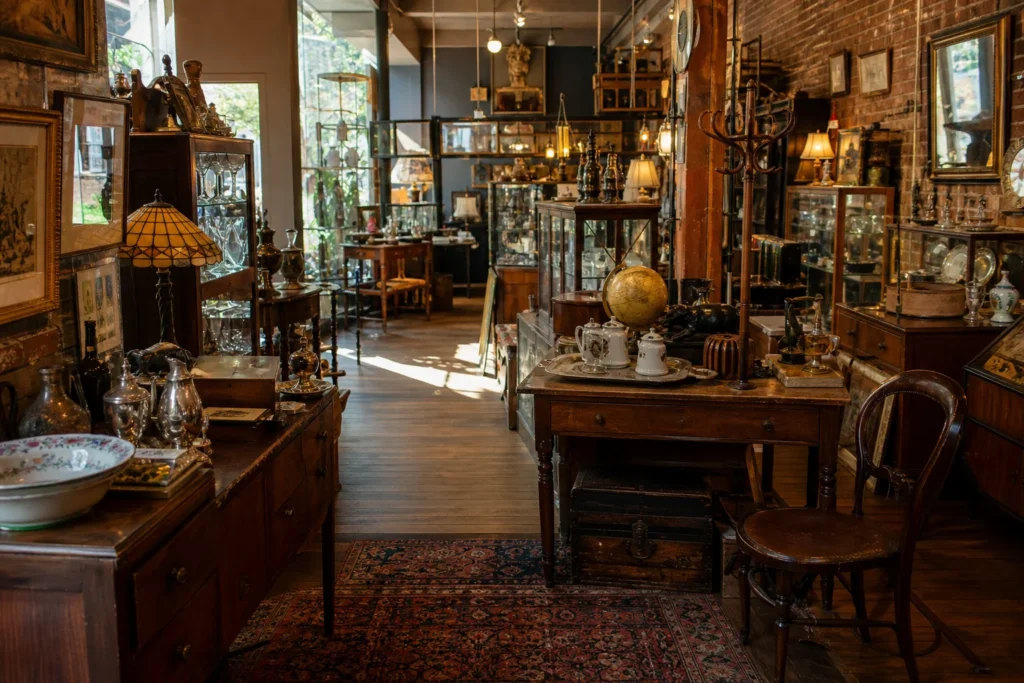

Few Australian cities pack as much antique character into such a walkable footprint as Hobart. Tasmania's capital sits at the edge of the Derwent River, its colonial streetscape and island history giving the local antique trade a material depth that mainland cities rarely match. The district rewards slow, deliberate browsing — the kind where you return a week later and find something entirely different.
The natural anchor is The Antiques Warehouse, Hobart's largest generalist destination and a sensible place to start. The stock spans fine furniture, country pieces, decorative collectibles and garden artefacts, and it turns over regularly enough to make repeat visits worthwhile. The scale here is genuinely impressive. Visitors can spend a long morning without exhausting the selection, and the presentation lifts the experience above a standard warehouse browse.
From that generalist base, the district's specialist dealers feel like a natural extension rather than a separate circuit. The Coin and Stamp Place offers one of the more focused operations in the city, dealing in Australian stamps, medals, vintage coins and old banknotes. It is a clean, single-subject shop — the kind that collectors with a defined numismatic or philatelic interest will find worth crossing town for.
Kent and Kent Antiques draws more directly on Tasmania's seafaring and colonial past. The collection covers estate jewellery, silver, glass, ceramics and clocks, with maritime instruments and navigational pieces appearing alongside early curios. For anyone collecting Southern Hemisphere colonial or maritime material, this is one of the more compelling stops in the region. The two stores complement each other well, serving different collecting instincts within a short walk.
The waterfront cluster adds two further specialists worth seeking out. Antique Prints and Maps carries a consistent range of cartographic and printed material, with enough variety to interest both serious map collectors and decorators looking for distinctive wall pieces. The Astrolabe Booksellers rounds out the area with antique, rare and collectible books — it draws bibliophiles who treat the search for a specific edition as a serious pursuit rather than casual browsing.
What holds the district together is the tension between generalist depth and specialist focus. The Tasmanian context sharpens that dynamic: convict-era objects, island-specific history and maritime heritage give the collecting here a regional identity that stands apart from larger Australian antique centres. The district suits serious collectors and decorators drawn to colonial material, but it also rewards anyone whose interest in Australian history runs to the physical record.
Most dealers in the district follow a pattern of Tuesday to Saturday, 10:00 to 17:00, with shorter Sunday hours from 13:00 to 17:00 and Monday generally closed — though individual store hours vary, so it is worth checking directly before travelling. Bus line 540 stops at Liverpool Street Stop 3 Out, approximately 135 metres from the district, making it the most straightforward public transport option. The Derwent Ferry at Brooke Street Pier sits roughly 750 metres away — an atmospheric waterfront arrival for those travelling from the eastern shore.
Frequently Asked Questions
Q: Is Hobart's antique district walkable, and how long should I set aside?
A: The district is genuinely compact — most of the key dealers sit within a short walk of each other along and behind the waterfront. A thorough visit to The Antiques Warehouse alone can fill a long morning, so allow a full day if you want to move through the specialist shops as well. Serious collectors often find a return visit worthwhile, since stock turns over regularly across the district.
Q: What types of antiques is Hobart particularly strong in?
A: The district has real depth in Tasmanian colonial and maritime material — convict-era objects, navigational instruments, estate jewellery, silver and early ceramics. Kent and Kent Antiques is the main stop for maritime and colonial pieces. The Coin and Stamp Place covers Australian stamps, medals, vintage coins and banknotes, while Antique Prints and Maps and The Astrolabe Booksellers serve collectors focused on cartographic material and rare books respectively.
Q: Is the district worth visiting for decorators as well as dedicated collectors?
A: Yes. The Antiques Warehouse carries a broad range including furniture, country pieces and garden artefacts that suit decorators as much as collectors. Antique Prints and Maps also stocks pieces that work as distinctive wall art, and the consistent quality across the waterfront cluster means decorative finds sit alongside more specialist material throughout.
Q: Do most dealers follow standard retail hours, or should I check ahead?
A: Many dealers in the district follow a Tuesday-to-Saturday pattern, but hours can vary by shop and season. Check directly with individual dealers before making a special trip, particularly if you are targeting a specific specialist store.
Q: Does the district suit a first-time visitor to Hobart's antique scene, or is it geared toward experienced collectors?
A: Both. The Antiques Warehouse works well as an orientation point for anyone new to the district — the scale and variety make it easy to browse without a specific focus. From there, the specialist dealers reward visitors who have a defined collecting interest, but the waterfront setting and colonial atmosphere make the circuit an enjoyable afternoon even for a casual explorer.








Add a review