


Region
Hollis Flea Market is permanently closed. The market is retained as an editorial archive of the venue and its distinctive character.
Few flea markets in New England thought to offer appraisal sessions. Hollis Flea Market did. On a typical Sunday morning, a shopper could arrive with a piece of inherited furniture or a box of unknowns, walk the grounds for an hour, and then sit down with someone who could tell them what they actually had. That combination of scale and expertise was unusual, and it said something essential about what Hollis Flea Market was: a market run by people who genuinely understood the secondhand world, not simply a field rented out to sellers on weekends.
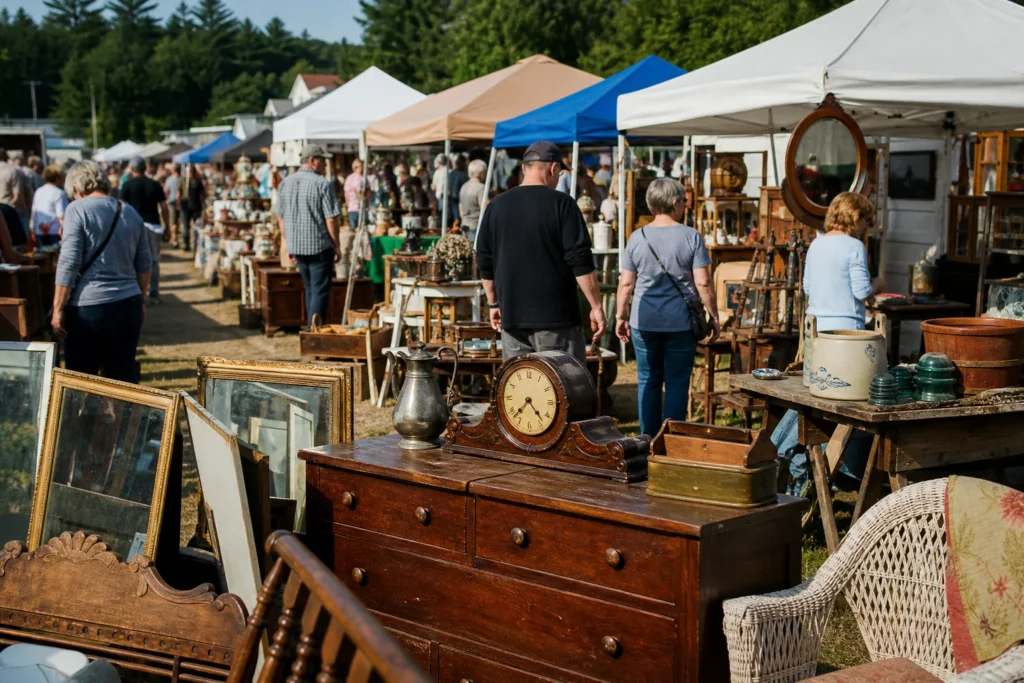
The market spread across more than 20 acres of southern New Hampshire, and at its busiest, up to 400 vendors could fill the site. That kind of footprint changes how a flea market feels. The browsing experience at Hollis was expansive — regulars returning with restocked tables, newer sellers arriving with unpredictable goods, and the natural energy of a well-attended outdoor market building through the morning. The weekly rhythm meant the mix shifted constantly. No two Sundays were quite the same, and that unpredictability was part of the draw.
The merchandise at Hollis covered serious ground. On any given Sunday, vendors offered furniture — solid pieces, painted dressers, old mirrors, mantel clocks — alongside framed pictures and decorative items that suited both dealers and homeowners. Kitchenware, vintage toys and books filled other tables. Clothing appeared throughout, from everyday finds to older garments worth a second look. What made the selection feel coherent rather than chaotic was the weekly turnover: new vendors joined the roster regularly, keeping the range fresh and the browsing genuinely unpredictable in the best sense.
By the time Hollis Flea Market passed into its second generation of family ownership, a particular character had settled around it. Longtime vendors knew their stock well and talked about it freely. Conversations about provenance, condition and value came naturally in that environment. The appraisal sessions the market offered gave concrete form to that culture of knowledge — a practical resource for buyers uncertain about a find, and a useful orientation for first-time sellers trying to understand what their goods were actually worth before they priced them.
Hollis Flea Market identified itself as New Hampshire's oldest and largest flea market, a claim rooted in a founding tradition stretching back to 1964. Whether or not every part of that description could be independently confirmed, the market's standing on the New England flea circuit was not in doubt. For collectors working the region, Hollis was a reliable anchor — large enough to reward a full morning, consistent enough to build into a regular route, and personal enough to feel like more than a transaction. Its record as a long-running, family-shaped institution in southern New Hampshire gives it a lasting place in the history of the region's secondhand culture.
Frequently Asked Questions
Q: Was Hollis Flea Market open year-round?
A: Hollis Flea Market ran on Sundays, and its long-running weekly schedule was central to its identity as a regional anchor on the New England flea circuit. For specifics about its seasonal calendar, check archived sources or local historical records — Hollis is now permanently closed.
Q: What kinds of goods did vendors typically sell at Hollis Flea Market?
A: The mix was genuinely broad. Furniture — painted dressers, old mirrors, mantel clocks — appeared alongside framed pictures and decorative items. Other tables carried vintage toys, books, kitchenware, and clothing ranging from everyday finds to older garments worth closer attention. New vendors joined weekly, so the selection shifted constantly.
Q: Did Hollis Flea Market offer any services beyond buying and selling?
A: Yes — the market offered appraisal sessions, which was uncommon for a flea market of any size. Shoppers could bring in inherited furniture or unidentified pieces and get an informed read on what they held. The same resource was useful for first-time vendors trying to understand value before pricing their own goods.
Q: How large was Hollis Flea Market at its peak?
A: The market spread across more than 20 acres in southern New Hampshire, with up to 400 vendors on busy Sundays. That footprint gave it a browsing atmosphere closer to a regional fair than a typical weekend market — regulars restocking alongside newer sellers with unpredictable stock.
Marketplace Highlights









Add a review