


Region
International Yorkshire Antique Home and Vintage Fair is permanently closed. The event is retained as an editorial archive of the venue and its distinctive character.
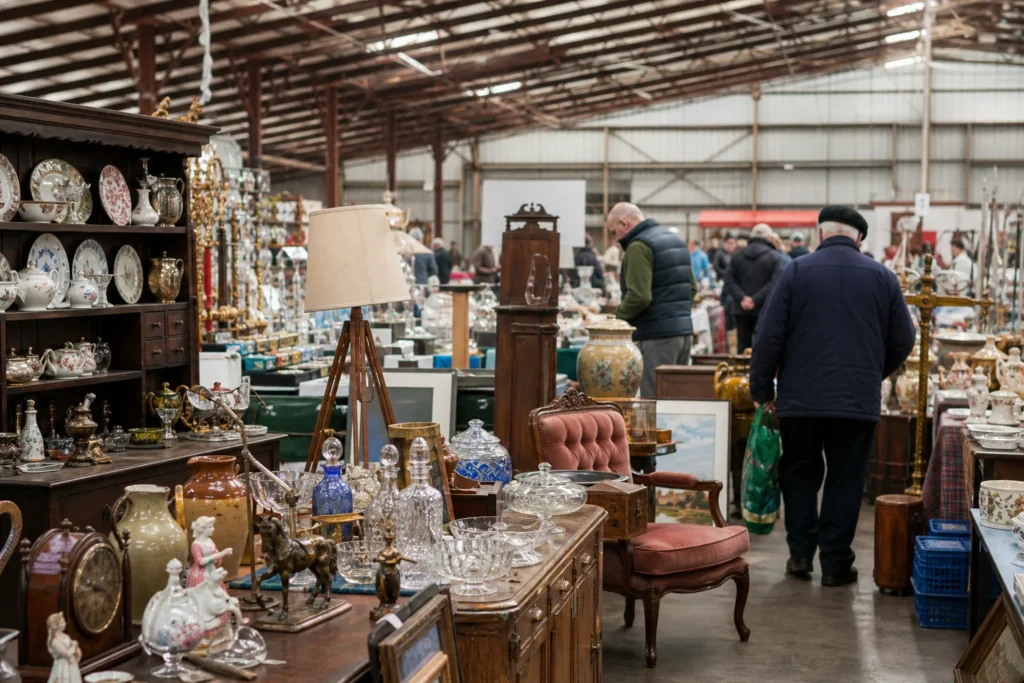
Two arenas stood at the heart of this fair, and they felt like genuinely different places. One housed fixed dealer booths arranged with a gallery-like steadiness — polished furniture against clean backdrops, glassware set out with care, stock that looked considered and curated. The other filled with table-top sellers working a looser format, where finds arrived more accidentally and the atmosphere had the restless energy of a proper rummage. Walking between the two in a single visit gave the event an unusual dual character that most single-hall fairs could not replicate.
The merchandise ranged across almost every collecting category worth mentioning. At one end sat the large pieces: hardwood dining tables, cabinets, statement decorative furniture that required a van and a plan. At the other end sat the single-pound ceramic, the overlooked textile, the small piece of jewellery that a browser might almost walk past. Between those poles came chinaware, glassware, art, vintage clothing, toys, bags and collector pieces of all kinds. Prices reportedly stretched from around a pound to tens of thousands for the most significant lots — a spread that meant a first-time visitor and an experienced decorator could both leave with something.
The scale of both arenas meant that a single morning rarely covered the ground properly. The fair ran across a full weekend, and returning on the second day was a habit many regular visitors developed. Stock that looked picked over on Saturday sometimes revealed itself differently by Sunday. Dealers at large multi-dealer events often engage more flexibly as a weekend draws to a close, and experienced fair-goers understood how to use that rhythm to their advantage.
The covered arenas removed one of the most persistent anxieties of attending a large outdoor market in the north of England: the weather. A full day of browsing carried no rain risk, no mud underfoot and no frozen fingers making it difficult to handle delicate pieces. Free on-site parking removed another friction point. A sit-down restaurant offered a proper break, and refreshment stands selling tea, coffee and snacks were spread through the arenas so visitors could refuel without leaving the site. These were practical conditions that made staying for the full day feel natural rather than effortful.
The International Yorkshire Antique Home and Vintage Fair held a notable position on the northern England antique circuit. It drew dealers and buyers from across the UK and attracted international interest in its stronger editions. The combination of established dealers alongside casual table-top sellers gave it a breadth that appealed to serious collectors and curious newcomers in the same visit. It operated on a structured, ticketed event model rather than the informal rhythm of a weekly market, and that distinction shaped the kind of buying and selling that happened within it. As an archive record of what the fair offered at its height, it remains a useful reference point for understanding the scale and variety that the northern antique fair circuit once supported.
Frequently Asked Questions
Q: What made the International Yorkshire Antique Home and Vintage Fair different from a typical single-hall antique market?
A: The fair filled two separate covered arenas with genuinely different characters. One housed fixed dealer booths arranged with a gallery-like permanence; the other was given over to table-top sellers working in a looser format where finds felt more accidental. Most single-hall events could not replicate that dual atmosphere in a single visit.
Q: What kinds of items and price ranges did the fair cover?
A: The range was unusually wide — from large hardwood furniture and statement decorative pieces down to single-pound ceramics, textiles and overlooked jewellery. Chinaware, glassware, vintage clothing, toys and art all appeared regularly. Prices reportedly spanned from around a pound to tens of thousands for significant lots, which meant first-time browsers and experienced decorators could both leave with something.
Q: Was one day enough to see the whole fair?
A: Rarely. The scale of both arenas meant a single morning left most of the ground uncovered. The fair ran across a full weekend, and returning on the second day was a habit many regular visitors developed — stock that looked picked over on Saturday often revealed itself differently by Sunday.
Q: Did the fair offer any practical comforts for a full day of browsing?
A: Yes, and they mattered. The covered arenas removed all weather risk, which is significant for a multi-hour visit in the north of England. Free parking was available on site, a sit-down restaurant offered a proper break, and refreshment stands selling tea, coffee and snacks were distributed through both arenas so visitors never needed to leave and return.
Marketplace Highlights








Add a review