

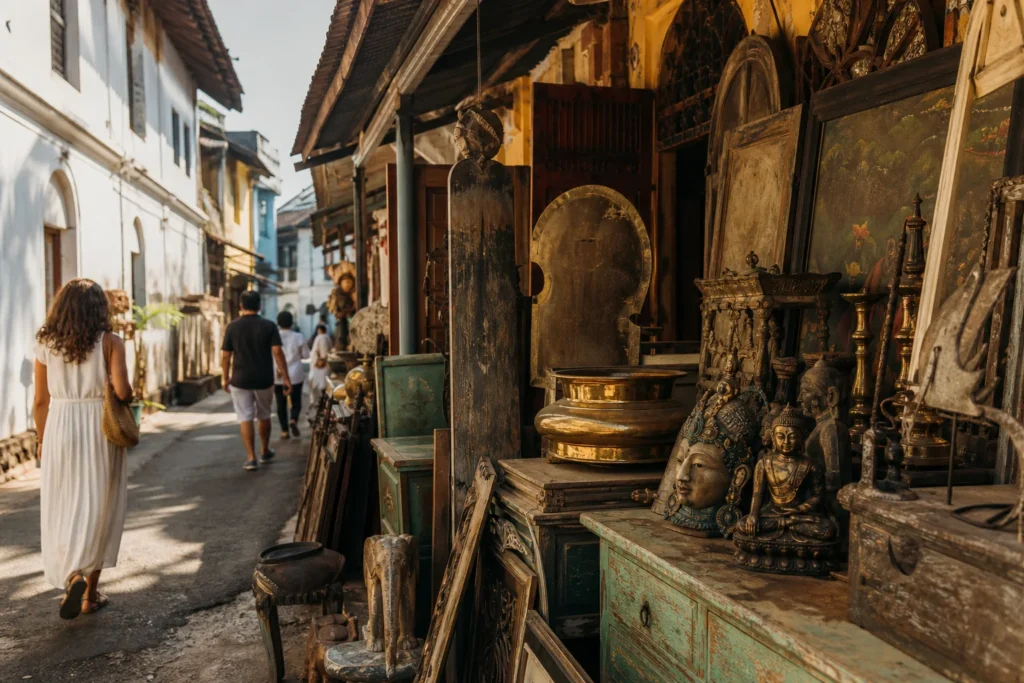

Few antique streets in South Asia pack as much into a single stretch as Jew Town. Tucked into the southern end of Mattancherry, it runs roughly 200 metres between the Dutch Palace and the Paradesi Synagogue — two landmarks that frame its layered, lived-in character perfectly.
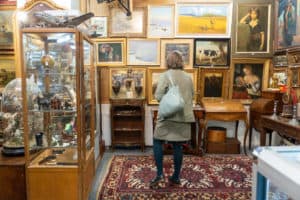
The merchandise here clusters into two broad families. Architectural and furniture salvage dominates the larger shops: teak panels, carved rosewood furniture, Keralan oil lamps, colonial-era sideboards and painted temple panels that once belonged to very different rooms. Alongside these sits a denser world of objects — Keralan bronze figurines, silverware, old spice jars and tins, textiles and vintage artefacts tied to the spice trade that built this part of Kochi. Almost every building spills something onto the pavement. Stacked chairs, hanging lanterns and trays of small objects compete for your attention at every doorway.
The range inside any single shop can swing sharply between serious collector pieces and tourist-grade souvenirs. That contrast is part of the experience, but it rewards a patient eye. Shoppers who browse slowly and compare before committing generally leave with better finds and better prices than those who move quickly.
The street runs Monday through Saturday, opening at 10:00 and closing at 16:00. Sunday sees everything shuttered, so visitors planning a Kochi heritage day should build their itinerary around those hours. A weekday morning visit keeps the crowds thinner and gives you more unhurried time with shopkeepers before tour groups arrive.
Haggling is expected and first prices for visitors tend to run high. Watching a few transactions before you buy is genuinely useful. Sellers here are experienced, and a calm, unhurried approach works far better than a quick counteroffer. If you have a specific category in mind — say, bronze lamps or colonial silverware — a little research before you visit will help you read the prices more confidently.
Spices run through the street as both product and history. Cardamom, pepper and dried florals appear alongside vintage spice-trade pieces, reminding visitors that this corner of Mattancherry built its wealth on those same commodities centuries ago. It gives the area a double appeal: objects to buy and a trade history to read through them.
Jew Town fits naturally into a half-day circuit through Mattancherry and Fort Kochi. The Dutch Palace sits directly opposite the synagogue end of the street. Both neighbourhoods connect on foot, and the area rewards slow exploration rather than a single destination visit.
Getting there is straightforward. The Chakkamadam bus stop sits approximately 250 metres away and serves a wide range of routes across greater Kochi, including buses from Aluva, Kakkanad and Edakochi into Mattancherry. The Mattancherry ferry terminal is similarly close at around 240 metres — a useful option for visitors crossing from Fort Kochi or the city centre by water. The Mattancherry Water Metro terminal is also within roughly 350 metres, offering a backwaters approach that adds its own appeal to the journey.
Jew Town suits anyone who takes antique shopping seriously enough to look past the first price and the tourist tier. It also suits the curious visitor who simply wants to spend a morning inside one of India's most atmospheric trading streets. The history on this road is not decorative — it is still actively for sale.
Frequently Asked Questions
Q: When is Jew Town open, and is it worth visiting on a Sunday?
A: The antique shops along Jew Town run Monday through Saturday, roughly 10:00 to 16:00. Everything closes on Sunday, so if you are planning a Mattancherry heritage day, build your itinerary around those hours. A weekday morning visit is the sweet spot — crowds are lighter and shopkeepers have more time before tour groups arrive.
Q: What kinds of antiques and objects will I actually find here?
A: Two broad categories dominate. The larger shops carry architectural and furniture salvage — teak panels, carved rosewood pieces, colonial-era sideboards, Keralan oil lamps and painted temple panels. Alongside these you will find a denser world of smaller objects: Keralan bronze figurines, old silverware, vintage spice jars and tins, and textiles connected to the spice trade. The range within a single shop can swing between serious collector pieces and tourist-grade souvenirs, so a patient eye matters.
Q: Is haggling expected, and how should I approach it?
A: Haggling is standard practice, and first prices for visitors tend to run high. The sellers here are experienced, so a calm and unhurried approach works far better than a quick counteroffer. Watching a few transactions before you commit is genuinely useful. If you have a specific category in mind — bronze lamps, colonial silverware, architectural salvage — a little research before your visit helps you read prices with more confidence.
Q: How do I get to Jew Town without a private car?
A: The Chakkamadam bus stop is approximately 250 metres from the street and connects to a wide range of routes across greater Kochi. Check current timetables locally, as services vary. The area is also walkable from the Fort Kochi ferry terminals, and Mattancherry and Fort Kochi connect on foot from the synagogue end of the street.
Marketplace Highlights






Add a review