


Kavalleriemarkt is permanently closed. The market is retained as an editorial archive of the venue and its distinctive character.
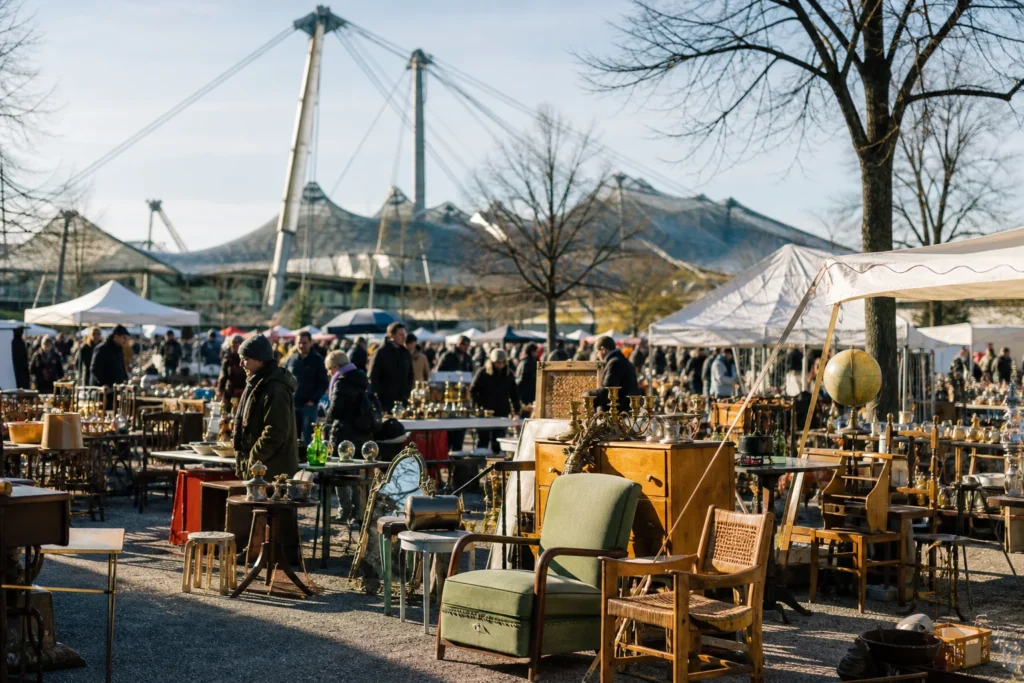
At the south end of Munich's Olympic Park, the Kavalleriemarkt occupied a setting that felt deliberately removed from the city's tourist circuits. Twice a week, vendors arranged their stalls across the open ground here, drawing collectors, browsers and curious locals into a market that had a clear personality from the moment you arrived.
What set the Kavalleriemarkt apart most visibly was not its merchandise but its physical atmosphere. The market's operator had woven handmade recycled-art installations throughout the space. Strings of pennants cut from old, colourful fabric scraps ran between stalls. Oversized lanterns built from layers of fabric caught the light overhead. Bicycles stripped and re-formed into hanging sculptures appeared at intervals throughout the site. These were not decorative afterthoughts. They expressed a philosophy that ran through the entire market: that discarded things held value worth recognising.
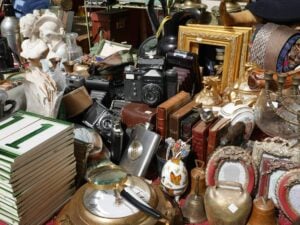
That sensibility shaped the antiques offer too. The Kavalleriemarkt leaned heavily toward objects with history behind them. Collectors came for art from earlier periods, antique cutlery, porcelain, sculptures and related collectibles. New goods were largely absent, which gave the market a more considered character than a typical car-boot sale. Sellers tended to know their stock. Browsers who arrived looking for decorative antiques or specific collecting categories found a market genuinely organised around those interests.
Once a month, the Kavalleriemarkt extended into the evening with a night edition running from 17:00 to 22:30. The goods remained the same. The installations looked different by lantern and low light, and the market felt more like a community gathering than a daytime retail event. That monthly evening format suggested a market aware of its own identity — one that cultivated atmosphere as deliberately as it curated its stalls.
The broader message of the Kavalleriemarkt was embedded in its structure. Recycled creativity was not a branding exercise here. It appeared in the handmade objects hanging above you, in the preference for antique and second-hand goods over new stock, and in the implicit argument that used things deserved a second look. For a market positioned on the edge of a major European city, that was a specific and coherent point of view.
The Kavalleriemarkt remains a documented example of a Munich flea market that treated its philosophy as part of the visitor experience. Its combination of antiques trading, handmade installation art and a monthly evening edition gave it a character difficult to replicate and worth recording.
Frequently Asked Questions
Q: What kind of goods did the Kavalleriemarkt specialise in?
A: The market leaned heavily toward antiques and collectibles — art from earlier periods, antique cutlery, porcelain and sculptures. New goods were largely absent, giving it a more curated, object-focused character than a general flea market. Sellers tended to know their stock, which made it a genuine destination for collectors rather than casual car-boot browsing.
Q: What made the Kavalleriemarkt visually distinctive compared to other Munich flea markets?
A: The market's operator installed handmade recycled-art pieces throughout the site — strings of pennants cut from old colourful fabric, oversized lanterns constructed from layered fabric, and bicycles repurposed as hanging sculptures. These were not incidental decoration; they expressed a coherent philosophy that discarded materials held recognisable value, and they shaped the atmosphere of the whole space.
Q: Did the Kavalleriemarkt ever run evening sessions?
A: Once a month the market held a night edition, running from 17:00 to 22:30. The same goods and installations were on offer, but the lanterns and low light gave the site a noticeably different atmosphere — closer to a community gathering than a daytime retail event.
Q: Is the Kavalleriemarkt still operating?
A: The Kavalleriemarkt is permanently closed. It is retained here as an editorial archive of its character and history as a Munich flea market.
Marketplace Highlights







Add a review