


Region
Kunst & Antikmesse Copenhagen is permanently closed. The market is retained as an editorial archive of the venue and its distinctive character.
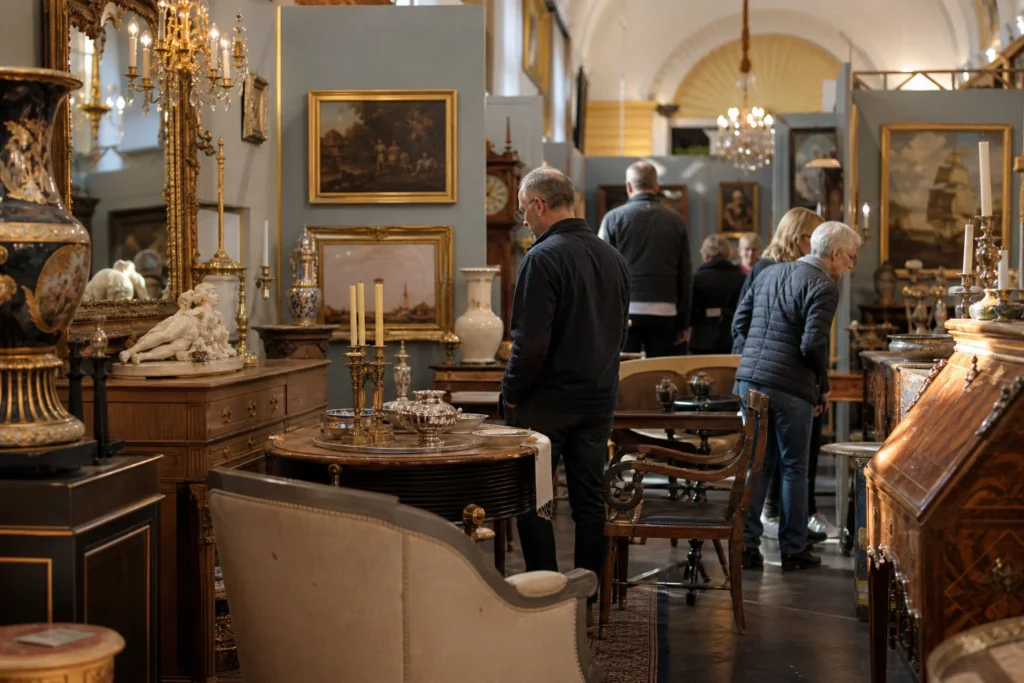
For one weekend each year, Kunst & Antikmesse Copenhagen shifted the tempo of the Danish antique world entirely. Where the city's permanent dealers offered the quiet accumulation of a considered browse, the fair delivered concentrated expertise and rare opportunity in a single compressed event. It stood among the most significant antique gatherings in Denmark, and the atmosphere reflected that weight — purposeful, knowledgeable, alive with the particular energy of serious collectors moving through carefully assembled stands.
Close to one hundred specialist dealers gathered for the event, each presenting work that felt curated rather than simply stockpiled. The stands read more like composed interiors than market stalls. Furniture anchored many booths — pieces chosen for period integrity and condition — while chandeliers and mirrors caught the light overhead. Paintings, silverware, ceramics and decorative objects filled the gaps between, each category represented by dealers who knew their material deeply. Volume was never the point. The fair made its case through quality, and that discipline gave the whole floor an unhurried, gallery-like quality rare in an event of this scale.
One of the fair's most distinctive commercial habits set it apart from the broader antique calendar. Many exhibitors reserved their finest pieces specifically for this event, holding back acquisitions they might otherwise have placed in their shops or sent to auction. Opening-day trading carried a particular intensity as a result. The strongest objects moved early, and the dealers who brought them knew it. That practice gave the fair a genuine sense of occasion — each edition felt like a moment rather than a routine.
The depth of expertise assembled on the floor was itself a draw. Specialists in furniture history, fine art, silver, ceramics and lighting shared space for a single weekend, and most were willing to discuss provenance, period and condition at length. For collectors still developing their eye, a conversation with the right dealer here could clarify years of uncertainty. The fair functioned as both a marketplace and an informal education, and the distinction between the two often dissolved entirely mid-conversation.
There was also a strong community dimension running beneath the commercial surface. Dealers used the weekend to reconnect with peers, compare notes on recent acquisitions and exchange the kind of professional knowledge that rarely surfaces in public. That energy passed into the aisles and shaped the atmosphere for visitors too. The fair felt less transactional than many commercial antique events — more like an annual gathering of people bound by a shared seriousness about objects and their histories.
Kunst & Antikmesse Copenhagen belonged to a city with a rich permanent antique culture. Ravnsborggade in Nørrebro and the streets around Bredgade in the city centre both carried respected specialist dealers year-round. The fair sat above that everyday provision, drawing collectors who came specifically for its scale and calibre. It represented, for a single concentrated weekend each year, something close to the full breadth of Danish expertise in historic decorative arts — gathered, presented and argued over in one place.
Frequently Asked Questions
Q: Was Kunst & Antikmesse Copenhagen open to the general public, or was it trade-only?
A: The fair welcomed the general public alongside trade buyers and serious collectors. Interior enthusiasts and browsers moved through the same aisles as specialist dealers, and the atmosphere — though purposeful — was never exclusionary.
Q: Why did so many collectors treat opening day as especially important?
A: Many exhibitors held back their strongest acquisitions specifically for this fair rather than placing them in their shops or sending them to auction. That habit meant the most distinctive pieces appeared on the floor from the moment trading began, and the first hours consistently moved at pace.
Q: What kinds of objects did the fair specialise in?
A: Close to one hundred specialist dealers brought furniture chosen for period integrity and condition, alongside chandeliers, mirrors, paintings, silverware and ceramics. The stands read more like composed interiors than conventional market stalls, with each dealer focused on depth within their category rather than breadth across many.
Q: Was the fair useful for collectors who were still developing their knowledge?
A: It was particularly so. Specialists in furniture history, fine art, silver, ceramics and lighting shared the floor for a single weekend, and most were willing to discuss provenance, period and condition at length. A conversation with the right dealer could resolve questions that reference books rarely settle cleanly.










Add a review