


Like That One is permanently closed. The market is retained as an editorial archive of the venue and its distinctive character.
Like That One occupied a particular corner of the southern French antique circuit that rewarded slow browsers and serious collectors alike. The shop sat on Place Charles David in Villeneuve-lès-Avignon, a town that holds its own identity quietly across the Rhône from its more famous neighbour. This was not a satellite of Avignon's tourist trade. It was something more considered — a small, curated space with a distinct point of view.
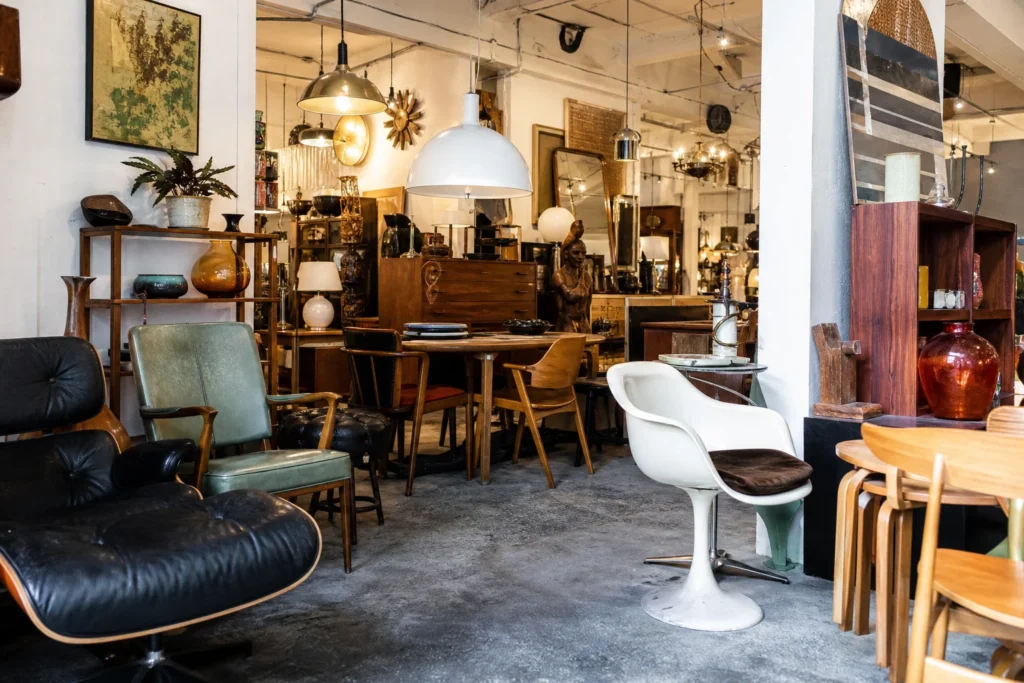
At the heart of the collection were art deco and mid-century pieces. Founders Elle and Cheu built their stock around the structural confidence of these periods: clean silhouettes, honest materials, forms that hold attention without demanding it. A well-proportioned armchair or a low sideboard in this tradition needs very little intervention to feel relevant. Elle and Cheu understood that, and it showed in what they chose to stock.
Running alongside the mid-century core were industrial and reclaimed pieces that gave the collection an unexpected edge. Worn finishes, salvaged metal and the kind of patina that cannot be manufactured offered a counterpoint to the more refined deco work. These two currents — the elegant and the raw — sat together without awkwardness. The tension between them was part of what made browsing the shop genuinely interesting.
Smaller decorative objects filled out the space and gave casual visitors something to engage with beyond the furniture. These pieces functioned as a browsable layer — the kind of finds that do not require a van to take home. They also reflected the same editorial instinct that ran through the larger stock: original character preserved, worn surfaces respected, nothing smoothed into anonymity.
What set Like That One apart from a straightforward antique dealer was the reworking approach Elle and Cheu brought to certain pieces. Where a chair or cabinet called for it, they introduced colour or pattern — not to disguise age, but to refresh it. The result was a collection where a reclaimed piece might carry a new seat fabric in an unexpected tone, or a painted surface might draw attention to a detail the original maker had intended to be noticed. The stock changed continuously, which gave regular visitors reason to return.
Villeneuve-lès-Avignon suited this kind of enterprise well. The town is quieter than Avignon, less trafficked by day-trippers, and has long attracted artists, antique dealers and those who prefer the left bank of the river. Place Charles David offered a setting that felt unhurried — appropriate for a shop that asked its customers to look carefully rather than move quickly.
Like That One represented a small but distinctive strand of independent vintage retail in the Gard and Vaucluse region. It combined genuine curatorial taste with a hands-on approach to restoration, and it offered something that standardised antique centres rarely can — the clear sense that two people with strong opinions had chosen every object in the room.
Frequently Asked Questions
Q: What type of pieces did Like That One specialise in?
A: The shop centred on art deco and mid-century furniture, complemented by industrial and reclaimed pieces with worn, salvaged character. Smaller decorative objects filled out the space, giving browsers something to engage with beyond larger furniture.
Q: What made Like That One different from a standard antique dealer?
A: Founders Elle and Cheu went beyond sourcing and selling. They reworked certain pieces — introducing colour or pattern to a chair, cabinet or painted surface — refreshing a piece without erasing its age or original character. The result sat somewhere between dealing and re-imagining.
Q: Was the stock at Like That One consistent, or did it change frequently?
A: The collection changed continuously, which gave regular visitors genuine reason to return. Active acquisition meant the shop rarely stood still, and a piece worth considering one visit might be gone the next.
Q: Is Like That One still open?
A: Like That One is permanently closed. It is retained here as an editorial archive of the venue and its character for collectors and researchers with an interest in the southern French antique circuit.
Marketplace Highlights










Add a review