

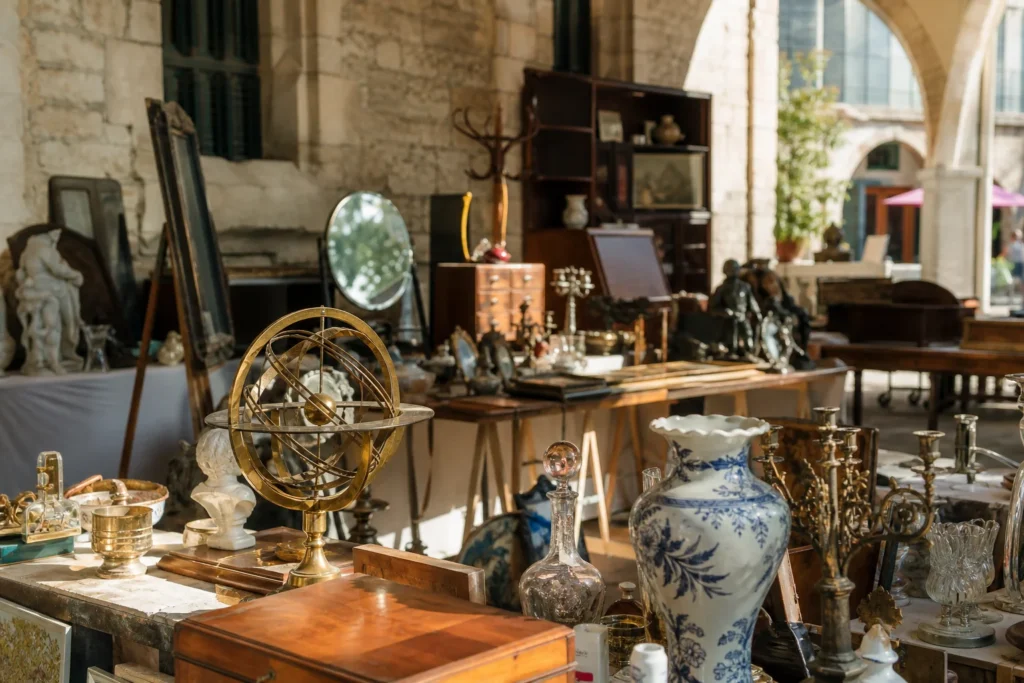

Imagine a specialist auction unfolding in real time — a collection of antique scientific instruments, a run of regional folk paintings, or a group of rare cartographic maps — happening in a city you will never visit. LiveAuctioneers puts that sale on your screen and lets you bid as if you were in the room. That is the practical reality the platform delivers, and it is the clearest reason serious collectors keep coming back.
The breadth of inventory is genuinely impressive. Fine art and jewellery form the most visible tier, attracting buyers who might otherwise travel to major sale rooms. Furniture and decorative objects sit alongside them, covering everything from continental antiques to mid-century American pieces. Then there is the third cluster, where the platform truly differentiates itself: Maps and Globes, Scientific and Medical Items, Weapons and Armour, Coins and Currency, Musical Instruments, and Rocks and Minerals. These subcategories make LiveAuctioneers practical for focused collectors chasing obscure inventory that rarely surfaces in a single place.
The platform operates around the clock, seven days a week, so browsing fits any schedule. Creating an account is free and unlocks saved searches and item alerts — useful tools for anyone tracking a specific category over time. Bidding requires a separate registration for each individual sale, reviewed by the host auction house. That review often completes within one to two business days, so registering well ahead of a sale you care about is genuinely good practice, not just a formality.
Winning bidders pay more than the hammer price, and it matters to understand that before you set a ceiling. Each auction house sets its own buyer's premium, and LiveAuctioneers does not control that figure. Premiums vary and can shift the real cost meaningfully, so checking the specific sale's terms before bidding is straightforward collector discipline. Building that premium into your maximum from the start keeps the final invoice free of surprises.
Because established auction houses use LiveAuctioneers to reach buyers well beyond their local market, the bidding pool is genuinely international. That competition can push prices on desirable lots higher than a regional sale might. At the same time, it means a wide market is setting the price — which is useful information in itself. Peer platforms like Invaluable and Catawiki occupy similar territory, and experienced buyers often use more than one. LiveAuctioneers holds its own through catalogue depth and the specificity of its niche subcategories.
The platform suits collectors who know what they want and are comfortable working across geography to find it. It also works well for first-time online auction buyers who need a structured, reputable environment to learn the format. Whether you are filling a precise gap in a long-running collection or simply exploring what serious auction culture looks like beyond the physical flea market and fair circuit, LiveAuctioneers offers a credible and expansive starting point.
Frequently Asked Questions
Q: Do I need to pay to browse and search LiveAuctioneers?
A: Creating an account is free and gives you access to saved searches and item alerts — useful if you are tracking a specific category such as vintage maps, scientific instruments, or folk art over time.
Q: How does bidding registration work, and how far in advance should I register for a sale?
A: Each auction house reviews bidder registrations separately for every sale, and that process can take up to 24 to 48 hours. Registering well ahead of any sale you care about — rather than the day before — is practical habit, especially for specialist lots where timing matters.
Q: What is a buyer's premium, and how much should I expect to pay on top of the hammer price?
A: Every winning bid carries a buyer's premium set by the individual auction house, not by LiveAuctioneers. The figure varies by sale and can shift your real cost meaningfully, so reading the specific auction's terms before you bid and building the premium into your maximum from the start is straightforward collector discipline.
Q: What kinds of specialist and niche categories can I find on LiveAuctioneers?
A: Beyond fine art, jewellery, and furniture, the platform covers Maps and Globes, Scientific and Medical Items, Weapons and Armour, Coins and Currency, Musical Instruments, and Rocks and Minerals — categories where relevant inventory is otherwise scattered and hard to track in one place.
Q: Can I bid on auctions happening in other countries?
A: Yes. LiveAuctioneers connects buyers with auction houses around the world, and the platform is accessible around the clock, which matters when sales run across different time zones. Bear in mind that international competition can push prices on desirable lots higher than a regional sale might — though it also means a genuinely wide market is setting the value.
Marketplace Highlights










Add a review