


Region
Maine Antiques Festival is permanently closed. The event is retained as an editorial archive of the venue and its distinctive character.
What began as a modest summer gathering — locals hauling attic finds to folding tables — grew into something far more serious. The Maine Antiques Festival evolved over the decades into a professional marketplace that drew specialist dealers from across North America. By the time it reached its mature form, it was widely described as the largest antiques show in the state, and collectors from well outside New England planned their summers around it.
The dealer floor was what set it apart. More than 200 vendors attended at its peak, and the mix ran from narrow category specialists to eclectic generalists who could turn up almost anything. Dealers who focused exclusively on furniture or coins shared space with those whose tables held a century's worth of American material culture. The professional standard was consistently high. Vendors knew their stock deeply and were willing to talk, which gave the event a different feel from the typical regional fair where provenance questions go unanswered.
The merchandise itself rewarded patience and specificity in equal measure. Art, furniture, primitives, pottery and glassware formed the backbone, but the range stretched well beyond those anchors. Coins, tools, toys, sporting memorabilia, vintage clothing and decorative china all found a home here. The paper and ephemera offerings stood out in particular — trade cards, advertising signage, promotional material and printed matter appeared at a density that was genuinely rare for this part of New England. Collectors who worked in that category knew the festival as a serious source.
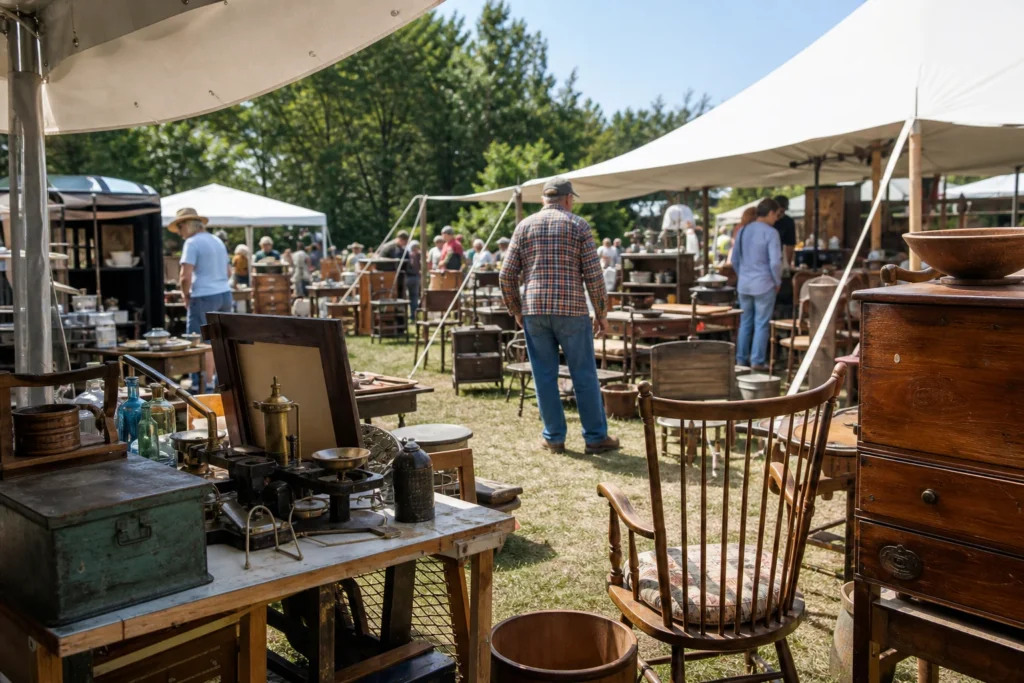
The layout combined indoor and outdoor sections, which softened the weather risk and gave the event a loose, unhurried rhythm despite its scale. Covered areas allowed dealers to display fragile pieces without anxiety. The open sections, on a clear Maine summer day, carried their own easy atmosphere — the kind that slowed visitors down and encouraged closer looking. Moving between the two felt natural rather than disjointed.
Because the show ran once a year, the dynamic between buyers and dealers was distinctive. Opening day drew the most determined collectors, moving quickly and with intent. As the weekend progressed, the pace eased. Later hours rewarded a different kind of attention: longer conversations, more careful negotiation, a chance to understand the thinking behind a dealer's selection.
The festival earned its place not simply through size but through character. It belonged to the tradition of serious American antiques shows where the floor functioned as both marketplace and education — where knowing what to ask was as valuable as knowing what to buy. For a certain kind of collector, it was not just an annual event. It was an anchor point for the season.
Frequently Asked Questions
Q: What kind of dealers exhibited at the Maine Antiques Festival?
A: The show drew more than 200 vendors at its peak, ranging from narrow category specialists — dealers who focused exclusively on furniture, coins or a single collecting area — to eclectic generalists carrying a broad sweep of American material culture. Many traveled specifically for this event, and the professional standard was consistently high. Dealers knew their stock deeply and were generally willing to discuss provenance and context, which distinguished the festival from the typical regional fair.
Q: What categories of antiques and collectibles appeared at the festival?
A: The core merchandise ran to furniture, art, primitives, pottery, glassware and jewelry, but the range extended well beyond those anchors. Coins, tools, toys, vintage clothing, sports memorabilia and decorative china all appeared regularly. The paper and ephemera offerings were a particular strength — trade cards, advertising signage and printed promotional material surfaced at a density that was genuinely uncommon for New England, and collectors who worked in that category treated the festival as a serious source.
Q: How was the festival laid out, and did weather affect it?
A: The show used a combination of indoor and outdoor sections, which meant weather rarely disrupted the experience. Covered areas allowed dealers to display fragile pieces without risk, while the open-air sections carried their own relaxed atmosphere on a clear Maine summer day. Moving between the two felt natural, and the dual-space layout gave the event an unhurried pace despite its considerable scale.
Q: Did it matter which day of the weekend you attended?
A: It made a real difference in tone. Opening day drew the most determined collectors moving quickly and with intent, competing for the strongest pieces. As the weekend progressed the pace eased considerably, favoring longer conversations with dealers, more careful examination of stock, and a better opportunity for negotiation. Both approaches had their rewards depending on what a collector was after.
Q: Is the Maine Antiques Festival still running?
A: The Maine Antiques Festival is permanently closed. The event is maintained as an editorial archive documenting the event's character and its significance within the New England antiques calendar.
Marketplace Highlights







Add a review