


Region
On a Sunday morning in La Candelaria, Bogotá's oldest neighbourhood, stalls begin filling the street while the colonial facades behind them are still catching the first light. The cobblestones, the centuries-old architecture, the faint sound of the city waking up — none of that is set dressing. It is the actual context in which Mercado de las Pulgas de San Alejo has been trading since 1987, and it shapes everything about the experience.
The market runs on Sundays only, from 08:00 to 17:00. Arriving in the first couple of hours gives you the best pick before the busiest part of the day. Later in the afternoon the crowd thins, but so does the selection. A morning start, with time built in for conversation and a slow circuit, is the most rewarding approach.
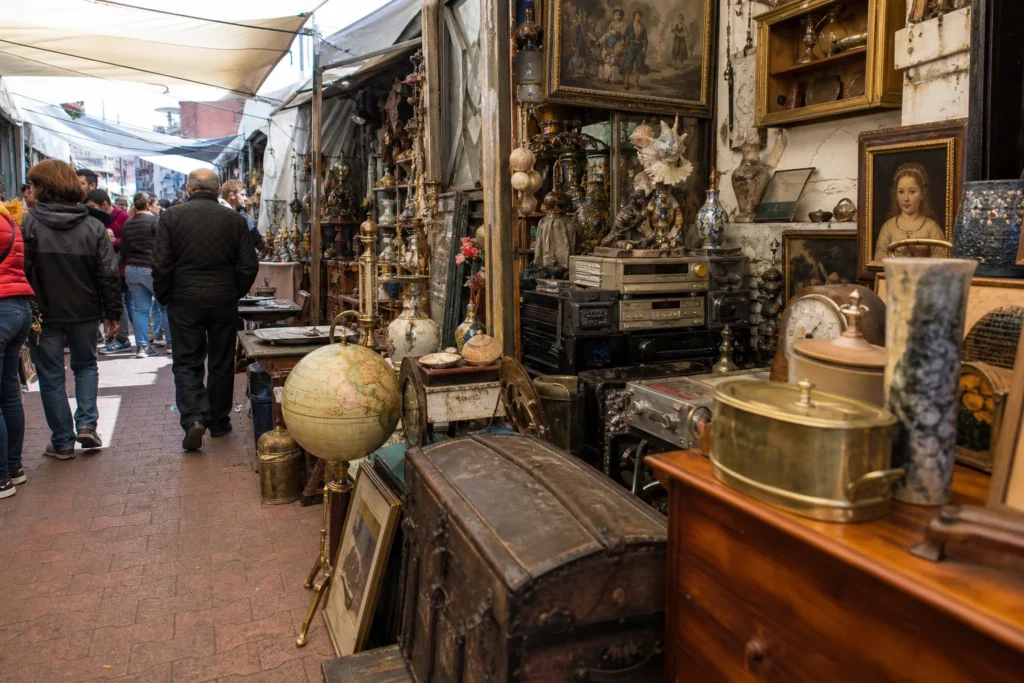
What distinguishes San Alejo from a weekend pop-up is its vendor community. Among the stalls you will find restorers, cabinet makers, artisans and long-standing traders whose families have worked the same pitch across generations. These are sellers who often know precisely what they are selling — its origin, its condition, the work that went into bringing it back. Show genuine curiosity about a piece and a conversation usually follows. That kind of knowledge exchange belongs to the same historical fabric as the neighbourhood around it.
The goods divide loosely into recognisable layers. At one end sit objects with clear colonial or pre-twentieth-century provenance: ceramics, decorative pieces, furniture that has aged in interesting ways. Further in, the browsing layer opens up — mid-century everyday objects, worn household items, the kind of finds that reward slow looking rather than a quick scan. Running alongside these are crafts and culturally inflected pieces that reflect Bogotá's layered immigration history, including traces of European and Middle Eastern communities who settled in the city through the twentieth century. The mix is genuinely varied, and the antique end of the market is particularly strong.
Rummaging is part of the point. Not every stall carries something remarkable, and experienced flea market visitors understand that contrast is precisely the appeal. Street entertainment adds texture to the circuit, and food and drink vendors make it easy to pace yourself without losing momentum. Budget at least two to three hours — more if you want proper time with the traders rather than a surface-level pass.
Getting there is straightforward by public transport. The Torre Colpatria bus stop sits less than 50 metres from the market, making it the most convenient local option. Central subway station is approximately 550 metres away and connects the area to wider parts of the city. Estación 17 — Calle 26, a light rail stop, is roughly 680 metres distant and offers another viable approach from other parts of Bogotá.
San Alejo suits serious collectors hunting colonial and vintage pieces, culturally curious visitors who want a market embedded in the city's real urban fabric, and travellers who value trader knowledge as much as the browse itself. Nearly four decades of continuous trading in one of Bogotá's most historically significant neighbourhoods gives this market a depth that a newer event simply cannot manufacture.
Frequently Asked Questions
Q: When does Mercado de las Pulgas de San Alejo take place, and what are the hours?
A: The market runs on Sundays only, from 08:00 to 17:00. Arriving in the first couple of hours gives you the best pick of the stalls before the crowds build and the busiest part of the day sets in.
Q: What kinds of goods can I expect to find here?
A: The range runs from colonial-era ceramics and aged furniture through to mid-century household objects and everyday vintage pieces. Alongside these sit crafts and culturally layered finds that reflect Bogotá's history of European and Middle Eastern settlement. The antique end of the market is particularly strong, but the browsing layer rewards slow, unhurried looking at every level.
Q: Are the vendors knowledgeable, or is this more of a general jumble sale?
A: San Alejo has an unusually deep vendor community — restorers, cabinet makers, artisans and multi-generational stall holders who often know a piece's origin, condition and restoration history in detail. Show genuine curiosity and a conversation usually follows. That kind of knowledge exchange sets it apart from most general flea markets.
Q: How long should I plan to spend at the market?
A: Budget at least two to three hours for a proper visit. A quick pass misses most of what makes San Alejo worthwhile — the slow circuit, the trader conversations and the rummaging are as much the point as any individual find. Food and drink vendors make it easy to pace yourself without losing momentum.
Q: What is the easiest way to get there by public transport?
A: The Torre Colpatria bus stop is less than 50 metres from the market and is the most convenient local option. Central subway station is approximately 550 metres away and connects the area to wider parts of the city. Check current service information before you travel, as routes and schedules can change.
Marketplace Highlights








Add a review