

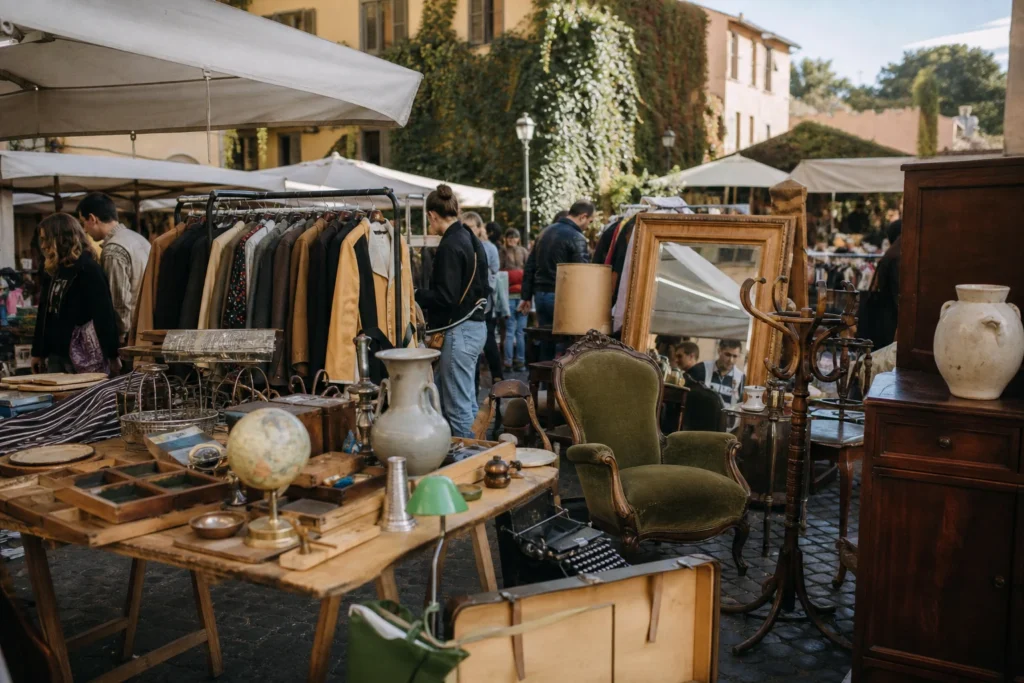

MercatoMonti Urban Market is permanently closed. The market is retained as an editorial archive of the venue and its distinctive character.
MercatoMonti Urban Market occupied a distinctive place in Rome's weekend culture. It was neither a conventional flea market nor a straightforward designer fair, but something more considered — a curated gathering where young Italian creatives sold alongside vintage dealers in the heart of the Monti neighbourhood. That dual identity gave it a character unlike anything else the city offered at the time.
The vintage strand alone rewarded careful browsing. Visitors could flick through racks of classic Italian novels, handle mid-century furnishings, and sort through second-hand trinkets that felt genuinely discovered rather than commercially staged. Records, collectibles and worn-in clothing sat alongside one-off handmade pieces by emerging designers. The mix was the point — here, a forgotten object from decades past could sit a table away from something made the previous week.
The designer strand set Mercato Monti apart most sharply from Rome's older markets. Young Italian talent used the event as a platform: artisan jewellery, hand-stitched garments, small-run ceramics and handmade souvenirs all found a home here. Sellers were selected rather than self-assigned, and the result was a floor where quality felt consistent. The market's compact footprint made that curation visible — nothing slipped through unnoticed, and browsing felt considered rather than overwhelming.
Monti itself shaped the market's atmosphere as much as anything inside it. The neighbourhood combined Roman ruins with cobbled streets, independent boutiques and the kind of creative energy that attracts both stylish locals and curious visitors. The Colosseum and the remnants of Ancient Rome sat within easy reach, lending the surrounding streets a weight that few urban market locations could match. Restaurants and bars nearby filled between market hours, and the district hummed with a mix of residents and tourists sharing the same narrow lanes.
Inside the event, a DJ spun records in the corner throughout the day. It was a small touch that shifted the mood from market to occasion, giving the whole room a social warmth that pure retail spaces rarely achieve. Admission was free, and the relaxed format encouraged people to stay, return and browse unhurriedly rather than rush through.
What MercatoMonti represented in Rome's wider market landscape was a moment of convergence. The Monti neighbourhood had long carried a reputation for creative independence, and the market crystallised that identity into something tangible and weekly. For collectors, design enthusiasts and anyone drawn to Italian craft, it became a reference point — a place where the neighbourhood's layered character, its ancient bones and its contemporary instincts, found a common space.
Frequently Asked Questions
Q: What kind of market was MercatoMonti — flea market or designer fair?
A: It was genuinely both at once. MercatoMonti brought young Italian designers showing contemporary work into the same curated space as vintage dealers offering records, second-hand clothing, mid-century furnishings and collectibles. That hybrid identity — part designer showcase, part vintage bazaar — was what set it apart from Rome's more conventional weekend markets.
Q: Was entry to MercatoMonti free?
A: Yes, admission was free. The relaxed, no-entry-cost format was part of what encouraged visitors to browse unhurriedly, stay longer and return on future weekends.
Q: What kinds of things could you find on the vintage and collector side of the market?
A: Browsers could turn up vintage records, worn-in clothing, classic Italian novels, mid-century furnishings, second-hand trinkets and vintage collectibles. The mix leaned toward genuinely discovered objects rather than commercially staged antiques, and the compact floor meant nothing was buried.
Q: Is MercatoMonti still running?
A: MercatoMonti Urban Market is permanently closed. It is preserved here as an editorial archive of the venue and its character.
Marketplace Highlights







Add a review