


Region
Montsweag Flea Market is permanently closed. The market is retained as an editorial archive of the venue and its distinctive character.
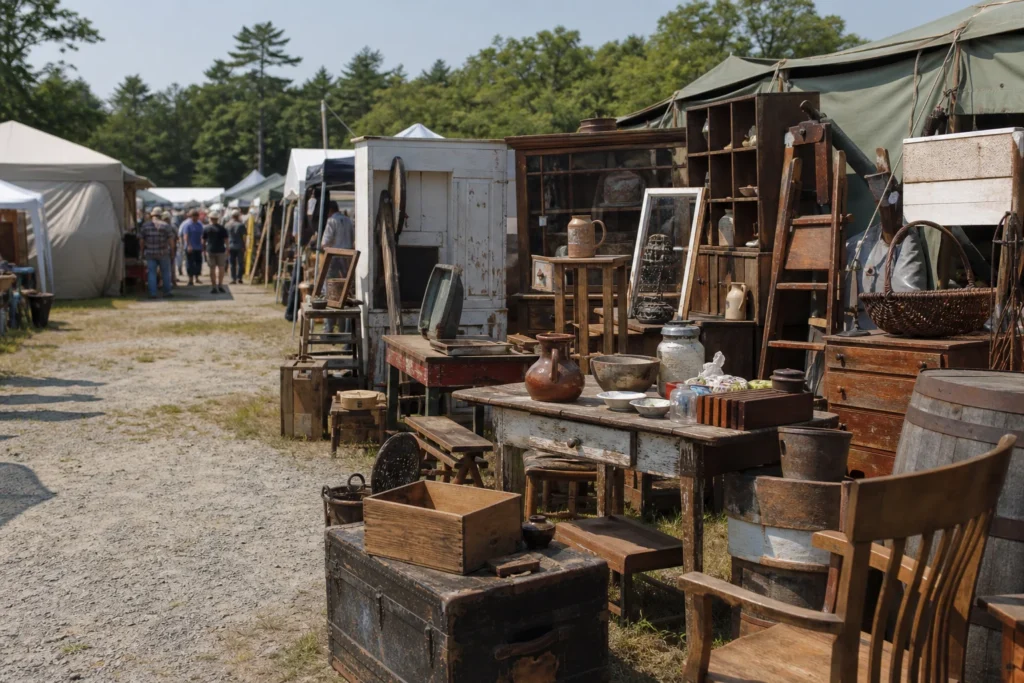
On a summer weekday at Montsweag, the pace slowed to something that felt deliberate. Dealers arranged their tables without hurry, and collectors moved through the outdoor grounds with the kind of patience that permanent, indoor markets rarely encourage. The site sat in Woolwich, close enough to Bath and the mid-coast Maine shore to feel like an extension of the landscape itself — seasonal, unhurried, and specific to its setting.
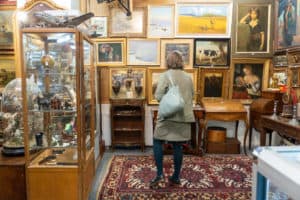
The market's clearest distinction was a dedicated antiques-only day. On that day, general household goods and secondhand miscellany stepped aside entirely. What remained were specialist dealers who knew their inventory with genuine depth. A conversation about a piece of antique furniture could turn quickly into a discussion of its period, its provenance, or a recommendation for another dealer worth seeking out. Collectors with a serious interest in period pieces, antique artwork, or decorative objects tended to find this format especially rewarding. It filtered the experience in a way that casual browsing rarely allows.
The character shifted considerably at weekends. More stalls opened, crowds grew, and the range of goods broadened across the grounds. Furniture and period pieces sat alongside antique tools and vintage kitchenware. Further along, the browsing grew more serendipitous — old toys, worn suitcases, and the kind of small curiosities that reward slow attention and no particular plan. The two formats together gave the market a genuine flexibility, drawing specialist collectors on weekday visits and a more relaxed weekend crowd in search of something they hadn't anticipated.
The vendor community contributed much of what set Montsweag apart from comparable regional outdoor markets. Many dealers here also ran their own shops or held permanent stalls elsewhere. That experience showed in how they curated and discussed their stock. The site itself supported the experience practically — free parking made arrival easy, and food and refreshments were available on the grounds. These details suggest a well-run operation that understood its visitors' habits. The proximity to Bath and the wider mid-coast also meant that a morning at the market extended naturally into an afternoon along the coast.
The market traced its origins to the 1970s, founded by Norma Scopino and sustained as a family-run operation throughout its life. That continuity shaped the atmosphere in ways that commercial fairground events rarely replicate. The scale stayed personal. Regular visitors returned partly for the merchandise, but also for the familiarity — the sense that the people behind the market genuinely knew their community and their trade.
Within the mid-coast Maine antiques landscape, Montsweag occupied a distinct place. It was seasonal by design, limited in frequency, and stronger for both constraints. The antiques-only format, the knowledgeable dealer base, and the outdoor summer setting gave it a character that collectors recognised as something worth planning a visit around. At its best, it offered exactly the kind of market that rewards knowing where to look.
Frequently Asked Questions
Q: What made Montsweag's dedicated antiques-only day different from a typical flea market visit?
A: On that day, general secondhand goods stepped aside entirely. Only specialist dealers were present — people who knew their stock in depth and could speak to provenance, period, and related dealers worth seeking out. For collectors with a serious interest in antique furniture, period artwork, or decorative objects, it was a genuinely filtered experience rather than a browse through mixed merchandise.
Q: How did the weekend experience differ from the weekday antiques day?
A: Weekends brought more stalls, larger crowds, and a broader range of goods across the outdoor grounds. Furniture and period pieces shared space with antique tools, vintage kitchenware, old toys, worn suitcases, and the kind of small curiosities that reward unhurried attention. The two formats gave Montsweag a real flexibility — specialist collectors on quieter weekday visits, a more relaxed and serendipitous crowd at weekends.
Q: What kind of dealers set up at Montsweag?
A: Many vendors also ran their own shops or held permanent stalls elsewhere in the region. That experience showed in how they curated and talked about their inventory. A conversation could move quickly from a specific piece to its history, its period, or a recommendation for another dealer — the kind of exchange that distinguishes a knowledgeable outdoor market from a general sale.
Q: Is Montsweag Flea Market still open?
A: Montsweag Flea Market is permanently closed. It is preserved here as an editorial archive of the venue and its distinctive character.
Q: Where was Montsweag located, and was it easy to reach?
A: The market was situated in Woolwich, Maine, close to Bath and the mid-coast shore. The grounds offered free parking, and food and refreshments were available on-site — practical details that reflected a well-run, visitor-aware operation. Its setting made a morning at the market a natural complement to an afternoon along the Maine coast.
Marketplace Highlights






Add a review