


Region
Norfolk Antique and Collectors Fairs is permanently closed. The market is retained as an editorial archive of the venue and its distinctive character.
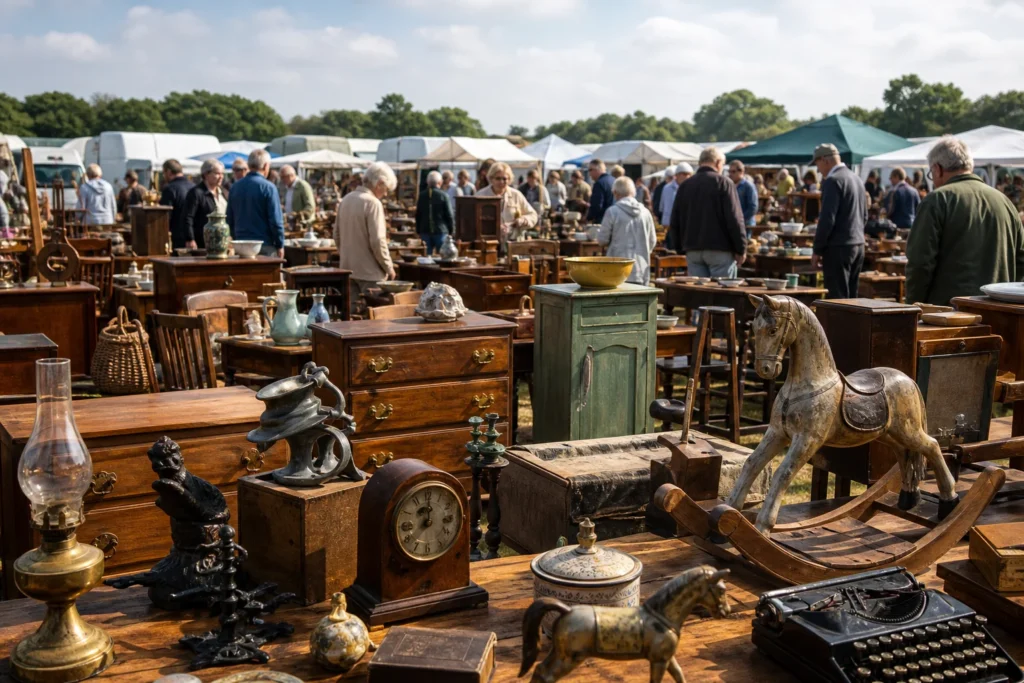
Somewhere between a Victorian rocking horse and a shelf of hand-wound clocks, Norfolk Antique and Collectors Fairs found its character. Organised by Aztec Events across four weekends each year, the fair drew a loyal crowd of dealers, dedicated collectors and first-time browsers from across Norfolk and well beyond. It was the kind of event where the stock did the talking.
The merchandise divided naturally into clusters, each with its own appeal. At the larger end sat furniture with presence — rocking horses, old bicycles, wardrobes and dressers that needed space and a willing van. These were the pieces that anchored a room or a collection. Alongside them, precision and mechanism held their own corner of the market: ornate clocks, vintage typewriters and old telephones that still felt purposeful in the hand. Decorative pieces filled in the rest — ceramics spanning several eras, ornaments, toys and curiosities that carried the accumulated detail of lives lived well before the current century.
The fair's layout was one of its practical strengths. Stalls spread across both covered indoor sections and open-air areas, which meant trading rarely stopped for weather. In Norfolk, where skies can change sharply and without warning, that indoor provision mattered. On wet weekends the covered sections stayed reliably busy, and the outdoor areas came back to life the moment conditions improved.
Catering on site kept energy levels up through long browsing sessions. Food and refreshment stalls gave visitors a reason to pause mid-market rather than head for the car park too early. Experienced collectors tended to allow themselves the full day, working through stalls methodically rather than taking a single pass. The layout rewarded that kind of patience.
The fair also offered appraisal services, which gave it unusual depth as an event. Visitors brought pieces from home and left with a clearer sense of what they held. This drew a distinct type of attendee — not purely a buyer or seller, but someone treating the fair as a resource. A genealogical research service was also associated with the fair at certain points, though its precise scope and availability were never fully established in public documentation.
What made Norfolk Antique and Collectors Fairs distinctive was not any single category of stock but the consistency of its mix. Aztec Events built an event that served the serious dealer and the casual browser without sacrificing depth for either. For collectors across the region, it occupied a reliable place in the calendar — four weekends a year when the chances of finding exactly the right clock, ceramic or forgotten curiosity were genuinely good.
Frequently Asked Questions
Q: What kind of stock did Norfolk Antique and Collectors Fairs typically offer?
A: The fair was known for genuine breadth across three loose clusters: large statement pieces such as rocking horses, old bicycles and antique furniture; precision and mechanism items including ornate clocks, vintage typewriters and old telephones; and decorative work spanning ceramics of various eras, ornaments, toys and curios. The mix rewarded patient, unhurried browsing rather than a quick pass through.
Q: Did the fair run indoors, outdoors, or both?
A: Stalls spread across both covered indoor sections and open-air areas. The indoor provision was a practical strength given Norfolk's changeable weather — on wet weekends the covered sections stayed reliably busy, and the outdoor areas filled again whenever conditions improved.
Q: Was the fair suitable for someone bringing a piece in for valuation, not just buying?
A: Yes. Appraisal services were offered at the fair, which drew a distinct group of attendees who treated the event as a resource rather than purely a buying or selling opportunity. It was one of the features that gave the fair depth beyond a standard market.
Q: How long did visitors typically spend at the fair?
A: Experienced collectors generally allowed a full day. The stall layout rewarded methodical browsing across multiple sections rather than a single pass, and on-site catering gave visitors a reason to pause and continue rather than leave early.
Marketplace Highlights







Add a review