


Region
Olde Good Things Madison Ave is permanently closed. The market is retained as an editorial archive of the venue and its distinctive character.
Before Olde Good Things became a recognised name in American architectural salvage, its founders were working the flea market circuit. They sourced pieces, restored them and sold them from market stalls — a hands-on apprenticeship that shaped everything the brand would eventually become. That origin carried forward into the Madison Avenue store, giving it an edge over more conventional antique dealers. The address was grand; the instincts behind the inventory were not.
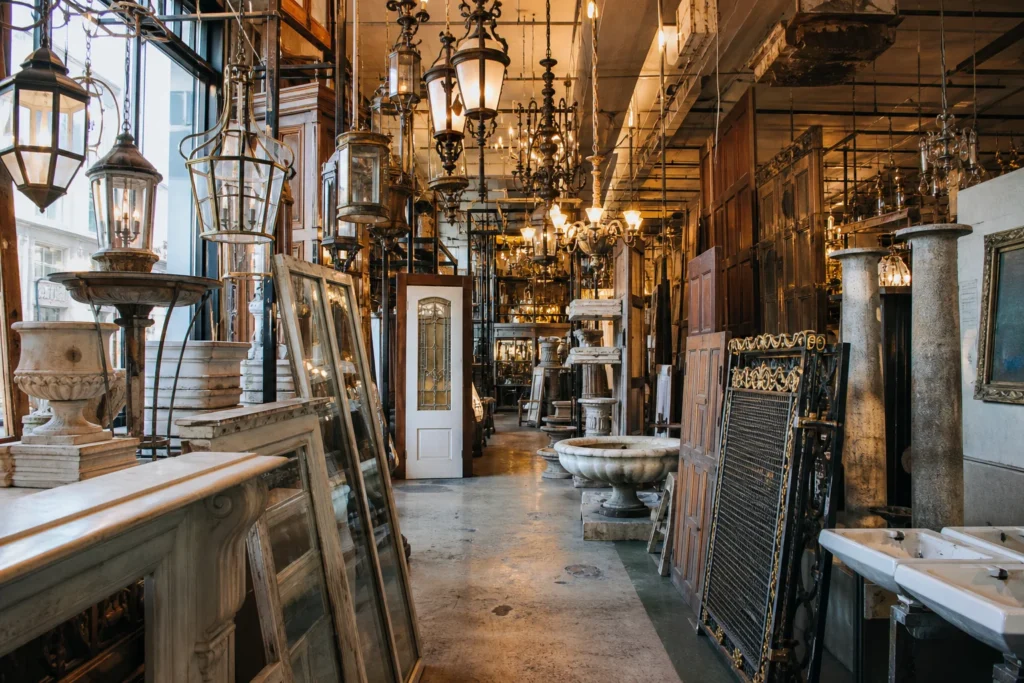
The stock reflected a serious salvage operation rather than a decorating shop. Architectural fragments and ornate ironwork sat alongside period lighting fixtures, reclaimed hardware and carved mantlepieces. Rescued furnishings completed a picture of interiors pulled from buildings that had since disappeared. What separated this from ordinary antique retail was the active recovery process. The team salvaged directly from demolition sites, retrieving pieces before they were lost permanently. That effort produced inventory with a specificity and a quality that browsing elsewhere rarely matched.
Inside, the space felt closer to a museum than a conventional store floor. Pieces arrived with genuine histories — removed from identifiable buildings, often with documentation or at least institutional memory attached. Shoppers moved through a kind of compressed architectural record. Even visitors with no immediate purchase in mind found the experience absorbing. The sheer range of what had been saved, and from where, gave every visit a quality of discovery that retail interiors rarely sustain.
The buyer profile was specific. Renovation clients, interior designers and collectors hunting a precise period detail formed the core audience. These were people who came with a project already in motion, not impulse browsers. Staff met that seriousness with genuine expertise. They offered context on provenance, helped narrow decisions and, in some cases, negotiated on price. That combination of knowledge and flexibility made the buying experience feel personal. Pricing reflected the labour of restoration honestly, and experienced buyers understood why.
The store was reported to operate under a non-profit structure, with a portion of profits directed toward mission work in Haiti. If accurate, that added an ethical weight to every transaction — a cast-iron bracket or a salvaged stained-glass panel became, in a small way, a contribution to something beyond the sale itself. For buyers who cared about where their money went, that dimension of the business mattered.
The Madison Avenue location belonged to a wider Olde Good Things network that included additional New York sites and a large warehouse operation in Scranton, Pennsylvania. Each location carried its own stock profile and character. The Madison Avenue address offered something specific: a flagship-scale selection on one of the city's most design-conscious corridors, combining salvage ethics, genuine provenance and an unusual non-profit purpose. It was an unlikely fit for the neighbourhood, and that tension was part of what made it worth remembering.
Frequently Asked Questions
Q: What kind of stock did Olde Good Things on Madison Avenue carry?
A: The store specialised in architectural salvage — reclaimed ironwork, period lighting fixtures, decorative hardware, carved mantlepieces and rescued furnishings, alongside larger architectural fragments. Most pieces were recovered directly from demolition sites before the buildings disappeared, which gave the inventory a specificity and quality that separated it from standard antique dealers.
Q: Who typically shopped there, and was it worth visiting without a specific project in mind?
A: The core audience was renovation clients, interior designers and collectors hunting a precise period detail. That said, the space had a museum-like quality — pieces arrived with genuine provenance tied to identifiable buildings — and browsers with no immediate purchase in mind consistently found the experience absorbing on its own terms.
Q: Were prices negotiable, and what should buyers have expected to pay?
A: Pricing reflected the labour of restoration honestly, so this was not a destination for bargain hunting. Staff were knowledgeable and direct, and in some cases were open to negotiation — particularly for buyers who came with a clear project and genuine expertise. Experienced shoppers understood the value behind the price.
Q: Did Olde Good Things on Madison Avenue operate as part of a wider network?
A: The Madison Avenue store was one location within a broader Olde Good Things operation that included additional New York sites and a large warehouse in Scranton, Pennsylvania. Buyers unable to find a specific piece on Madison Avenue sometimes sourced from the wider network.
Marketplace Highlights







Paul Bosco
9th September 2020 at 20:22This store closed because the building was sold. They still have several other locations, in NYC and elsewhere. Great store(s).