

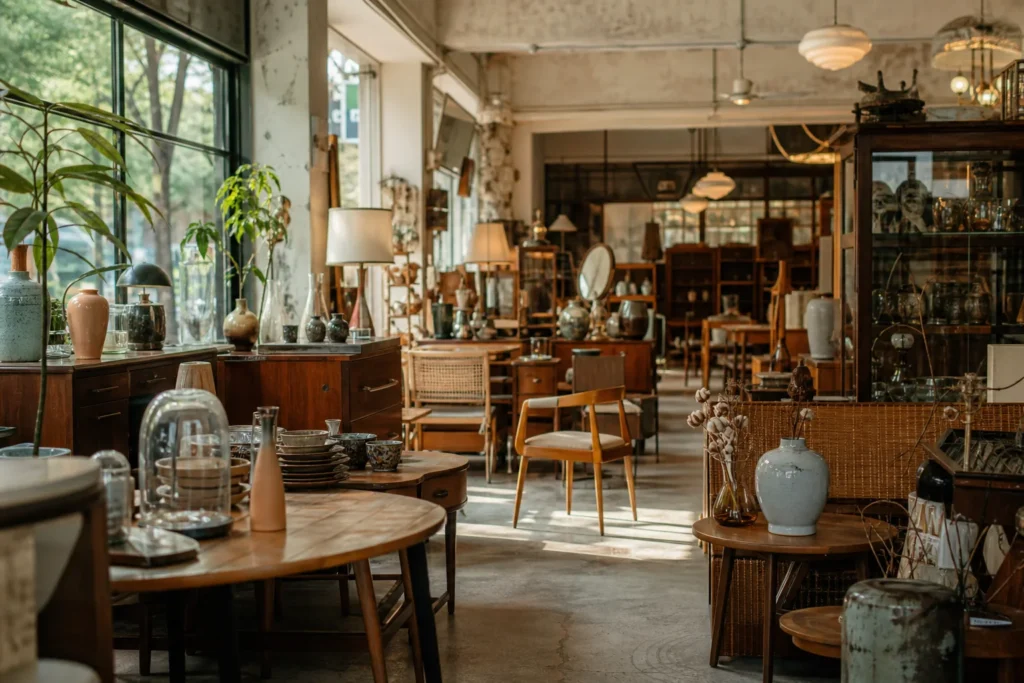

ReStore Living is permanently closed. The market is retained as an editorial archive of the venue and its distinctive character.
ReStore Living built its identity on a single, disciplined conviction: only furniture worth saving deserved to be saved. The shop accepted pieces selectively, choosing items made from solid, quality wood rather than sweeping up anything worn and decorative. That curatorial restraint shaped everything that followed — the restoration work, the finished pieces on the floor, the character of the place itself.
Once a piece was accepted, the real work began. The team tackled whatever each item required: careful polishing, structural wood restoration, re-upholstery where fabric had aged beyond recovery. The goal was not to impose a uniform aesthetic but to return each piece to something close to its original integrity. Because the starting material was already sound, the results tended to reward the effort. A well-chosen chair, properly restored, looked like a chair that had always been cared for — not a project rescued from neglect.
The shop suited a particular kind of shopper. Those furnishing a home around a consistent vintage theme would find the inventory coherent and considered. Those wanting a single piece of genuine character amid more contemporary surroundings were equally well served. What ReStore Living did not offer was the rough-and-ready lottery of a clearance sale or reproduction furniture dressed to look old. Every piece had a traceable material quality behind it, and that distinction was legible on the floor.
Browsing ReStore Living was not meant to be hurried. The shop welcomed visitors with the smell of freshly brewed coffee and homemade waffles — a detail that sounds incidental but was actually structural to the atmosphere. It created the conditions for the kind of slow, unhurried looking that vintage furniture demands. You could sit, drink something good, and allow a piece to make its case. That combination of sensory warmth and unhurried pace was unusual enough to be remembered by the people who passed through.
The homeware selection extended the offer beyond furniture. Smaller vintage objects alongside the larger restored pieces gave visitors more entry points — useful for those not yet ready to commit to a statement chair or cabinet but drawn to the sensibility of the shop.
What ReStore Living represented was a particular approach to vintage retail that treated restoration as craft rather than commerce. The quality threshold, the careful work, the coffee and waffles — they added up to a shop with a coherent point of view. In a field crowded with surface charm, that coherence was the thing worth recording.
Frequently Asked Questions
Q: What kind of furniture did ReStore Living specialise in?
A: The shop focused exclusively on solid, quality-wood pieces selected for their restoration potential. It was not a general second-hand store — the owners only accepted items they considered genuinely worth saving, which kept the inventory small and considered.
Q: What restoration work was carried out on pieces before they went on sale?
A: Depending on what each piece needed, the team carried out careful polishing, structural wood restoration, and re-upholstery. The aim was to return furniture to something close to its original condition rather than apply a uniform cosmetic finish.
Q: Who was this shop best suited to?
A: Shoppers furnishing a home around a consistent vintage theme would have found the inventory coherent and well-matched. Those looking for a single piece of genuine character to sit alongside more contemporary surroundings were equally well served. It was not the place for reproduction furniture or rough clearance finds.
Q: Is ReStore Living still open?
A: No. ReStore Living closed permanently in 2016. It is preserved here as an editorial record of a distinctive approach to vintage furniture retail.
Marketplace Highlights











Add a review