


Region
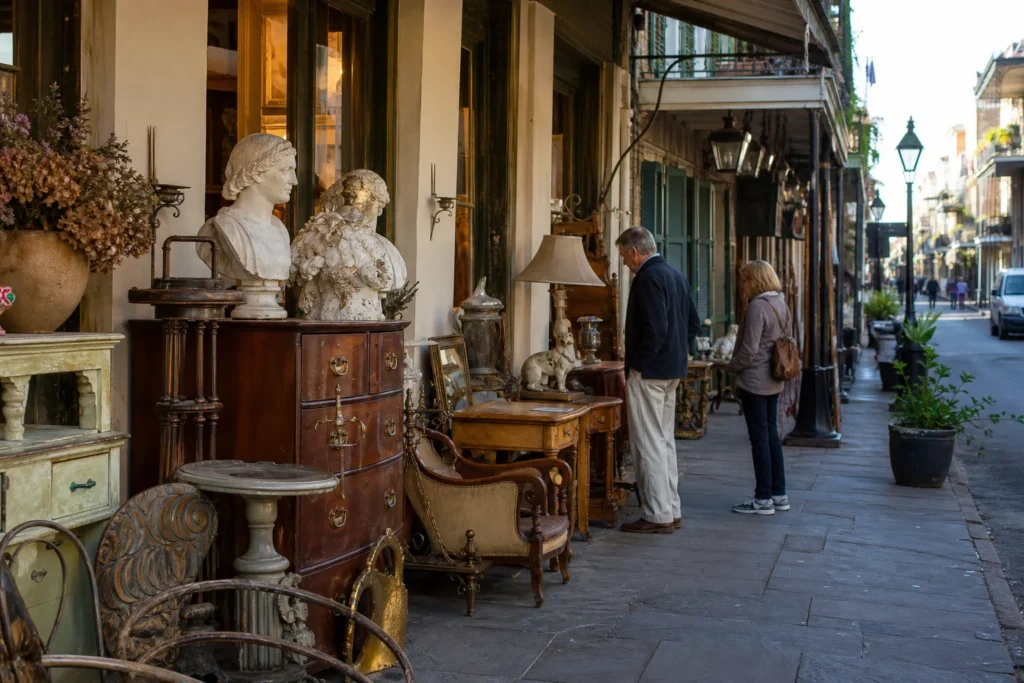
Royal Street runs through the core of New Orleans' French Quarter with an unhurried confidence that matches its reputation. The buildings along this stretch are among the oldest in the city — their ironwork balconies, worn plaster facades and deep interior rooms forming a natural backdrop for what happens inside. This is not a weekend market or a seasonal fair. It is a permanent concentration of specialist antique dealers and galleries, open to collectors and browsers most days of the week.
Most shops along Royal Street keep regular hours, opening Monday through Saturday from around 10 am to 5 pm. That rhythm suits the street well. A serious collector can spend a full morning working through a handful of rooms before stopping for lunch and returning for the afternoon. Sunday tends to be quiet, with most dealers closed — a detail worth noting before planning a visit.
What separates Royal Street from other antique districts is the quality of the conversation. Pick up a piece of Louisiana silver or a nineteenth-century painted portrait and the dealer is likely to know its provenance, its period and something of its journey to this particular shelf. That kind of specialist knowledge is not universal, but it is common enough on Royal Street to shape the experience. Shopping here feels less like browsing and more like consulting someone who has spent decades thinking about the same objects.
The street holds a real range. Some shops sprawl across multiple rooms, offering furniture, art, jewelry and decorative objects across different periods and price points. Others are tightly focused — a single era, a regional tradition, a specific category. Long-established names anchor the blocks with decades of credibility, while newer dealers keep the stock moving and the angles fresh.
MS Rau Antiques is among the most recognized names on the street. Its large showroom covers fine furniture, jewelry, silver and art in a way that functions almost like a private museum — unhurried, well-documented and genuinely impressive in scale. Royal Antiques offers a different register: estate pieces and decorative objects that reflect Louisiana's layered cultural history, with the kind of depth that rewards return visits. Both are worth researching before arriving so you arrive knowing what you are walking into.
Collectors who find Royal Street leaves them wanting more often extend their search to Magazine Street, which runs through the Garden District and carries a longer, more neighborhood-scale stretch of antique shops with its own distinct character.
Bus line 8 runs along St Claude Avenue, with stops at France Street and Poland Avenue each sitting roughly 470 to 500 metres from the Royal Street corridor in approximate straight-line distance. The French Quarter is a walkable neighborhood, and the street itself is easily reached on foot from much of the central city.
Frequently Asked Questions
Q: When are the antique shops on Royal Street open?
A: Most dealers keep regular hours Monday through Saturday, opening around 10 am and closing around 5 pm. Sunday tends to be quiet, with the majority of shops closed. Check individual shops directly before planning a specific visit, as hours can vary by dealer.
Q: Is Royal Street suitable for serious collectors, or is it more of a tourist browse?
A: Both, but it earns its reputation with serious collectors. The street holds a genuine concentration of specialist dealers in fine furniture, Louisiana silver, estate jewelry, nineteenth-century portraiture and Southern decorative arts. Many dealers carry provenance knowledge that is genuinely useful when evaluating a piece, which is less common in general antiques markets.
Q: Which shops are considered the major anchors on Royal Street?
A: MS Rau Antiques is among the most recognized names, with a large multi-room showroom spanning fine furniture, jewelry, silver and art. Royal Antiques is a longstanding presence known for estate pieces that reflect Louisiana's layered cultural history. Both are worth researching before you arrive so you walk in with a clear sense of what each carries.
Q: What kinds of antiques and collectibles does Royal Street specialise in?
A: The street leans toward American and European fine and decorative arts, Louisiana and Southern regional pieces, estate silver, period furniture and fine art. Some shops cover multiple categories across sprawling rooms; others focus tightly on a single era or tradition. The range suits collectors working across different periods and price points.
Q: Are there other antique areas in New Orleans worth combining with a Royal Street visit?
A: Magazine Street in the Garden District runs a longer, more neighbourhood-scale stretch of antique shops with its own distinct character and is the most natural extension for a dedicated collecting day in the city.
Marketplace Highlights








Add a review