


Region
Tables To Teacups Indoor Flea Market is permanently closed. The market is retained as an editorial archive of the venue and its distinctive character.
There was something unhurried about Tables to Teacups Indoor Flea Market that set it apart from busier, more anonymous venues. The space rewarded browsers who arrived without a fixed plan and left with things they hadn't known they were looking for. That quality wasn't accidental — it grew from the people who ran it and the structure they built around the buying and selling of secondhand goods.
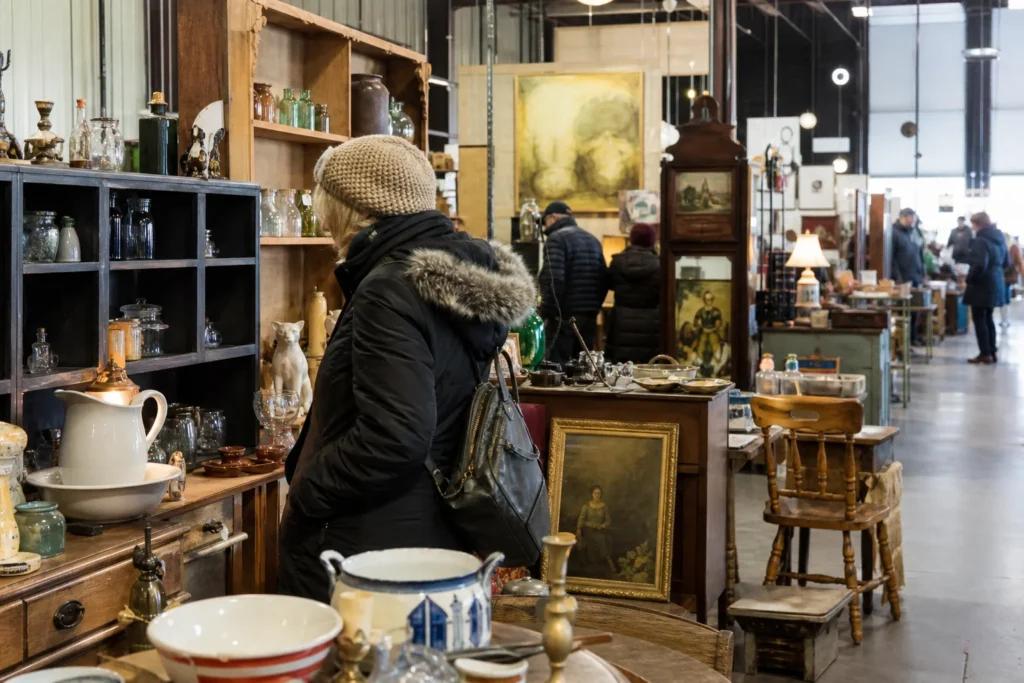
The market operated across roughly 3,000 square metres of fully covered indoor space, and the indoor format mattered. Weather never dictated the quality of a visit. Around 90 dealers filled the floor on a typical day, bringing enough stock to make serious browsing feel worthwhile. Larger pieces — furniture, statement decorative items, the kinds of things that anchor a room — sat alongside smaller finds: glassware, kitchenware, vintage clothing, books, sunglasses and a rotating cast of decorative oddities. The mix shifted often enough that return visits rarely covered the same ground twice.
For anyone working on a room refresh or a renovation, the scale worked in their favour. A single browse could turn up a centrepiece and the surrounding details to complement it. Collectors chasing a specific category had a genuine chance of finding what they needed, and the breadth of stock meant that general browsers could land something unexpected at almost any visit.
Tables to Teacups was family-run, and the owners brought a personal investment to the floor that showed in how the market felt. They had come to the business through a genuine interest in antiques and vintage collecting, not through a commercial formula. That background shaped the atmosphere. Questions about a piece — its provenance, its likely age, whether it suited a particular style — got real answers rather than a polite deflection. Conversations between staff and visitors had a quality of shared enthusiasm rather than transaction management.
The pricing policy was the most structurally distinctive feature of the market. Any item that remained unsold after two months entered a rolling monthly reduction of ten percent, continuing until the piece found a buyer. For regular visitors, this created a quiet strategy: identify something, let it sit, and return when the price had moved to where they wanted it. It was one of the more transparent and genuinely buyer-friendly systems found at an indoor market of this scale. Patience wasn't just a virtue here — it was a practical method.
As an example of what a thoughtfully run indoor flea market could look like, Tables to Teacups stood out. The combination of scale, personal ownership and a pricing structure that actively worked in the buyer's favour gave it a character that few comparable venues matched.
Frequently Asked Questions
Q: Was Tables to Teacups suitable for visitors hunting a specific category of antique or vintage item?
A: With around 90 dealers filling roughly 3,000 square metres of covered floor space, the market gave collectors a genuine chance of finding something in a specific category. Stock shifted regularly, so return visits rarely covered the same ground twice. For anything very particular, calling ahead to ask whether that category was well represented on a given day was a smart move.
Q: How did the pricing work, and was there room to find a bargain?
A: Tables to Teacups ran one of the more transparent pricing systems found at an indoor market. Any item that remained unsold after two months dropped in price by ten percent, with that reduction repeating each month until the piece sold. Regular visitors used this to their advantage — spotting something they liked, leaving it, and timing a return for when the price had moved in their favour.
Q: What kind of stock did the market typically carry?
A: The floor covered a wide range: furniture and larger decorative pieces sat alongside smaller finds including glassware, kitchenware, books, vintage clothing, sunglasses and a rotating selection of decorative oddities. The mix made it practical for room refreshes or renovation projects, where a single browse could yield both a statement piece and smaller details to complement it.
Q: What was the atmosphere like for first-time visitors?
A: Tables to Teacups was family-run by owners with a genuine background in antiques and vintage collecting, and that showed on the floor. Questions about a piece — its age, provenance or whether it suited a particular style — got real answers. The scale rewarded visitors who arrived without a tight schedule and browsed without a fixed plan.
Marketplace Highlights







Add a review