


Region
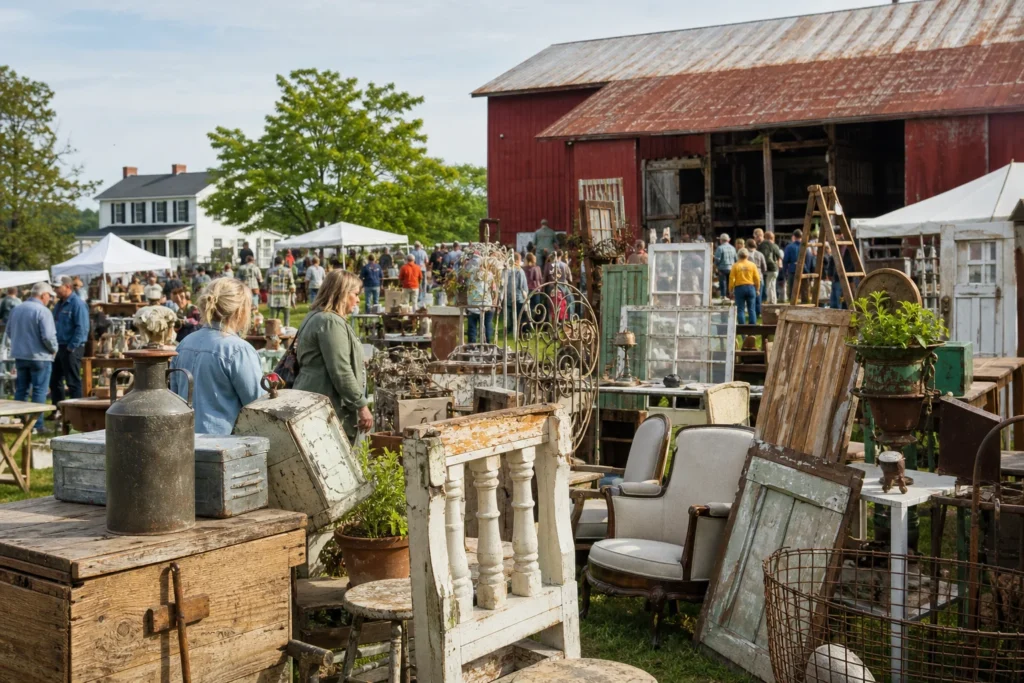
A red barn, a weathered farmhouse, rows of festival tents, and open fields that run wide under an Arkansas sky — this is The Junk Ranch, and it looks exactly like it sounds. Held on a working farm outside Prairie Grove in northwest Arkansas, the event transforms the property multiple times a year into one of the region's most distinctive antique and vintage festivals. The scale tends to catch first-timers off guard.
Hundreds of vendors spread across every corner of the farm, from the barn interior to the open grass beyond the last tent. What they bring covers serious range. One booth might hold a gallery-level collection of curated industrial salvage and restored furniture, priced and arranged with the care of a proper shop. The next might be an attic raid — mismatched frames, vintage tins, odd hardware — everything priced to go home with someone today. That contrast between the deliberate and the spontaneous is a genuine part of the event's character.
The Junk Ranch typically runs three times a year, with a summer show in June and a fall edition in October, each spanning a Friday and Saturday. The summer show runs Friday from 08:00 to 15:00 and Saturday from 08:00 to 16:00. The fall edition keeps longer hours across both days, running 10:00 to 19:00. Dates usually fall on or near the first weekend of each month. Checking the official Junk Ranch website before planning a trip is worthwhile, since exact dates can shift between seasons.
Live workshops set this event clearly apart from a standard flea market. Working artisans set up alongside the dealers — repainting furniture, swapping out hardware, discussing custom finishes and taking orders on the spot. Watching a skilled restorer work a piece in real time changes how you look at everything else on the fairgrounds. It slows the browse in the best possible way.
Seasonal themes give each edition a different feel. Fall shows lean into harvest palettes, warm textures and rustic décor. Spring and summer editions bring lighter finds, florals and garden-ready pieces. Vendors often restock between Friday and Saturday, so returning on day two still turns up fresh material for determined shoppers.
The atmosphere runs genuinely warm. Music moves through the aisles, food trucks anchor the paths, and the crowd tends to linger rather than march. Vendors here expect conversation — many know the history of what they're selling, and those stories often travel home alongside the objects. Cash is a practical tool at an event like this, and comfortable shoes are non-negotiable.
The farm sits in a rural setting outside Prairie Grove, in the Ozarks region of northwest Arkansas. It is a drive-to destination, roughly accessible from Fayetteville and the wider northwest corner of the state. Visitors should plan for parking on open ground and allow extra time if travelling from further afield. No public transport serves the site directly.
The Junk Ranch suits dedicated pickers chasing provenance, home decorators sourcing statement furniture, and anyone who wants a market that holds its ground as a genuine day out. Arriving early — especially on Friday — gives the clearest run at the best finds before serious competition arrives.
Frequently Asked Questions
Q: How many times a year does The Junk Ranch run, and when does it typically happen?
A: The Junk Ranch generally holds three events a year, with shows typically in June and October. The summer show runs Friday 08:00–15:00 and Saturday 08:00–16:00; the fall edition keeps longer hours across both days, 10:00–19:00. Exact dates can shift between seasons, so check the official Junk Ranch website before you plan a trip.
Q: What kind of finds should shoppers expect?
A: The vendor mix spans a wide range — from carefully curated restored furniture, architectural salvage and original art at the gallery-level end, to attic-haul booths full of vintage tins, mismatched frames and odd hardware priced to move the same day. That contrast between the deliberate and the spontaneous is a genuine part of what makes the event worth attending.
Q: What sets The Junk Ranch apart from a standard flea market?
A: Live workshops run alongside the dealer booths. Working artisans restore furniture in real time — repainting, swapping hardware, taking custom orders — while shoppers browse nearby. Watching a skilled restorer work a piece changes how you look at everything else on the fairgrounds, and it rewards a slower, more attentive walk through the event.
Q: Should I bring cash, or are cards accepted?
A: Cash is a practical tool at The Junk Ranch and widely expected by vendors, particularly at the smaller or attic-haul style booths. Card acceptance varies by seller, so arriving with cash on hand avoids any friction at the point of purchase.
Q: Is The Junk Ranch accessible by public transport, and what should first-timers know before arriving?
A: The farm sits in a rural setting outside Prairie Grove in northwest Arkansas — it is a drive-to destination with no public transit serving the site. First-timers should arrive as early as possible, wear comfortable shoes, and leave room in the car. Vendors often restock between Friday and Saturday, so a second-day visit still turns up fresh material.
Marketplace Highlights









Add a review