


Region
The Stubborn Dutchman Antiques and Flea Market is permanently closed. The market is retained as an editorial archive of the venue and its distinctive character.
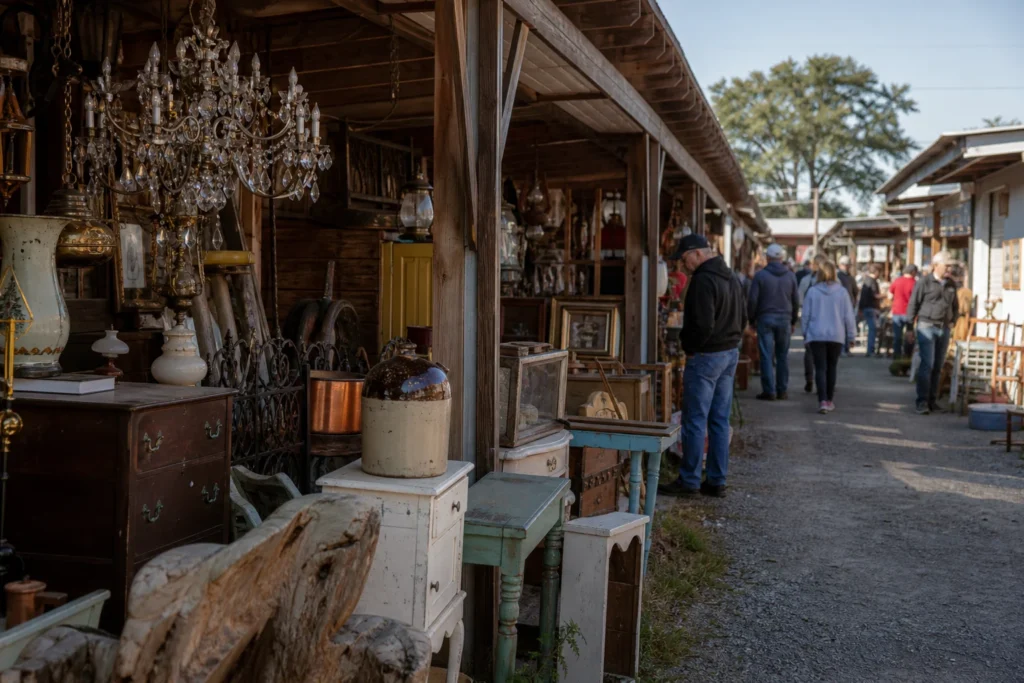
On a busy weekend, the outdoor grounds of The Stubborn Dutchman Antiques and Flea Market held upwards of 500 vendors. That number was not incidental — it was the direct result of keeping outdoor pitch fees low enough to attract occasional sellers alongside seasoned dealers. The rotating cast of traders meant that even regular visitors rarely encountered the same stalls twice. That unpredictability was the market's defining quality, and experienced pickers knew it well.
The market combined two distinct environments into a single day out. Around 50 vendors held permanent or semi-permanent pitches indoors, offering the kind of depth and consistency that drew serious collectors back repeatedly. The outdoor grounds operated on a different logic entirely: high turnover, wide variety, and the genuine sense that anything might surface. Together, the two halves worked as complements — indoor stability anchored the market while the outdoor sections kept it alive and surprising.
The merchandise covered a broad collector range. Decorative and household antiques filled much of the floor space: porcelain pieces, antique lighting, ornaments and retro kitchen appliances showed up regularly across vendor stalls. Personal collectibles drew their own loyal hunters — vintage jewellery, advertising memorabilia and military collectibles turned up with enough frequency to reward focused searching. Furniture hunters found sofas, cabinets and decorative pieces scattered throughout the outdoor areas. Nostalgic and recreational objects rounded out the mix, with collectible toys and vintage bicycles appearing among the more unexpected finds.
Negotiation was part of how the market functioned. Vendors ranged from professional dealers to occasional sellers clearing out a household, and most expected a conversation about price. Arriving with cash and a genuine willingness to ask made a practical difference. The gap between the asking price and a fair offer was often smaller than it looked from a distance.
Food vendors operated alongside the antiques throughout the market. Fresh-cut fries, homemade ice cream and a range of hot and sweet snacks kept families and groups comfortable across a full afternoon without needing to leave the site. The social atmosphere drew visitors beyond the collector crowd, and the market functioned on busy weekends as much as a community event as a trading destination.
What gave The Stubborn Dutchman its lasting character was the tension between reliable structure and genuine unpredictability. Year-round operation, a covered indoor hall and a core of permanent dealers gave it a consistent foundation. The ever-rotating outdoor vendors ensured that no two visits produced the same results. That combination — dependable enough to plan around, unpredictable enough to keep coming back — was unusual at this scale, and it gave the market a distinct place in the regional flea market landscape.
Frequently Asked Questions
Q: Was The Stubborn Dutchman Antiques and Flea Market open year-round?
A: The market operated year-round on weekends, with holiday periods drawing extra vendors and a noticeably livelier atmosphere than a typical Saturday or Sunday.
Q: How many vendors typically traded at the market on a busy weekend?
A: Upwards of 500 vendors filled the outdoor grounds on busy weekends, alongside roughly 50 permanent or semi-permanent dealers inside the covered indoor hall. The low outdoor pitch fees kept turnover high, meaning the stall mix changed regularly even for frequent visitors.
Q: What kinds of antiques and collectibles turned up most often?
A: The range was broad. Decorative and household antiques — porcelain, vintage lighting, retro kitchen appliances — were common, as were vintage jewellery, advertising memorabilia and military collectibles. Furniture hunters found sofas and cabinets scattered through the outdoor areas, and more unexpected finds like collectible toys and vintage bicycles surfaced with enough regularity to reward patient browsing.
Q: Was bargaining expected at The Stubborn Dutchman?
A: Negotiation was a normal part of trading here. Vendors ranged from professional dealers to occasional household clearers, and most expected a conversation about price. Bringing cash and being willing to ask directly made a practical difference.







Add a review