


Region
Treasure Mart is permanently closed. The market is retained as an editorial archive of the venue and its distinctive character.
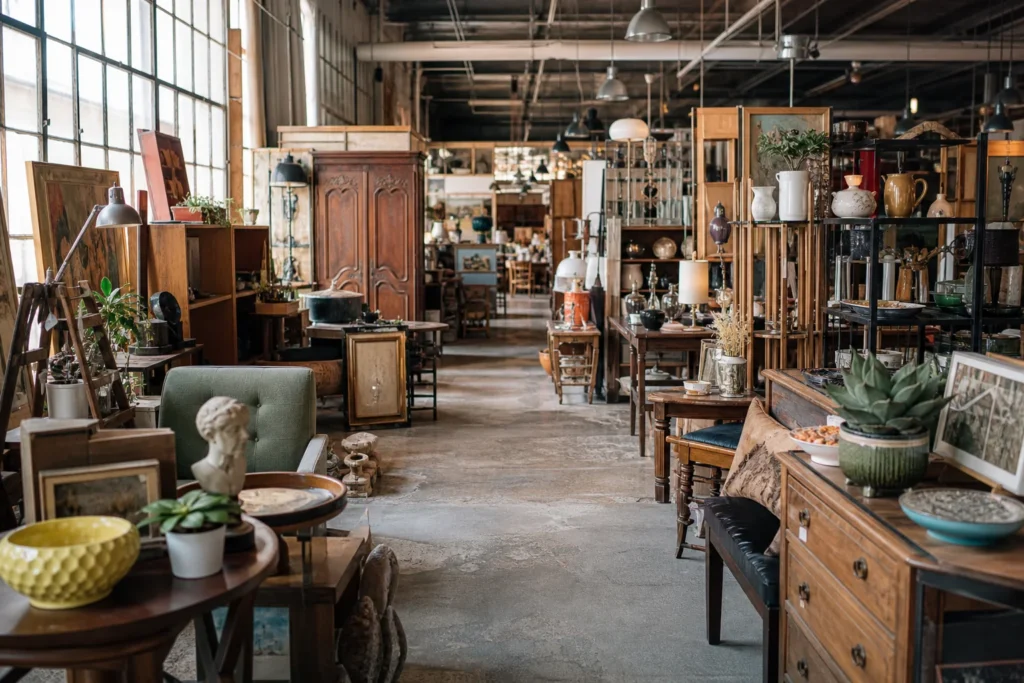
Treasure Mart occupied a three-story historic building in Kerrytown, one of Ann Arbor's most distinctive neighbourhood destinations. The structure had served as a planing mill in the mid-nineteenth century, and its industrial bones gave the space a particular character that newer retail buildings rarely matched. High ceilings, worn floors and generous square footage created a setting that felt genuinely suited to the kind of layered, exploratory browsing the inventory demanded.
The shop ran as a consignment operation spanning roughly 8,500 square feet, and the range of what it held was genuinely broad. Mid-century home furnishings anchored the larger floor areas, from sideboards and lounge chairs to full bedroom suites. The antique sections drew more serious collectors, with pieces reaching into the higher hundreds and beyond — the store reportedly offered items ranging from a twenty-five-cent postcard at one end of the spectrum to an eight-thousand-dollar Biedermeier bedroom set at the other. Vintage clothing, costume jewellery, ceramics and dishware filled out the middle ground, alongside the kind of small, inexpensive kitsch that tends to disappear fastest.
What made Treasure Mart feel closer to a flea market than a conventional antique shop was its restless inventory. The consignment model meant stock turned over constantly, and the store reportedly put out roughly two thousand new items each day. That figure gave regular visitors a genuine reason to return — the floor on a Tuesday looked meaningfully different from the floor on a Saturday.
The shop suited a wide range of visitors without feeling unfocused. Serious antique collectors could spend an hour working through the furniture sections, while casual browsers found more than enough small, affordable pieces to keep them occupied. DIY enthusiasts and prop hunters browsed alongside first-time vintage shoppers, and the organisation of the space — notably tidy for a venue of this scale — made it easy to move between categories without losing track of the whole.
An outdoor area extended the experience into open air, stocked with vintage patio furniture drawn from several decades of design. The surrounding Kerrytown neighbourhood added further appeal. The district had long been home to specialty food shops, the Kerrytown Market and Shops complex, and a general atmosphere that rewarded slow exploration on foot. Treasure Mart sat comfortably within that fabric.
For collectors across the broader Ann Arbor and Detroit region, Treasure Mart represented a rare combination: the scale and variety of a market, the organisation of a curated shop, and the unpredictability of a genuine consignment floor. Its setting in a building with genuine industrial history gave it a physical presence that matched its ambition. It was the kind of place that earned a standing place on people's regular routes through the city.
Frequently Asked Questions
Q: What kind of goods did Treasure Mart carry?
A: The shop ran across 8,500 square feet of consignment stock, with mid-century home furnishings as the anchor — sideboards, lounge chairs, bedroom suites and vintage outdoor patio furniture. Beyond furniture, the floor held vintage clothing, costume jewellery, ceramics, dishware and a steady supply of inexpensive kitsch. Prices ranged from a 25-cent postcard up to an $8,000 Biedermeier bedroom set, which gives a fair sense of how wide the spread was.
Q: Was Treasure Mart more of a flea market or an antique shop?
A: In spirit it sat somewhere between the two. The consignment model and the sheer variety of stock gave it the energy and unpredictability of a flea market, while the organisation of the space — unusually tidy for a venue this large — made it feel more curated than a typical market floor. Serious collectors, casual browsers and prop hunters all found it worthwhile.
Q: How often did the inventory change?
A: The consignment structure meant stock turned over constantly. The store reportedly put out around 2,000 new items each day, which gave regular visitors a real reason to return — the floor looked meaningfully different from one visit to the next.
Q: Where was Treasure Mart located, and what was the building?
A: Treasure Mart occupied a three-story historic building in Kerrytown, one of Ann Arbor's most established neighbourhood destinations. The structure originally served as a mid-19th century planing mill, and its high ceilings, worn floors and industrial bones gave the shop a character that newer retail spaces rarely matched.
Q: Is Treasure Mart still open?
A: No. Treasure Mart is permanently closed. It is retained here as an editorial archive of the venue and its place in the Ann Arbor vintage scene.
Marketplace Highlights









Marilyn Jones
1st September 2015 at 15:57Always a GREAT place to find “treasures ” of all kinds from trinkets to books to furniture and old favorites. The treasures change all the time even from day to day. The staff is great and they know when real antique treasures come in. All is on consignment and the staff can help you load your vehicle if you need help.
Charles Bell
24th January 2016 at 00:05A must-visit place for any antique collector. Best consignment shop in SE Michigan. Make sure you look at the dates on the tags – 10% off for each month it has been there. So 5 months = 50% off!
Gary Foster
11th July 2016 at 08:33Great turnover of items. The staff is constantly rearranging the items into new displays, often themed, so you can see things with fresh eyes. Items are kept dust free, better than any other store of this nature I’ve come across. More European small antiques than you see in other places. The price tags on items are dated with the day they came on the floor. With each month that passes, the price is automatically reduced (at the register, not the tag) by an additional ten percent. There is limited parking behind the store.