

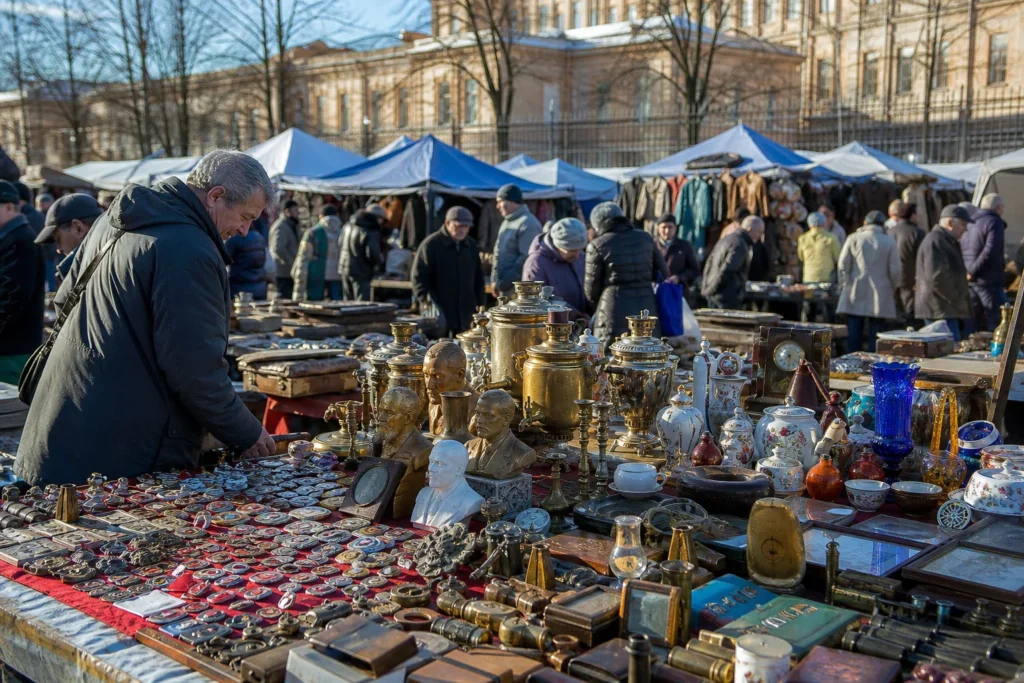

A Lenin bust sitting beside an imperial samovar tells you everything about this market before you have walked three rows in. Blankets spread directly on the ground hold Soviet enamel badges, cracked porcelain dishes stamped with factory marks, and officer-issue wristwatches that stopped decades ago. This is the Udelnaya Flea Market — Bloshinyy Rynok Na Udel'noy, known across the city as the Udelka — and it is considered Russia's most famous flea market. It occupies a sprawling outdoor site in northern St. Petersburg, drawing collectors, curious wanderers and specialist dealers every weekend.
The merchandise falls into three distinct layers, and that layering is unusual even by European flea market standards. The first is Soviet everyday life: enamel propaganda badges, factory ceramics, communist-era books, military watches and officer uniforms. These surface in genuine quantity, and serious collectors move through these rows with focused intent. The second layer is wartime and military material — WWII insignia, medals, and memorabilia that pull specialist collectors from across Europe. The third belongs to the imperial period before 1917: antique samovars, sacred icons, fragments of jewellery and porcelain from tsarist households. All three eras coexist under the same overcast St. Petersburg sky.
What separates the Udelka from any curated antique hall is who is selling. Many vendors are elderly pensioners who have spread their own belongings on the ground with no overhead signage and no polished sales manner. These are not dealers running commercial operations — they are individuals selling from personal histories. An object's provenance often emerges only through conversation, and those conversations can carry informal histories of the city that no published guidebook holds. That dynamic, for many visitors, outweighs anything in the display cases.
Professional dealers also work the market, and they arrive before most visitors are awake. Experienced resellers move through the rows at dawn to pull the strongest finds early. The practical consequence is straightforward: arrive close to the 07:00 Saturday or Sunday opening to give yourself a genuine chance at the best material. The market runs both weekend days from 07:00 to 17:00.
Bargaining is expected. Most sellers build negotiation into their opening price, so arriving with room to move is sensible. A Russian-speaking companion or a knowledgeable local guide changes the experience materially — not just for price discussions, but for reading the provenance of unfamiliar objects and distinguishing genuine period pieces from later reproductions, which do circulate at any large open market.
The site feels intentionally loose. Formal stall rows give way to informal ground-level spreads, and the crowd thickens through the morning. That looseness carries its own authenticity. The Udelka is a working market with real economic stakes for many of its sellers, and that pressure is visible in a way that more organised antique fairs rarely allow.
The market suits Soviet-era collectors, military history specialists and anyone wanting a St. Petersburg experience well beyond the Hermitage circuit. What you find here, and who you find it from, is unlikely to be replicated at any other market in the country.
Getting to the Udelka is straightforward. Udelnaya train station sits approximately 20 metres from the market entrance, serving multiple suburban lines northward. For visitors arriving from central St. Petersburg, Удельная station on metro line 2 is approximately 250 metres away and is the most practical option for most people. Bus lines 40, 85 and 208 serve a stop near the metro station, roughly 90 metres from the market, and provide a useful local connection.
Frequently Asked Questions
Q: When does the Udelka run, and does it matter what time you arrive?
A: The market runs Saturday and Sunday from 07:00 to 17:00. Arrival time matters a great deal here. Professional dealers move through the rows at dawn to pull the strongest pieces before casual visitors appear, so arriving close to the 07:00 opening gives you a genuine chance at the best Soviet-era finds and military material.
Q: What kind of objects can you realistically expect to find?
A: The Udelka covers three distinct collecting eras. Soviet everyday and political objects — enamel propaganda badges, factory ceramics, communist-era books, military watches and officer uniforms — surface in genuine quantity. WWII insignia and wartime memorabilia draw specialist collectors from across Europe. Pre-Soviet pieces, including antique samovars, sacred icons and imperial-period jewellery, also appear regularly. Few outdoor markets anywhere stack this many collecting layers in one place.
Q: Is bargaining expected, and does it help to speak Russian?
A: Bargaining is expected and built into most opening prices, so leaving room to negotiate is sensible. Visiting with a Russian-speaking companion or a knowledgeable local guide changes the experience materially — not just for price discussions, but for reading provenance on unfamiliar objects and distinguishing genuine period pieces from later reproductions, which do circulate at a market of this size.
Q: Who are the sellers, and what makes the atmosphere different from an antique shop?
A: Many vendors are elderly pensioners selling personal belongings spread directly on blankets on the ground, with no signage and no polished sales manner. An object's provenance often surfaces only through conversation, and those conversations can carry informal histories of St. Petersburg that no guidebook holds. The atmosphere is closer to an estate dispersal than a curated retail environment — raw, unfiltered, and genuinely distinctive.
Q: How do I reach the market by public transport?
A: The market is located in northern St. Petersburg near Udelnaya metro station. Confirm the exact exit and any current access details before you visit, as large outdoor sites can have multiple entry points.
Marketplace Highlights







Add a review