

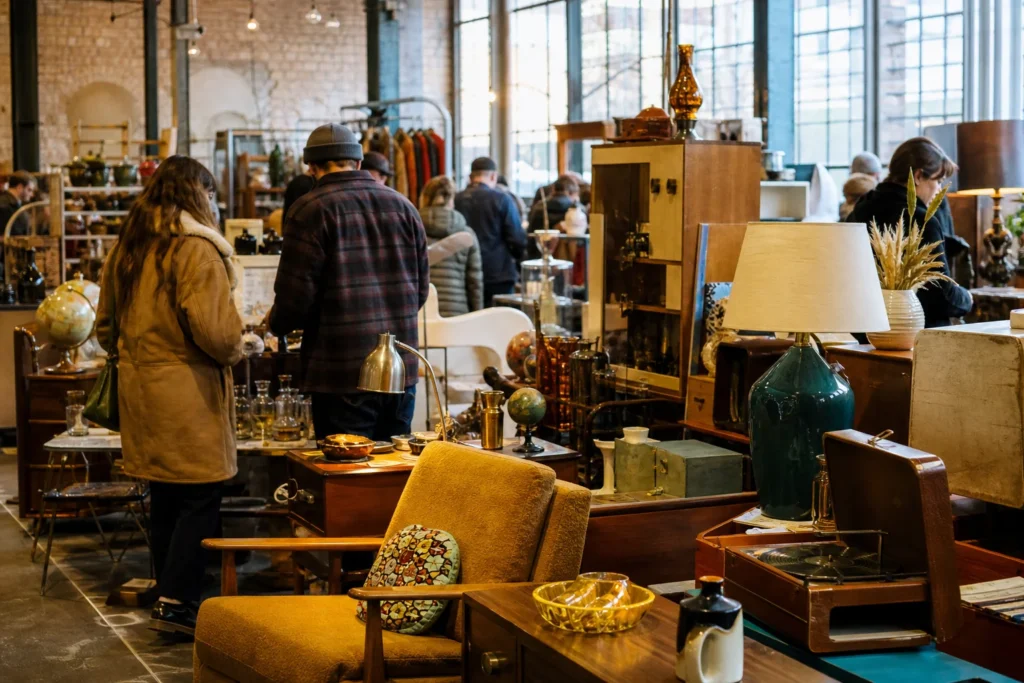

Vintage Garage Chicago is permanently closed. The market is retained as an editorial archive of the venue and its distinctive character.
Vintage Garage Chicago earned its name honestly. Several times a year, a multi-level parking structure in Chicago became something far more interesting than a place to leave a car. Spread across the first three levels of the garage, between 75 and 100 vendors turned concrete ramps and fluorescent-lit bays into a curated sprawl of mid-century furniture, vintage clothing, original artwork, and jewellery spanning the 1940s through the 1980s. It was a genuinely unusual setting for a vintage market, and that unusualness was part of the appeal.
What set the market apart from a typical flea or antique fair was its rotating theme format. Each event carried its own curatorial identity — Rockabilly, Record Ramp, Vintage Wedding — and that theme shaped not just what vendors brought but what shoppers wore and how the whole event felt. Organisers actively encouraged attendees to dress in period-appropriate attire, and many did. The result was less a passive shopping trip and more a collective act of vintage enthusiasm, where the crowd became part of the atmosphere.
The Vintage Wedding theme illustrated this particularly well. Vendors arrived with ornate furniture, kitschy bunting, bridesmaid gift ideas and decorative objects that doubled as wedding inspiration. For anyone planning a ceremony with a vintage aesthetic, a single visit could yield more ideas than weeks of browsing online. The themed structure meant repeat visitors rarely encountered the same market twice.
The garage setting also solved a problem that outdoor vintage markets never quite could. Chicago weather is notoriously uncooperative, but the covered structure meant the market ran regardless of rain, wind or grey skies. Vendors could set up without worrying about weather damage, and shoppers could browse in comfort. That reliability was a practical foundation for the community the market built around itself.
General admission ran at six dollars for a full day's access, with children under 16 entering free. Families brought children; people brought dogs. The atmosphere was inclusive in a way that felt organic rather than policy-driven. Between events, the organisers maintained an active Facebook presence, publishing details about upcoming themes and creating a dedicated event page for each market date. That social infrastructure helped sustain a loyal following across the market's run.
What Vintage Garage Chicago represented, in retrospect, was a specific and coherent model of urban vintage market. It combined all-weather indoor operation with a rotating thematic identity, a community participation ethic — dressed attendees, not just passive browsers — and a vendor mix broad enough to serve serious collectors and casual browsers alike. The garage format was unglamorous by design, and that honesty gave the market a character that polished convention-centre shows rarely matched. For anyone who attended, or who researches Chicago's vintage market history, it remains a useful reference point for how this kind of event could be done with genuine editorial purpose.
Frequently Asked Questions
Q: What kind of items did vendors sell at Vintage Garage Chicago?
A: Stock spanned the 1940s through the 1980s and included vintage clothing, jewellery, original artwork, and furniture — particularly mid-century pieces. Themed events shaped what vendors brought, so a Vintage Wedding edition might yield ornate furniture, kitschy bunting, and decorative objects, while a Record Ramp event leaned toward music-related finds.
Q: What was the rotating theme format and why did it matter for shoppers?
A: Each market event carried its own curatorial theme — Rockabilly, Record Ramp, Vintage Wedding and others — which influenced the merchandise vendors brought and the atmosphere on the day. Repeat visitors rarely encountered the same market twice, making the theme worth checking before each visit to match your collecting interests.
Q: How was the garage setting practical for a vintage market?
A: The covered multi-level parking structure meant the market ran regardless of Chicago's weather. Vendors could display textiles and furniture without rain damage, and shoppers browsed in comfort across three full levels — a genuine advantage over outdoor flea markets in that climate.
Q: Was Vintage Garage Chicago suitable for families?
A: It was notably family- and dog-friendly. General admission was six dollars for a full day, and children under 16 entered free. The atmosphere was inclusive in practice, not just in policy.
Q: Is Vintage Garage Chicago still operating?
A: The market is permanently closed. It is preserved here as an editorial archive of the venue and its distinctive character.
Marketplace Highlights









Add a review