


Region
Wagon Wheel Flea Market & Mustang Flea Market is permanently closed. This listing is retained as an editorial archive of the venue and its distinctive character.
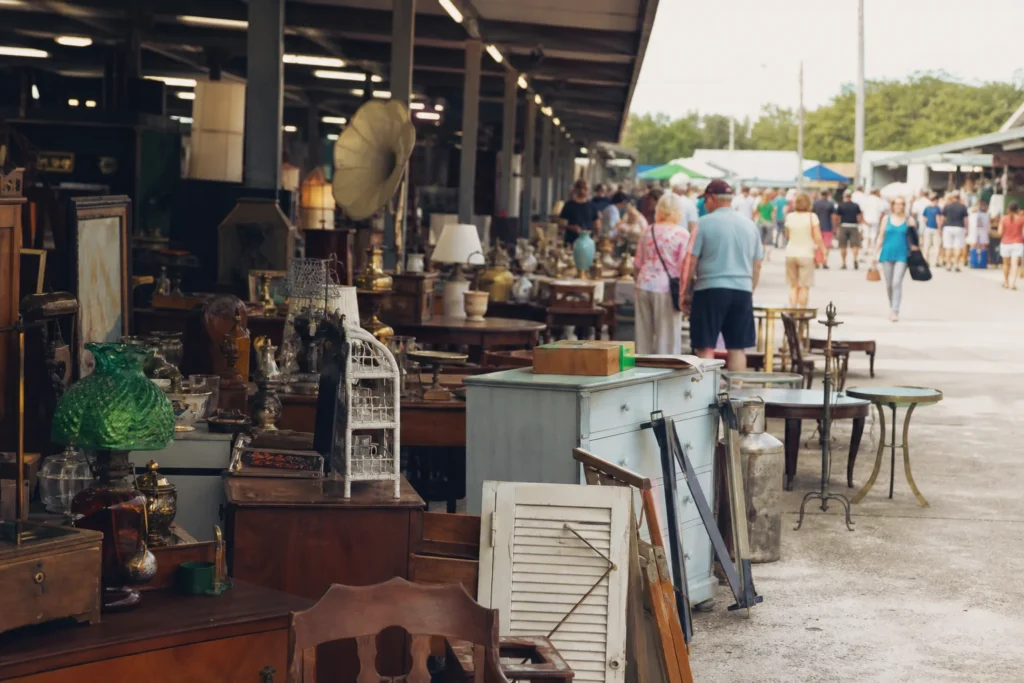
For roughly five and a half decades, Wagon Wheel Flea Market stood as one of the most remarkable market destinations in the American Southeast. Spread across 125 acres in Pinellas County, Florida, it claimed a scale few flea markets in the state could rival. Nearly 2,000 vendor stalls filled the site, with approximately 1,300 of them housed under cover. On any given market day, the scene stretched from shaded indoor aisles to wide open-air rows baking in Florida sunshine.
Right next door, the Mustang Flea Market offered a different experience. Where Wagon Wheel had grown into a partly modernised, partly indoor operation, Mustang kept its entirely outdoor character throughout its life. The two markets shared a boundary and drew from the same broad community, but each had its own feel. Wagon Wheel could feel almost like a small city of commerce. Mustang felt closer to the classic roadside market tradition that many older Florida residents remembered from earlier decades.
Both venues carried the kind of inventory that rewarded unhurried browsing. Wagon Wheel was especially well known for its collector appeal — coins, badges, vintage furniture and antique home décor sat alongside new tools, hardware, and hand carts. Vendors selling fresh local produce and exotic fruits brought in shoppers who came for groceries as much as for finds. Mustang carried much of the same mix in its open rows, with used household goods, clothing, and general wares spread across a more traditional market layout.
What kept both markets drawing crowds year after year was the breadth of their appeal. Families came for the produce and the atmosphere. Collectors came for the antiques and the occasional overlooked piece tucked between everyday items. Casual sellers set up alongside experienced traders. The result was a market environment that felt genuinely communal — neither purely commercial nor purely recreational.
Both markets traced their roots to the mid-1960s, which made them fixtures of Pinellas County life long before the area's population surged. Generations of local families built Saturday and Sunday routines around the sites. That continuity gave the markets an identity rooted in the community rather than in any particular retail category.
For collectors and flea market researchers, the Wagon Wheel and Mustang sites represent a specific chapter in Florida's open-air market history. The dual-market format — one large and partly covered, one traditionally outdoor, both sharing the same corner of Pinellas County — was an unusual arrangement that shaped the character of each venue. This listing preserves their record as a reference for anyone tracing the region's market heritage.
Frequently Asked Questions
Q: How large was Wagon Wheel Flea Market, and what made it stand out among Florida flea markets?
A: Wagon Wheel spread across 125 acres in Pinellas County and hosted nearly 2,000 vendor stalls, around 1,300 of them under cover. That combination of scale and partly indoor trading set it apart from most open-air markets in the state and made it a practical destination in all weather.
Q: What was the difference between Wagon Wheel and the adjacent Mustang Flea Market?
A: Wagon Wheel was the larger, partly modernised operation with extensive indoor sections. Mustang, located immediately next door, was entirely outdoors and kept a more traditional open-air market feel throughout its life. The two shared a community of shoppers but each had its own character and operating schedule.
Q: What kinds of finds could collectors expect at these markets?
A: Wagon Wheel was particularly noted for coins, badges, antique furniture, and vintage home décor alongside everyday goods like tools and hardware. Both markets also carried used household items and clothing. Produce vendors — including sellers of exotic fruits rarely found elsewhere in the Tampa Bay area — added another reason to browse.
Q: How long had these markets been part of the Pinellas County community?
A: Both markets traced their roots to the mid-1960s, giving them roughly five and a half decades of continuous operation before closure. That longevity made them genuine fixtures of local life, with generations of families building regular routines around weekend visits.
Q: Are Wagon Wheel and Mustang Flea Markets still open?
A: Both markets are permanently closed. This listing is maintained as an editorial archive of their history and character.
Marketplace Highlights









Add a review