


Region
Authentication is what sets the Winter Arts and Antiques Fair apart. Before the doors open each November, industry experts examine every piece on the floor — checking provenance, condition and authenticity. That vetting process is the fair's defining credential, and it is the main reason serious collectors and art market professionals treat this as a fixture in the annual calendar rather than a casual browse.
The fair runs for six days inside the National Hall at Olympia London. It opens on the Tuesday before the first full weekend of November and runs through to the Sunday, with daily hours from 12:00 to 18:00. That extended run gives visitors genuine flexibility — enough time to return a second day, which serious buyers often do.
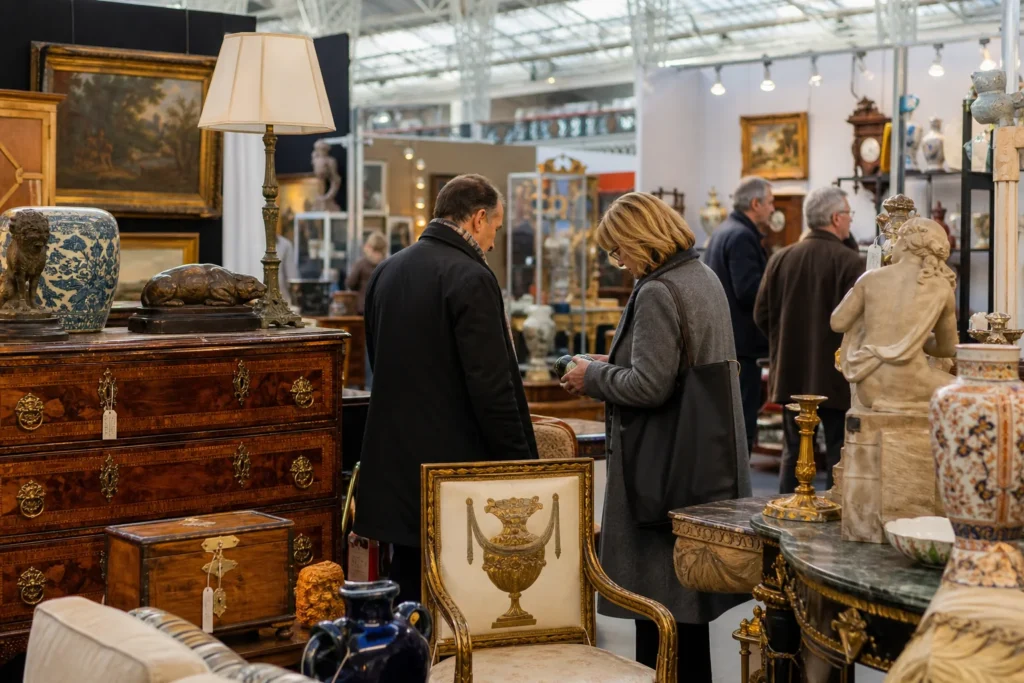
The range of objects on show reflects the broad reach of specialist dealing at its best. Fine paintings and sculpture anchor one end of the spectrum. Furniture and decorative objects fill the middle ground, alongside jewellery and ceramics. Harder to categorise — and often the most memorable — are the antique curiosities that appear each year: singular objects with strong histories that rarely surface anywhere else. Some pieces command significant prices and attract experienced collectors with clear acquisition goals. Others sit well within reach of a first-time buyer looking for something considered, well-made and properly guaranteed.
Olympia's National Hall gives exhibitors the space to show work properly. Pieces are not crowded onto tables or stacked in corridors. They are placed so you can move around them, assess proportion and read condition in decent light. That presentation matters when authenticity is the promise on offer.
The crowd reflects the fair's dual appeal. Auction professionals and trade dealers use it to source and scout. Private collectors return year after year, drawn by the consistency of the vetting standard. First-time visitors often arrive unsure of what they are looking for and leave with a sharper sense of what they actually respond to — which is a particular quality of a well-curated fair. The atmosphere is focused without being intimidating, and the range of price points keeps the floor genuinely open.
Entry requires a ticket. Booking in advance usually costs less than paying at the door, and a private view option is typically available for those who prefer a quieter, less crowded start. Planning ahead — both for the saving and for the freedom it offers on arrival — is worth doing.
Olympia London sits in west London with strong public transport connections. Kensington (Olympia) station is the most direct option, with train services on the Mildmay and SN2 lines and bus routes 9, 27, 28, N9, N27 and N28 stopping approximately 150 metres from the venue. For District line travellers, West Kensington underground station is roughly 700 metres away.
For anyone who values provenance and specialist knowledge over the open-ended luck of a general antique market, the Winter Arts and Antiques Fair delivers a level of editorial confidence that few comparable events in London can match. The November timing, the six-day run and the National Hall setting all combine to make this one of the more purposeful antiques weeks on the city's calendar.
Frequently Asked Questions
Q: What makes the Winter Arts and Antiques Fair different from a general antiques market?
A: Every piece on the floor is examined by industry experts before the fair opens — provenance, condition and authenticity are all checked. That pre-fair vetting is the fair's core credential and the reason collectors and trade professionals treat it as a reliable annual fixture rather than a speculative browse.
Q: Is the fair only for serious collectors with large budgets?
A: Not at all. The floor covers a genuinely wide range of price points. Some pieces attract seasoned buyers with significant acquisition goals, while others are well within reach of a first-time buyer. Antique curiosities — singular objects with strong histories that rarely appear elsewhere — turn up each year and can be among the most memorable finds regardless of budget.
Q: When does the fair take place and how long does it run?
A: The fair runs for six days in November, opening on the Tuesday before the first full weekend of the month and closing on the Sunday, with daily hours from 12:00 to 18:00. That schedule gives you enough flexibility to return for a second visit, which serious buyers often do.
Q: Do I need to book a ticket in advance?
A: Entry requires a ticket. Booking ahead typically costs less than paying at the door, and a private view option is usually available for those who prefer a quieter start. Check the organizer's official page for current ticket prices and availability before you go.
Q: How easy is Olympia London to reach by public transport?
A: Kensington (Olympia) station is the most direct stop, served by Mildmay and SN2 line trains. Bus routes 9, 27, 28, N9, N27 and N28 stop approximately 150 metres from the venue. The District line also provides access for those coming from other parts of the city.
Marketplace Highlights







Add a review