

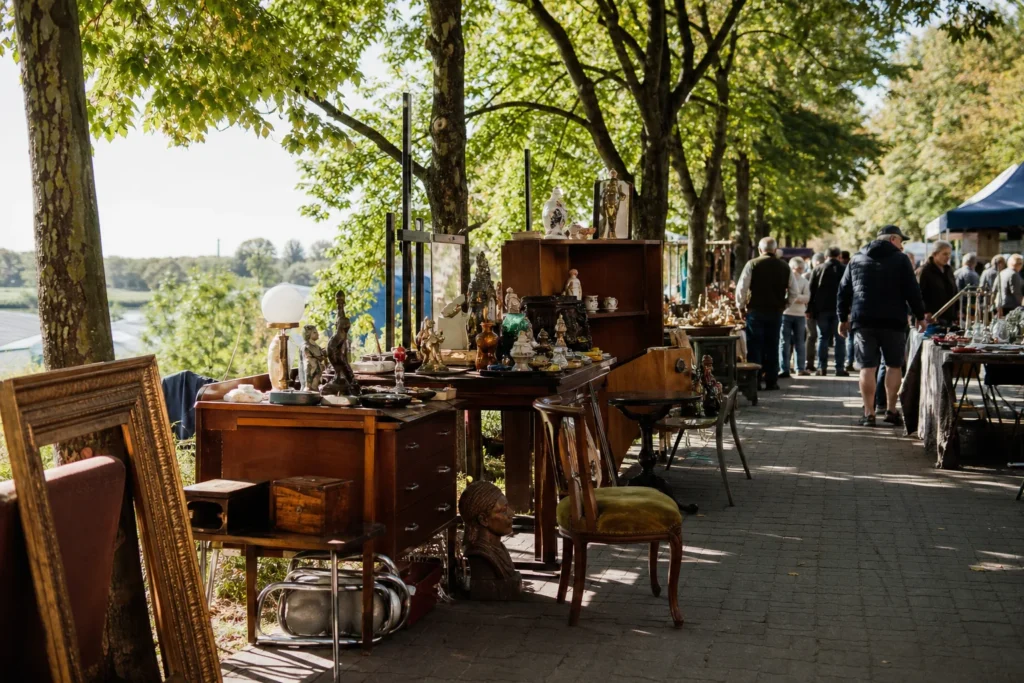

ZOO Market is permanently closed. The market is retained as an editorial archive of the venue and its distinctive character.
ZOO Market occupied one of Warsaw's most storied corners: the right bank of the Vistula River, in the Praga district, within easy reach of the Old Town across the water. Praga had long carried a reputation as Warsaw's rougher, more authentic twin — a neighbourhood of peeling tenements, artisan workshops, and genuine local life. ZOO Market planted itself in that character without apology.
The market took its name from the Warsaw Zoo, which sat directly across the street. The zoo's historic bear terrarium — a distinctive outdoor enclosure — gave the market both its name and the bears that appeared in its logo. It was a small, specific piece of Warsaw geography transformed into an identity, and it worked. Visitors arrived already knowing a little story before they had even browsed a single stall.
ZOO Market opened twice a week and kept to its schedule regardless of weather. Around sixty stalls spread across the site on each trading day, drawing a mix of serious collectors, casual browsers and tourists crossing over from the Old Town. The market was comparatively young by Warsaw standards. The Koło flea market, on the city's western edge, had decades of history behind it. ZOO Market offered something different: a riverfront Praga address, a tighter edit, and a specialism in mid-century material that felt curated rather than accumulated.
The strongest draw was mid-century modern design from the 1950s, 1960s and 1970s. Polish design from those decades had a distinctive visual language — functional, sometimes austere, occasionally playful — and ZOO Market was a reliable place to find it in the form of furniture, ceramics, glassware and household objects. Dealers who understood that period brought genuine stock rather than generic bric-a-brac.
Alongside the mid-century pieces, stalls carried vintage clothing and accessories, antique books, vinyl records and old toys. A category that set ZOO Market apart from more generic European flea markets was its Warsaw-specific material: vintage city souvenirs, local postcards and memorabilia that documented the capital's own twentieth-century history. For anyone interested in Warsaw as a place rather than simply as a shopping destination, this local thread gave the market a particular kind of depth.
The atmosphere was relaxed. The proximity to the Vistula and to Praga's wide, low-rise streetscape gave the market room to breathe. Locals came for the records and the ceramics; tourists came for the postcards and the general browsing; the two groups moved through the stalls without friction.
ZOO Market represented a specific moment in Praga's evolution — a neighbourhood finding new creative confidence while holding onto its material past. Its mid-century specialism, its zoo-born name and its riverside setting combined to make it one of Warsaw's more characterful flea market addresses during its time.
Frequently Asked Questions
Q: What kind of market was ZOO Market, and what was it best known for?
A: ZOO Market was an open-air flea market in Warsaw's Praga district, on the right bank of the Vistula River. It was most distinctly associated with mid-century modern design — furniture, ceramics, glassware and household objects from the 1950s, 1960s and 1970s, particularly pieces with a Polish design sensibility. Dealers in that category brought genuine stock rather than generic bric-a-brac, which gave the market a more curated feel than a typical general flea.
Q: How did ZOO Market get its name?
A: The name came directly from its address: the Warsaw Zoo sat just across the street, and the zoo's historic outdoor bear terrarium gave the market both its name and the bears that appeared in its logo. It was a small, specific piece of Warsaw geography that became a recognisable identity before visitors had browsed a single stall.
Q: What else could shoppers find beyond mid-century design?
A: Alongside the mid-century pieces, stalls carried vintage clothing and accessories, antique books, vinyl records and old toys. A category that set ZOO Market apart from more generic European flea markets was its Warsaw-specific material — vintage city souvenirs, local postcards and memorabilia documenting the capital's own twentieth-century history.
Q: Is ZOO Market still open?
A: ZOO Market is permanently closed. The market is retained as an editorial archive of the venue and its character. For current flea market options in Warsaw, the Koło market on the city's western edge is the city's longest-established alternative worth exploring.
Marketplace Highlights







Apolonia Zagrzewska
13th May 2015 at 08:39Byłam w niedzielę, 12 czerwca, koło godziny 14. To co zastałam mega mnie rozczarowało. Nawet połowa stoisk nie była zapełniona. Było też bardzo mało kupujących. Było trochę płyt, trochę ksiażek, trochę ubrań, trochę okularów i nieco staroci. Ale stanowczo czuć atmosferę ledwo raczkującego wydarzenia. Trzymam za Was kciuki, bo może się rozkręci (teraz, przez remont torowiska jest też utrudniony dostęp, nie widać Was z drugiej strony ulicy). Ja jeszcze odczekam z następną wizytą, bo to co zobaczyłam nie było warte stania w niedzielnym korku na moście śląsko-dąbrowskim i krążenia po pradze w poszukiwaniu miejsca parkingowego.
Maja Rajkowska
9th April 2016 at 05:52Jestem wielce rozczarowana. Zaledwie kilku wystawców i niewielki wybór oferowanego towaru. A obsługa ma tak niezadowolone miny, że odechciewa się zapytać o cokolwiek. Spodziewałam się dużo więcej.
Krista Reyes
29th April 2016 at 10:55Good location. Few but interesting stands with vintage items. I would suggest that the flea market starts much earlier. And try to have more true flea market stands.
Marta Krzeszewska
9th May 2016 at 02:47Jestesmy tu! I jest swietnie, muza miksowana na zywo, piekne bibeloty po malo złoty, leżaki, foodtraki, no zwyczajnie: polecamy! My tu bedziemy wracac!