


ARTifacts is permanently closed. The market is retained as an editorial archive of the venue and its distinctive character.
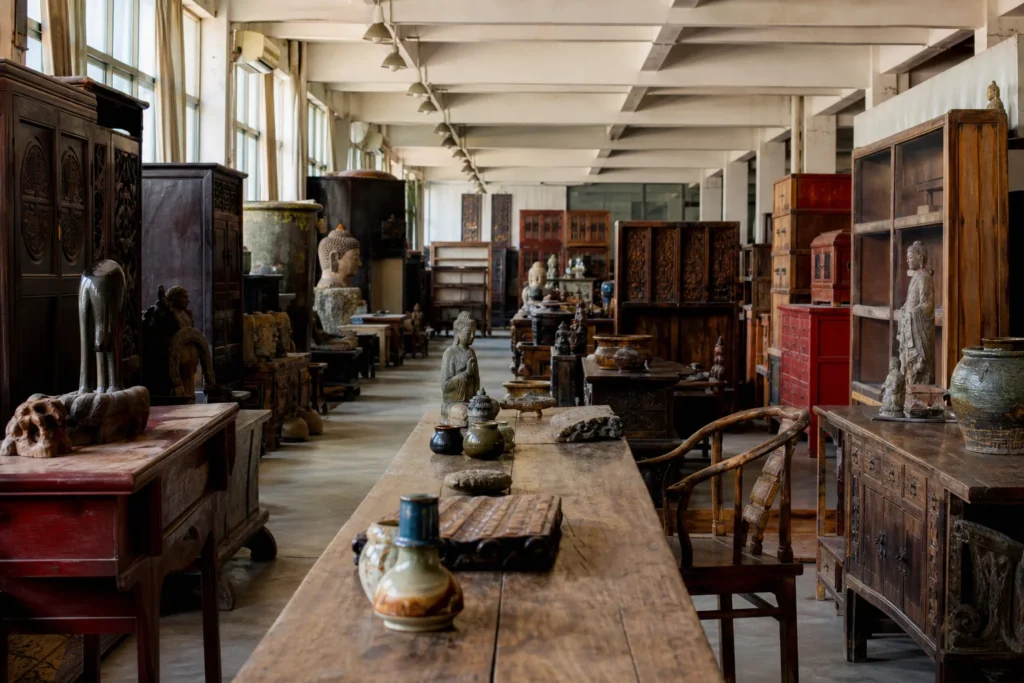
ARTifacts occupied a category of its own among Shanghai's antique destinations. Where most of the city's markets compressed their stock into stalls and shared corridors, this venue sprawled across six floors and close to nine thousand square metres. That scale shaped the entire experience. A serious browser could spend a full day moving through the building and still leave with rooms unseen. It felt less like shopping than like moving through a privately assembled museum — one with price tags.
The furniture collection anchored everything. Carved wooden cabinets, ceremonial thrones, ancestral beds and heavily ornate tables filled room after room, each piece demanding its own moment. Many carried Ming-dynasty provenance, placing them among the more historically significant objects available in any Shanghai antique space. Walking the floors traced a loose arc through Chinese material culture across several centuries — not as a curated exhibition, but as an accumulated record of what had survived and where it had ended up.
Beyond the furniture, ARTifacts held one of the more striking concentrations of religious objects you could find under a single roof. Stone and wood statues of Buddhist, Taoist and Animist figures occupied dedicated corners of the building. Ancestor portraits and devotional paintings lined the walls beside them. Ancient shrines, temple carvings and decorative architectural salvage from demolished buildings filled in the gaps. Taken together, this material gave the space a quality that went well past conventional antique retail.
A separate strand of the collection drew from China's minority cultures — embroidered textiles, vintage clothing and small personal objects that rarely appeared in mainstream antique markets. These pieces had a different register from the monumental furniture and religious statuary. They were quieter, more intimate, and in some ways harder to source. Collectors focused on ethnic craft traditions found this corner of the venue particularly rewarding.
The price range ran wide. Serious collectors hunting significant pieces found them here. Visitors with smaller budgets could also leave with something worth keeping. The atmosphere supported patient looking rather than pressure to buy. Staff moved through the space with evident knowledge of the stock and no particular urgency to move it. The place read as genuinely invested in the objects it held.
For anyone seriously engaged with Chinese antiques, ARTifacts offered a depth and concentration of material that was difficult to match in the city. Its combination of scale, curatorial range and the quality of individual pieces gave it a distinctive place in Shanghai's antique landscape — one that drew collectors, researchers and curious visitors with roughly equal pull.
Frequently Asked Questions
Q: What kinds of antiques and objects was ARTifacts known for?
A: The venue built its reputation on antique Chinese furniture — carved wooden cabinets, ceremonial thrones, ancestral beds and ornate tables, many with Ming-dynasty provenance. Alongside the furniture, it held an exceptional concentration of religious material: Buddhist, Taoist and Animist stone and wood statues, ancestor portraits, ancient shrines, temple carvings and architectural salvage. A separate strand covered minority cultures, including embroidered textiles, vintage clothing and small personal objects that rarely appeared in mainstream antique markets.
Q: Was ARTifacts only for serious collectors, or could casual visitors get something out of it?
A: Both found the space rewarding. Collectors hunting significant pieces — particularly furniture or religious objects — could find depth here that was difficult to match elsewhere in Shanghai. Visitors with smaller budgets could also leave with something worth keeping. The atmosphere favoured patient looking over pressure to buy, and curious visitors with no collecting habit tended to leave just as absorbed as dedicated hunters.
Q: How much time did a visit to ARTifacts typically require?
A: A full day was a reasonable commitment. The venue spread across six floors and close to nine thousand square metres, and a serious browser could work through the building and still leave with rooms unseen. It rewarded slow, deliberate exploration rather than a quick circuit.
Q: Is ARTifacts still open to visit?
A: ARTifacts is permanently closed. It is preserved here as an editorial archive of the venue and its character.
Marketplace Highlights







Add a review