

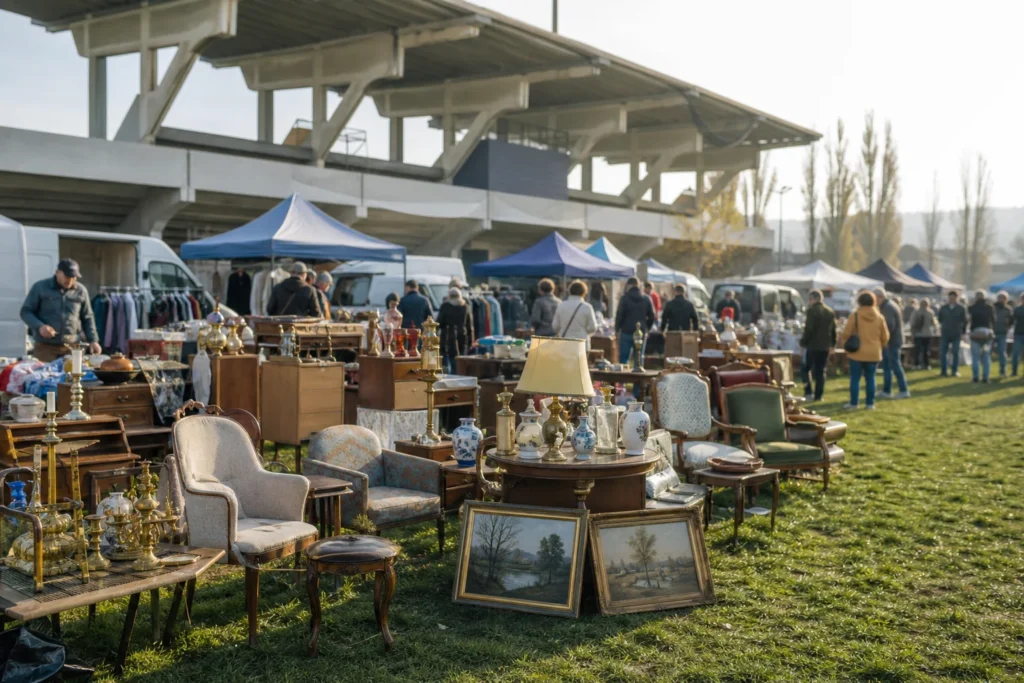

Blsak na interi – Inter Stadium flea market is permanently closed. The market is retained as an editorial archive of the venue and its distinctive character.
The market is retained as an editorial archive of the venue and its distinctive character.
Blšak na Interi occupied a setting that few markets anywhere could claim. The grounds of Bratislava's Inter Stadium — concrete terraces, open forecourts, the whole machinery of a working football venue — gave over on market mornings to rows of stalls, blanket sellers and a crowd that seemed to include half the neighbourhood. The physical contrast was striking: a place built for sport and noise, temporarily running at the quiet rhythm of browsing and bargaining.
The merchandise covered a wide range without feeling chaotic. Collectors found framed oil paintings, old radios and decorative glassware from different eras stacked together in no particular order. Vintage clothing turned up beside antique household items, mismatched crockery and wooden furniture. Boxes of toys and stacks of books filled the gaps. The spread resisted easy categorisation, which gave the market much of its energy. A dedicated rummage could turn up almost anything.
What separated Blšak na Interi from a straightforward antique fair was the produce running through it. Stalls selling fresh fruit and vegetables appeared among the vintage goods, pulling the atmosphere away from specialist collecting and toward something looser and more domestic. The crowd reflected this mix. Seasoned dealers moved through alongside families doing what felt more like a Saturday errand than a treasure hunt. Refreshment was easy to find, and the pace stayed relaxed well into the morning.
The vendor culture gave the market much of its character. Stallholders recognised regular customers and paid attention to what people asked for. Someone searching for a specific item one weekend often found it waiting the following visit — not by accident, but because the informal network of sellers kept track. This kind of unspoken sourcing gave Blšak na Interi a social quality that more polished markets rarely managed. A small entry fee applied at the gate, a modest cost that locals clearly considered well worth paying.
The metadata for this market records activity on Friday and Sunday mornings, with hours running from around 08:00 to 14:00. This pattern — a market anchored to morning hours across two separate weekdays — suggests the kind of regular rhythm that built loyal attendance over time. Saturday's absence from the schedule adds a mildly unexpected detail to the archive.
The market's lasting significance lay in the combination of scale and informality. Bratislava had other weekend markets, but few matched the variety on offer at Blšak na Interi or the ease of its atmosphere. The stadium grounds gave it a physical presence that smaller city-centre markets could not replicate. A football pitch repurposed as a marketplace is an unusual arrangement wherever it occurs. At Inter Stadium, it created something genuinely distinctive within the city's weekend life.
Frequently Asked Questions
Q: What kind of goods could you find at Blšak na Interi?
A: The range was genuinely broad. Collectors worked through framed oil paintings, old radios and decorative glassware alongside vintage clothing, antique household items, mismatched crockery and wooden furniture. Books, toys and printed matter filled the gaps. Fresh fruit and vegetable stalls ran through the market as well, giving the whole thing a neighbourhood character rather than the feel of a specialist antiques fair.
Q: Was Blšak na Interi good for serious collectors, or more of a casual browse?
A: It suited both. Seasoned dealers turned up regularly, and the vendor culture rewarded persistence — stallholders paid attention to requests, and items asked for one weekend often surfaced the next. At the same time, the relaxed pace and mixed crowd made it equally comfortable for casual visitors with no particular agenda.
Q: Is Blšak na Interi still operating?
A: The market is permanently closed. The market is kept as an editorial archive of the venue and its character for researchers and anyone with an interest in Bratislava's market history.
Q: What made the Inter Stadium an unusual setting for a flea market?
A: The grounds of a working football venue — concrete terraces, open forecourts, sports architecture built for crowds and noise — were given over on market mornings to rows of stalls and blanket sellers. The physical contrast between the stadium's original purpose and the quiet rhythm of browsing and bargaining was a defining part of the atmosphere.
Marketplace Highlights







Add a review