

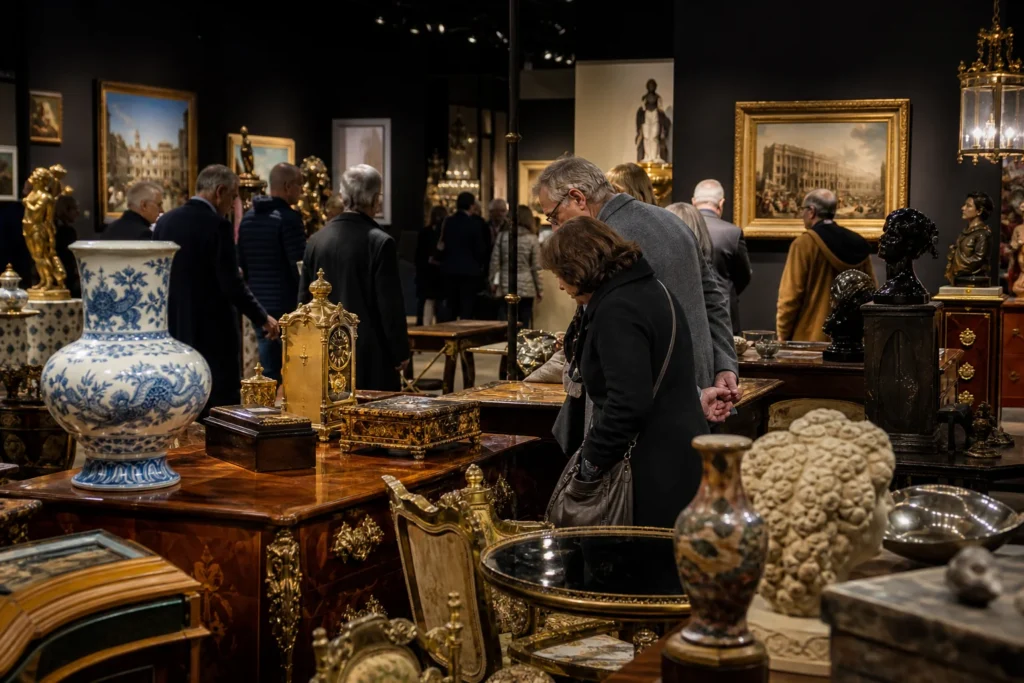

Few art fairs in Europe carry the authority that BRAFA brings to Brussels each January. It draws serious collectors, museum buyers and established international dealers into a single concentrated event, creating an atmosphere that is rigorous without being remote. For those who follow the antiques and fine art trade, attending BRAFA in the first weeks of the year offers something close to a live market reading — a chance to sense what buyers want, where prices are settling and which categories are drawing serious attention.
The fair's origins go back to 1956, when the first edition opened in the Arlequin Hall of the Galerie Louiza in Brussels. For decades it remained a domestic event, limited to Belgian antique dealers. That changed in 1995, when international participants joined and the fair expanded into the significant European fixture it is today.
More than 130 dealers now participate, representing a wide range of specialisms from across Europe and beyond. The Belgian Antiques Fair Association organises the event on a nonprofit basis and applies strict expert vetting to every object before the doors open to the public. Each piece goes through professional examination before it reaches a stand. That process gives buyers a meaningful layer of reassurance uncommon at fairs of comparable scale.
The objects on show span roughly 5,000 years of human creativity. Ancient ceramics sit near Old Master paintings. Art Deco furniture appears alongside tribal art and twentieth-century design. The fair does not specialise in a single era or category — that breadth is part of its identity and a genuine reason to walk every section of the hall rather than heading straight for familiar territory.
The atmosphere rewards both experienced collectors and first-time visitors. Dealers here are accustomed to genuine questions and tend to engage openly. The organisers work deliberately to keep the environment approachable, and the result is a fair that feels commercially serious without closing itself off to people still learning to look. Early January suits this kind of visit — the year is young, ambitions are fresh and the fair gives them an immediate, concrete focus.
BRAFA takes place at Tour & Taxis in Brussels, a historic former customs depot in the north of the city. The Tour & Taxis bus stop is immediately close, with bus lines 46, 86, 88 and night bus N18 stopping approximately 72 metres away in a straight line. Train line S10 also serves Tour & Taxis, roughly 960 metres from the venue. Visitors coming by metro can use Ribaucourt station on lines 2 and 6, approximately 775 metres away, with bus lines 20 and 86 offering an onward connection. Current dates, opening hours and ticketing are updated annually at the official BRAFA website before each edition.
Frequently Asked Questions
Q: What makes BRAFA different from other large European art and antiques fairs?
A: Every object displayed at BRAFA goes through expert examination before the fair opens to the public. That vetting process — applied to all 130-plus participating dealers — gives buyers a level of professional scrutiny that is uncommon at fairs of comparable scale. The nonprofit structure of the organising Belgian Antiques Fair Association reinforces that the event is built around the trade's integrity rather than commercial volume.
Q: What kind of objects can visitors expect to find?
A: The range spans roughly 5,000 years, from Bronze Age artefacts and ancient ceramics through Old Master paintings and decorative arts to Art Deco furniture, tribal art, modern sculpture and twentieth-century design. Few fairs cover that breadth within a single hall, which makes walking every section worthwhile rather than heading only for familiar categories.
Q: Is BRAFA worth attending if you are new to collecting rather than an established buyer?
A: Yes. The organisers work deliberately to keep the atmosphere welcoming alongside its commercial seriousness. Dealers here are accustomed to genuine questions and tend to engage openly, and the early-January timing means the year is fresh — a focused way to develop your eye and sense where the market is moving.
Q: Where does BRAFA take place and how do you get there by public transport?
A: The fair is held at Tour & Taxis, a historic former customs depot in the north of Brussels. Bus lines 46, 86, 88 and night bus N18 stop approximately 72 metres from the venue. Train line S10 also serves Tour & Taxis, and visitors using the metro can reach Ribaucourt station on lines 2 and 6, roughly 775 metres away, with bus lines 20 and 86 providing an onward connection.
Q: When does BRAFA take place each year, and where can I find current dates and tickets?
A: BRAFA runs each January in Brussels. For current dates, opening hours and ticketing, check the official BRAFA website directly before you plan your visit, as details are updated ahead of each annual edition.
Marketplace Highlights








Add a review