


Brussels Art Square is permanently closed. the market is retained as an editorial archive of the venue and its distinctive character.
the market is retained as an editorial archive of the venue and its distinctive character.
Le Sablon has long been Brussels' most serious address for antiques and fine art. Its galleries operate at a level where appointment culture and quiet exclusivity are simply part of the atmosphere. That made Brussels Art Square something of an anomaly — an annual moment when the quarter dropped its guard and let anyone walk in.
The event reportedly launched in 2005, driven by a group of Sablon dealers who wanted to sharpen the district's international profile. Their approach was straightforward: open the doors, remove the barriers and let the neighbourhood make its own argument. It was a considered act of generosity from a trade community that had little commercial reason to welcome casual browsers.
During its run, Brussels Art Square took place across three days each September. Around 50 participants joined each edition — galleries and dealers who had typically spent decades building their reputations in the quarter. Each space curated its own focused selection for the event, often building a themed exhibition rather than simply opening its regular stock to foot traffic. Programming shifted from year to year, which gave returning visitors a genuine reason to come back rather than expect a repeat of the previous edition.
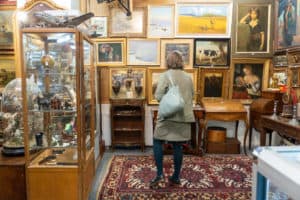
Entry to every participating gallery was free. In a district where serious price points were the norm year-round, that access carried real weight. Browsers who might have hesitated at an unmarked gallery door found the festival format gave them a natural reason to step inside, look closely and engage. The mix of material on offer was genuinely varied — 18th-century European silverware and decorative objects sat alongside contemporary fine art from neighbouring galleries, sometimes within a few metres of each other.
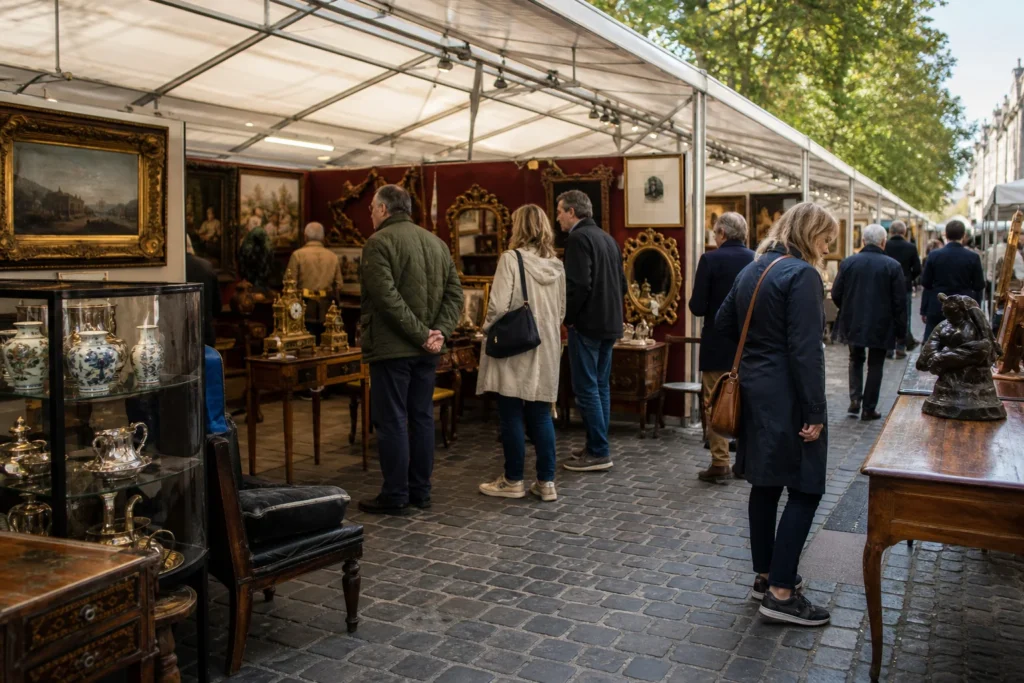
The Marché des Antiquaires du Sablon added a complementary dimension to any visit, though it operated entirely independently of the event itself. This twice-weekly outdoor market ran on the square and offered a more hands-on, open-air counterpoint to the white-walled gallery experience. Together, the two drew a wide range of collectors and wanderers into the same compact district.
Brussels Art Square served collectors with defined interests in European antiques, decorative arts and fine art. It also worked well for anyone approaching the Sablon quarter for the first time and wanting a structured way in. What the event managed — lowering the threshold without adjusting the standard — was a harder balance to strike than it appeared. For the dealers involved, opening unconditionally to the public was an act of confidence in the quarter and in the work they showed. That confidence was, in the end, what gave the event its particular character.
Frequently Asked Questions
Q: What was Brussels Art Square and where did it take place?
A: Brussels Art Square was an annual three-day open-access arts and antiques event held each September across Le Sablon, Brussels' most established quarter for fine art and antiques. Around 50 galleries and dealers participated each edition, opening their doors freely to the public — an unusual gesture in a district that otherwise operated largely on appointment culture and quiet exclusivity.
Q: Was there an entry fee to visit the participating galleries?
A: Entry to all participating galleries during Brussels Art Square was free. In a quarter where serious price points and selective access were the norm year-round, that open-door policy was a significant part of the event's appeal and gave browsers a natural way to step inside spaces they might otherwise have hesitated to enter.
Q: What kind of material could visitors find across the participating galleries?
A: The range was genuinely broad. A visitor could move between a dealer presenting focused 18th-century European silverware or decorative objects and a neighbouring gallery showing contemporary fine art — sometimes within a few metres of each other. Each participating gallery curated its own themed selection for the event, and programming shifted from year to year, giving returning visitors something new to look for rather than a repeat of the previous edition.
Q: Was the Marché des Antiquaires du Sablon part of Brussels Art Square?
A: No — the Marché des Antiquaires du Sablon operated entirely independently. This twice-weekly outdoor antiques market ran on the square itself and offered a more hands-on, open-air counterpart to the gallery experience. The two drew visitors into the same compact district, but the outdoor market ran on its own schedule and was not affiliated with the Brussels Art Square programme.
Q: Is Brussels Art Square still running?
A: Brussels Art Square is no longer active. the market is retained as an editorial archive of the event and the distinctive character it brought to Le Sablon during its run.
Marketplace Highlights






Add a review