



Featured
Maroilles sits in the Avesnois, a quiet agricultural corner of northern France near the Belgian border. Around 1,400 people live here. On the third Sunday of June, up to 80,000 visitors arrive. That contrast is the whole point — and it explains why serious collectors plan their calendar around a single day in a village most maps barely show.
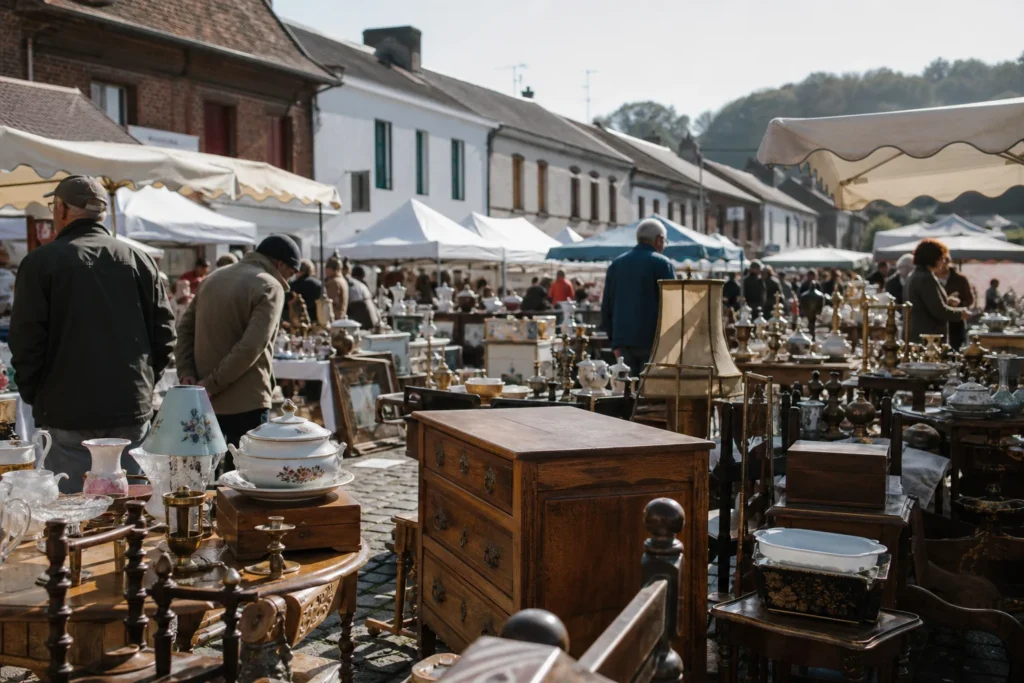
Doors open at 05:00. That is not a soft suggestion. Around 600 exhibitors spread across several miles of village streets, and the best pieces — good farmhouse furniture, well-priced crockery, early printed books — find new owners before the morning light settles properly. Experienced buyers understand the logic of arriving before most people have had coffee. Hesitation here carries a real cost.
What makes the Brocante de Maroilles genuinely unusual is its authenticity policy. Only antique and secondhand dealers may exhibit. No new goods, no craft stalls, no commercial fill. More than 30 on-site commissioners patrol the event to enforce those rules, which is a level of oversight rare at any market in France. Collectors who have spent years navigating diluted urban fairs — where a hand-thrown pot sits next to a printed-on-demand poster — notice the difference immediately.
The range of objects reflects both the market's scale and its northern French setting. Functional domestic antiques dominate: pottery, crockery, rustic farmhouse furniture, ornate tableware with a Flemish influence. Alongside those, smaller finds emerge — vintage toys, jewellery, antique books and decorative ornaments that suggest a region comfortable with its own domestic history. The stalls reward unhurried browsing, even if the clock argues otherwise.
By midday, the pace changes. After a long morning on the Grande Rue, the village's own character earns some attention. Maroilles carries AOC protection for its washed-rind cheese — assertive in smell, complex in flavour, and genuinely regional rather than tourist-facing. A Tarte au Maroilles, the local Flemish-style cheese tart, eaten with fries and a cold northern beer, gives the afternoon a slower, more particular rhythm. The food offer here belongs to the place rather than to the market circuit.
For collectors who find Paris flea markets too sprawling or Lille brocantes too commercial, the drive into Avesnois is a deliberate choice. The stone buildings, quiet lanes and agricultural setting provide an honest backdrop for a market that takes its antique credentials seriously. Scale and strictness rarely coincide this cleanly.
Most visitors reach Maroilles by car. For those using public transport, bus lines 987, 987S, 989, 989S and DB92-93 all stop at Maroilles Place Verte, roughly 63 metres from the market's Grande Rue address — the closest practical bus access point. A second stop, Maroilles Basses Maroilles, is approximately 800 metres away and is served by lines 987S, 989 and 989S. Confirm current timetables directly with the operator before travelling, particularly for an early morning 05:00 start.
Frequently Asked Questions
Q: What time does the Brocante de Maroilles open, and does it really matter when you arrive?
A: Doors open at 05:00. It matters considerably. Around 600 exhibitors spread across several miles of village streets, and the most sought-after pieces — good farmhouse furniture, early printed books, well-priced crockery — tend to move before mid-morning. Experienced collectors treat the early start as the main event, not an inconvenience.
Q: Is this a genuine antique market or does it mix in crafts and new goods?
A: Only antique and secondhand dealers may exhibit. No craft stalls, no new goods, no commercial fill. More than 30 on-site commissioners patrol the market to enforce this policy — a level of oversight that is genuinely unusual for a French brocante of this scale. Collectors who have spent time at diluted urban fairs notice the difference immediately.
Q: What kinds of objects typically come up for sale?
A: The range is broad but weighted towards functional domestic antiques: pottery, crockery, rustic farmhouse furniture and ornate tableware with a Flemish regional influence. Smaller collectables also appear regularly — vintage toys, jewellery, antique books and decorative ornaments. The northern French and cross-border setting shapes the character of what surfaces here.
Q: How do most visitors get to Maroilles, and is there bus access?
A: Most visitors arrive by car. For those using public transport, bus lines 987, 987S, 989, 989S and DB92-93 stop at Maroilles Place Verte, approximately 63 metres from the market's Grande Rue address. Confirm current schedules before travelling, as rural bus services can vary by season.
Q: Is there anything worth doing in the village once the market winds down?
A: The village itself is worth the slower afternoon. Maroilles holds AOC protection for its washed-rind cheese — genuinely regional rather than tourist-facing — and the local Tarte au Maroilles, a Flemish-style cheese tart, is the obvious choice after a long morning on the stalls. The stone buildings and agricultural setting give the day a character that goes beyond the market.
Marketplace Highlights

Flea Market Trip Planner
Visiting Brocante de Maroilles? Build your full flea market itinerary
Plan your route by date, distance and market type






Add a review